
Squamish Real Estate: What Buyers Need to Know in 2026
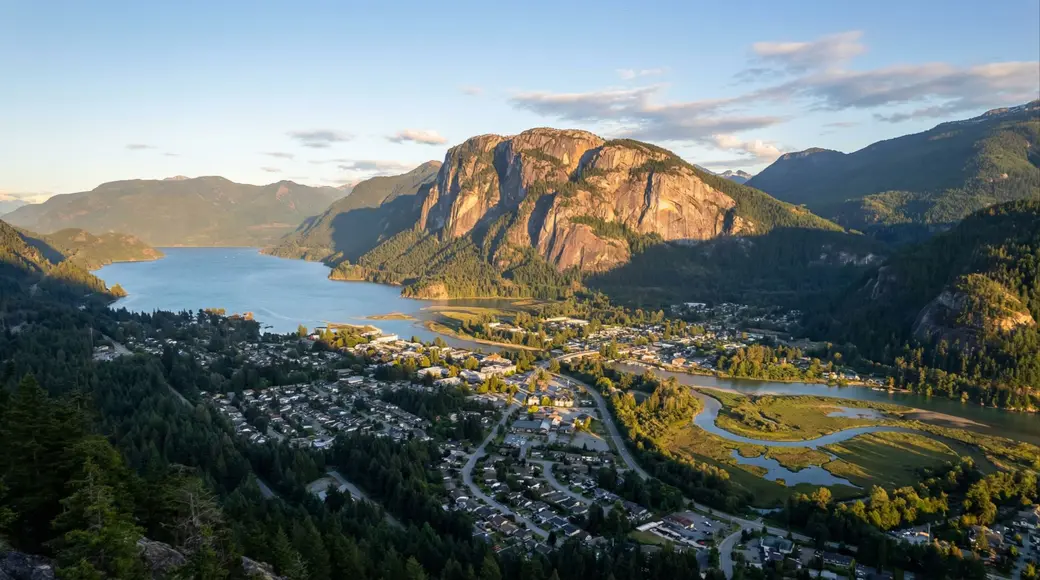
Watch: Is Squamish the Right Fit for You?
If you're considering buying in Squamish and want clarity on pricing, property types, or what actually makes sense for your situation, you can reach out directly here:
👉 https://bit.ly/4chDrB7
Squamish Real Estate: What Buyers Need to Know in 2026
Between the Mountains and the Market — Squamish Has Become One of the Sea to Sky's Most Compelling Buys
Squamish is no longer the affordable escape valve it was a decade ago — but it remains one of the most distinctive real estate opportunities within commuting distance of Metro Vancouver. Situated between West Vancouver and Whistler at the head of Howe Sound, Squamish offers a rare combination: genuine outdoor lifestyle, a growing local economy, and a housing market that still delivers more space and land value per dollar than anything comparable on the North Shore or in the city. For buyers who understand the trade-offs and the drive, Squamish deserves serious consideration in 2026.
An Overview of the Area
Squamish sits approximately 65 kilometres north of Vancouver on the Sea to Sky Highway (Highway 99), about 40 minutes from West Vancouver under normal driving conditions. It is the largest municipality in the Sea to Sky Corridor and serves as a regional hub for the communities between the Lower Mainland and Whistler.
The town centre has undergone significant transformation over the past decade. Downtown Squamish — centred around Cleveland Avenue — has developed a genuine independent food, retail, and café scene. New residential development has brought density, amenities, and buyers who have permanently relocated from Vancouver and the North Shore rather than simply using Squamish as a weekend base.
The natural setting is extraordinary. Squamish sits at the convergence of the Squamish and Cheakamus rivers, below the Stawamus Chief — one of the largest granite monoliths in the world — with direct access to world-class rock climbing, mountain biking on the Squamish trail network, kiteboarding at the Spit, hiking in Garibaldi Provincial Park, and ski access to both Whistler Blackcomb to the north and Cypress Mountain to the south.
Lifestyle and What It Actually Means to Live Here
Squamish attracts a specific kind of buyer — one who has made a conscious decision to prioritize outdoor access, space, and community identity over proximity and walkability. The buyers who thrive here are not those who are priced out of Vancouver and settling for second-best. They are people who have chosen Squamish intentionally, and that distinction matters for resale, neighbourhood character, and community energy.
The lifestyle trade-off is real: Squamish is not a walkable neighbourhood in the Lower Lonsdale or Edgemont sense. Most errands require a car, and the downtown core — while much improved — does not replicate the density of services and amenities found closer to Vancouver. For families, schooling is a genuine strength: the Squamish School District serves the community well, and Sea to Sky Community School and Howe Sound Secondary are both well-regarded.
The commute question is the one every prospective buyer has to answer honestly. The Sea to Sky Highway can be dramatic in winter conditions and is subject to closures. The drive to West Vancouver is 40 minutes in good conditions but can extend significantly during incidents, snowfall, or peak summer weekend traffic. Remote and hybrid work arrangements have fundamentally changed who can make this lifestyle work — but buyers who require daily in-office attendance should plan their commute in real conditions, not ideal ones.
Real Estate and Pricing
Squamish offers a genuinely varied housing market by Sea to Sky standards — one of the broadest product mixes between Vancouver and Whistler. Detached homes, townhomes, and condominiums all trade actively, and the price-to-space ratio remains meaningfully more favourable than the North Shore or Vancouver proper.
Detached Homes
Detached homes in Squamish typically range from approximately $1.1M for a well-maintained older home on a standard lot to $2.5M and above for newer construction, larger lots, or properties with significant mountain or water views. Neighbourhoods such as Garibaldi Estates, Brackendale, and Valleycliffe offer good detached supply at varying price points. Newer developments in areas like University Heights and Dentville have introduced contemporary construction at premium pricing.
Townhomes
Townhome product has expanded significantly in Squamish over the past several years. Pricing typically runs from $750K for older product to $1.4M for newer, well-finished townhomes in sought-after developments. Turnover is relatively low among buyers who have committed to the Squamish lifestyle.
Condominiums
Condo pricing in Squamish ranges from approximately $500K for a one-bedroom in an older building to just over $1M for larger or newer product in premium developments. The condo market has matured considerably — quality of construction and strata governance varies, and document review remains essential.
Value Perspective
The case for Squamish as a value proposition rests on one fundamental fact: you get more house, more land, and more view per dollar than anything comparable within commuting reach of Metro Vancouver. Buyers who purchased detached homes in Squamish five to eight years ago have seen strong appreciation. The question in 2026 is not whether Squamish represents value in absolute terms — it does — but whether buyers have assessed the commute, the lifestyle fit, and the specific neighbourhood within Squamish carefully enough before committing.
Pros and Cons
What Works Here
- Detached homes with land still available at meaningful price advantages over the North Shore
- World-class outdoor access — climbing, biking, hiking, kiteboarding, skiing
- Genuine community identity and growing local economy
- Proximity to both Whistler and Vancouver via Sea to Sky
- Garibaldi Provincial Park essentially at your doorstep
- Well-regarded school district — good option for families
- More space, more yard, more garage than anything comparable in price on the North Shore
- Remote and hybrid work has made the commute equation much more manageable for many buyers
What to Consider
- Daily commute to Vancouver or North Shore is 40–60+ minutes each way
- Sea to Sky Highway closures and winter conditions are a real factor
- Car-dependent — limited walkability outside the downtown core
- Smaller service and amenity base than North Shore communities
- Condo and strata document review still essential — building quality varies
- Wildfire smoke and flooding risk in some areas warrant due diligence
- Some new developments have faced strata issues — assess carefully
What Buyers Often Overlook
The Neighbourhood Differences Within Squamish
Squamish is not one homogeneous neighbourhood — it is a collection of distinct areas with meaningfully different characters, price points, and buyer profiles. Brackendale, to the north, is quieter and more rural in feel, with larger lots and established families. The downtown and Dentville area is more urban and walkable by Squamish standards, with newer construction and a younger demographic. Garibaldi Estates is a well-established family neighbourhood with good schools access. Understanding which part of Squamish actually suits your lifestyle matters as much as understanding the broader market.
The Commute in Real Conditions
Many buyers evaluate the Squamish commute in ideal conditions — a clear summer Tuesday morning. The honest test is a January commute during or after snowfall, or a Friday evening in July when summer weekend traffic backs up from Horseshoe Bay. Drive it in those conditions before you buy. The Sea to Sky is one of the more beautiful commutes in North America — it is also one of the more variable ones.
Natural Hazard Awareness
Parts of Squamish have documented flood plain exposure and wildfire interface risk. Before purchasing, review the property's specific risk profile with your REALTOR®, the District of Squamish's hazard mapping, and appropriate insurance advisors. This is not a reason to avoid Squamish — it is standard diligence for a community with a large natural land interface.
Buyer's Note
Squamish's strata market has grown rapidly and not all buildings have been created equal. Depreciation reports and strata meeting minutes remain essential reading for any condo or townhome purchase — some newer developments have encountered construction deficiency issues, underfunded reserves, or strata governance challenges that are not visible in a showing but are clearly documented in the strata records. Read the documents before you fall in love with the unit.
Who Squamish is Best For
- Remote and hybrid workers who have the flexibility to commute two or three days per week and want to trade a smaller Vancouver condo for a detached home with genuine outdoor access
- Outdoor lifestyle buyers for whom climbing, mountain biking, hiking, or kiteboarding is not a weekend hobby but a core part of daily life
- Families who want space, yard, and good schools at a price point that no longer exists on the North Shore for detached product
- Buyers priced out of the North Shore detached market who will not sacrifice their outdoor lifestyle for a condo closer to the city
- Whistler-adjacent buyers who want to be within 30–35 minutes of Whistler Blackcomb without paying Whistler prices for year-round living
- Investors focused on long-term appreciation in a community with a growing population base, constrained land supply, and continued in-migration from Metro Vancouver
Final Summary
Squamish in 2026 is not the same market it was in 2015 or even 2020. Prices have risen, product has become more sophisticated, and the buyer pool has shifted from weekend adventurers to full-time residents who have made a genuine lifestyle choice. The value case remains compelling — particularly for detached product relative to the North Shore — but buyers need to approach Squamish with clear eyes about the commute, the lifestyle, and the due diligence that the strata market requires.
The buyers who do best here are those who buy for the right reasons: they want the mountains, the community, the space, and the specific kind of life Squamish makes possible. That clarity of purpose tends to produce good buying decisions — and good long-term outcomes.
Debbie Evans | REALTOR®
eXp Realty | West Vancouver & North Shore Markets
Squamish buyers often come to me after considering West Vancouver, North Vancouver, and other North Shore communities — and deciding that the lifestyle Squamish offers is worth the drive. If you are evaluating that decision and want a clear-eyed view of what each market actually delivers at your price point, I am happy to walk through the comparison with you. Reach out before something worth buying moves past you.
This content is for informational purposes only and does not constitute financial or investment advice. Market data is based on current MLS® listings and recent sales activity and is subject to change. Always consult appropriate professionals regarding your specific situation.
Frequently Asked Questions — Squamish
Is Squamish a good place to buy real estate in 2026?
Squamish continues to offer one of the most compelling value propositions within the greater Vancouver region — particularly for buyers seeking detached homes, outdoor lifestyle, and meaningful space at a price point that no longer exists on the North Shore. The market has matured and is not the dramatic undervaluation it was in 2015, but for the right buyer profile, Squamish remains an intelligent and rewarding purchase in 2026.
How far is Squamish from Vancouver and West Vancouver?
Squamish is approximately 65 kilometres north of Vancouver via the Sea to Sky Highway (Highway 99). Under good driving conditions, the trip to West Vancouver's Park Royal area takes roughly 40–45 minutes. In winter conditions, during incidents on the highway, or on busy summer weekends, travel times can extend significantly. Buyers who commute regularly should drive the route in real conditions — not just on a clear weekday morning — before making a purchase decision.
What types of properties are available in Squamish?
Squamish offers one of the most varied product mixes in the Sea to Sky Corridor — detached homes, townhomes, and condominiums all trade actively. Detached homes typically range from $1.1M to $2.5M and above depending on lot size, location, and construction quality. Townhomes run from approximately $750K to $1.4M. Condominiums start around $500K for a one-bedroom in an older building and can exceed $1M for newer or larger product. The price-to-space ratio remains meaningfully more favourable than comparable product on the North Shore.
Is the Sea to Sky Highway safe and reliable for daily commuting?
The Sea to Sky Highway is a world-class road by scenic standards and a well-maintained provincial highway — but it is a mountain corridor subject to real variability. Winter snowfall, rock events, accidents, and summer weekend congestion all affect travel times. For buyers who will commute daily, honest planning is essential: factor in the full range of conditions, not the best-case scenario. Many Squamish residents commute successfully every day; others find the variability becomes a stressor over time. Knowing which category you fall into before you buy is worth the effort of trialing the drive.
Is Squamish good for families?
Squamish is an excellent choice for many families. The Squamish School District is well-regarded, with Sea to Sky Community School and Howe Sound Secondary serving the community. Space and yard access that is unattainable at comparable price points on the North Shore make Squamish genuinely compelling for families who want their children to grow up with outdoor access and room to move. Families who value skiing, climbing, biking, and hiking as part of family life will find Squamish nearly unmatched within reach of Metro Vancouver.
Are there natural hazard risks I should know about in Squamish?
Yes — and this is standard due diligence, not a reason to avoid the area. Parts of Squamish have documented flood plain exposure along the Squamish and Cheakamus rivers, and some areas fall within the wildland-urban interface relevant to wildfire risk. Before purchasing, review the District of Squamish's hazard mapping, confirm the specific risk profile of any property with your REALTOR®, and consult with insurance advisors about coverage implications. Properties in lower-risk areas are not materially affected, but understanding what you are buying is always essential.
What should I look for when buying a condo or townhome in Squamish?
The strata document review is non-negotiable. Squamish's condo and townhome market has grown rapidly, and not all buildings have been created equal — some newer developments have encountered construction deficiency issues, underfunded contingency reserves, or strata governance challenges. Always request the full depreciation report, the last two years of strata meeting minutes, current financials, and the bylaws before making an offer. A unit that looks well-priced on paper can carry a very different true cost of ownership once the documents are properly reviewed.
How does Squamish compare to buying on the North Shore?
The comparison comes down to lifestyle priorities and commute tolerance. The North Shore — whether Lower Lonsdale, Edgemont, or Deep Cove — offers proximity to Vancouver, established amenities, and shorter commutes, but at a significant price premium for detached product and with far less space per dollar. Squamish offers more house, more land, more outdoor access, and a more distinct community identity — but requires genuine acceptance of the commute and a more car-dependent daily life. Buyers who have done the honest comparison and chosen Squamish tend to have no regrets. Those who buy without fully testing the commute sometimes do.
Categories
- All Blogs (97)
- aboriginal title ruling (2)
- bc housing market (23)
- bc real estate (55)
- Bill C-15 (1)
- build canada homes (8)
- Buyers Guide (4)
- canada strong fund (3)
- Canada-U.S. Trade (2)
- canadian real estate (15)
- Climate Change (2)
- Design & Build (4)
- Dundarave West Vancouver (1)
- Equity Growth (1)
- freehold (1)
- Home Buying Tips (1)
- housing policy (1)
- land claims (2)
- Land Claims / BC Real Estate (1)
- leasehold (1)
- local news (1)
- Lower Lonsdale (2)
- Market & Policy Analysis (1)
- Market Commentary (6)
- market insights (23)
- Multigenerational Living (2)
- North Vancouver Real Estate (19)
- open house (1)
- Open House Security (1)
- presale (1)
- real estate insights (7)
- Real Estate Market & Housing (2)
- Squamish Market Update (7)
- squamish real estate (8)
- squamish update (3)
- Vancouver Real Estate (17)
- West Vancouver Living (15)
- West Vancouver Real Estate (26)
- Whistler Market Update (4)
Recent Posts



Have a Question? Let’s Talk. I’m Here to Help.

North Shore & Vancouver Realtor License ID: 175378
+1(778) 875-4934 | debbie.evans@exprealty.com