
Only 3% of Canadians Prioritize Climate Over Housing — What This Means in 2026
Only 3% of Canadians Prioritize Climate Over Housing — What This Means in 2026
Only 3% of Canadians Ranked the Environment as a Top Issue in Early 2026
A new round of polling data released in early 2026 tells a clear story about where Canadians are right now. The environment — once a top-three concern for a significant portion of the population — has fallen to the margins of the national conversation. Housing, healthcare, and the economy have taken its place. This is not a story about denial. It is a story about pressure — and what happens when the immediate cost of daily life starts to crowd out longer-term priorities.
The Numbers in Plain Terms
In August 2021, 13% of Canadians ranked the environment as a top-tier concern. By early 2026, that number had fallen to 3%. The drop is not explained by a collapse in climate belief — over 60% of Canadians still view climate change as a human-caused crisis, and 66% describe it as a major crisis. What changed is not what people believe. It is what they feel they can afford to prioritize.
Housing affordability has become the defining pressure point for a generation of Canadians — particularly those under 35. The data reflects that clearly. Adults aged 18 to 34 are more likely to support higher taxes for housing improvements (71%) than for climate action (62%). When you are priced out of the city you grew up in, the urgency of a long-term environmental crisis competes poorly with the urgency of not being able to afford rent.
Key Data Points — March 2026
Over 60% of Canadians consistently view climate change as a human-caused crisis, with 66% calling it a major crisis. Belief in human-caused climate change sits at 81% among Liberal voters and 44% among Conservative voters — a significant ideological divide. In British Columbia and Alberta, 65% believe climate change is human-made. Roughly 62% of Canadians say they are willing to pay higher taxes for climate action. In the United States, belief in human-caused climate change has dropped below 50% for the first time in 2026, sitting at 48%.
The Political and Regional Divide
The data also reveals how deeply politicized climate belief has become. In Canada, the gap between Liberal voters (81% believe in human-caused climate change) and Conservative voters (44%) is striking — a 37-point divide on what is fundamentally a scientific question. Regional variation exists but is comparatively modest: 65% in BC and Alberta, 63% in Ontario, and 62% across Saskatchewan, Manitoba, Quebec, and Atlantic Canada.
The American picture is more pronounced. Belief in human-caused climate change dropped below 50% in the US for the first time in 2026, sitting at 48% nationally. Among Republicans, only 34% agree — compared to 67% of Democrats. The ideological polarization of climate belief south of the border appears to be accelerating in a way that Canada has not yet matched, though the directional trends are similar.
What This Means for Housing — and the North Shore
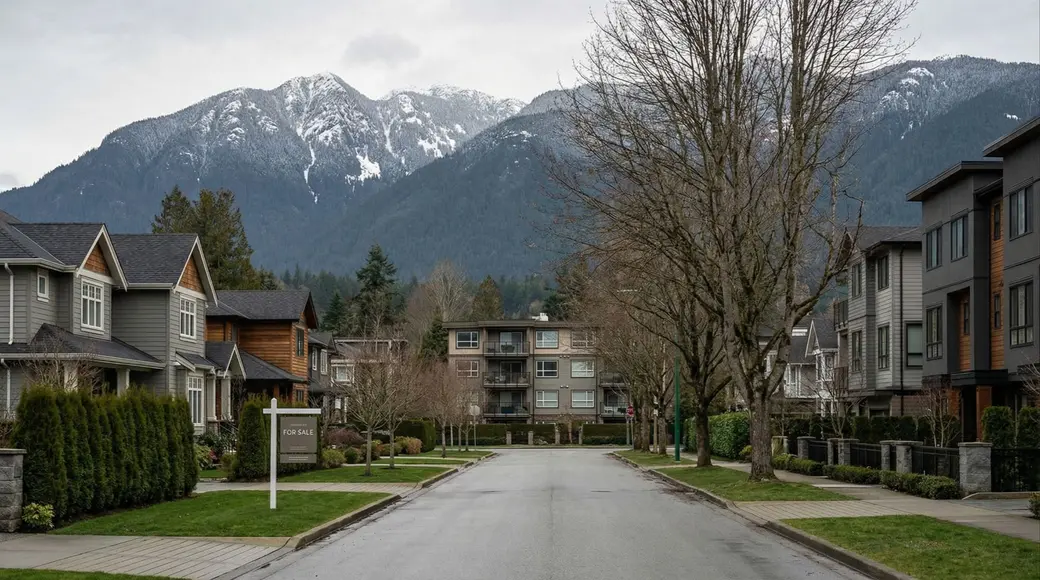
For anyone working in real estate on the North Shore, this data is not abstract. The buyers I work with are living this shift in real time. Younger buyers — the ones who genuinely care about sustainability and the environment — are making housing decisions almost entirely through the lens of affordability and access. Where can I actually get in? What can I realistically own? The environmental credentials of a neighbourhood or a home are a secondary consideration when the primary one is whether you can afford to be there at all.
At the same time, the North Shore's relationship with the natural environment remains one of its most durable value propositions. The buyers who come here — for the mountains, the trails, the water, the forest — are not indifferent to the environment. They have simply had to make practical decisions first. That combination of environmental values and economic pragmatism is shaping what buyers are looking for, what they are willing to compromise on, and where they are ultimately landing.
The Generational Tension Worth Paying Attention To
Perhaps the most telling finding in the 2026 data is the generational one. The cohort most associated with climate activism — adults 18 to 34 — is also the cohort most acutely affected by housing unaffordability. Their stated willingness to pay more for housing solutions (71%) over climate solutions (62%) is not a reversal of their values. It is a reflection of what is bearing down on them most immediately.
This tension — between the world they want to live in and the market they actually have to navigate — is one of the defining features of the current housing conversation. It deserves to be named clearly, not smoothed over with optimism about what the market will eventually deliver.
📱 Only 3% of Canadians Care About Climate Right Now
📱 People Are Choosing Housing Over Climate Change
Debbie Evans | REALTOR®
eXp Realty | West Vancouver & North Shore Markets
If you're navigating the North Shore market right now — whether you're a first-time buyer feeling the affordability pressure directly, or an established buyer thinking about long-term value and what the next decade looks like — these are conversations worth having before you make a move. I work across West Vancouver and North Vancouver and bring both market knowledge and a straight perspective to every client conversation.
This content references polling data published in early 2026. Sources include Business in Vancouver and associated research. This post is for informational and commentary purposes only and does not constitute financial or investment advice.
Categories
- All Blogs (97)
- aboriginal title ruling (2)
- bc housing market (23)
- bc real estate (55)
- Bill C-15 (1)
- build canada homes (8)
- Buyers Guide (4)
- canada strong fund (3)
- Canada-U.S. Trade (2)
- canadian real estate (15)
- Climate Change (2)
- Design & Build (4)
- Dundarave West Vancouver (1)
- Equity Growth (1)
- freehold (1)
- Home Buying Tips (1)
- housing policy (1)
- land claims (2)
- Land Claims / BC Real Estate (1)
- leasehold (1)
- local news (1)
- Lower Lonsdale (2)
- Market & Policy Analysis (1)
- Market Commentary (6)
- market insights (23)
- Multigenerational Living (2)
- North Vancouver Real Estate (19)
- open house (1)
- Open House Security (1)
- presale (1)
- real estate insights (7)
- Real Estate Market & Housing (2)
- Squamish Market Update (7)
- squamish real estate (8)
- squamish update (3)
- Vancouver Real Estate (17)
- West Vancouver Living (15)
- West Vancouver Real Estate (26)
- Whistler Market Update (4)
Recent Posts






Have a Question? Let’s Talk. I’m Here to Help.

North Shore & Vancouver Realtor License ID: 175378
+1(778) 875-4934 | debbie.evans@exprealty.com