
The Carbon Floor: How Climate Policy Is Quietly Setting the Price of Your Next Home
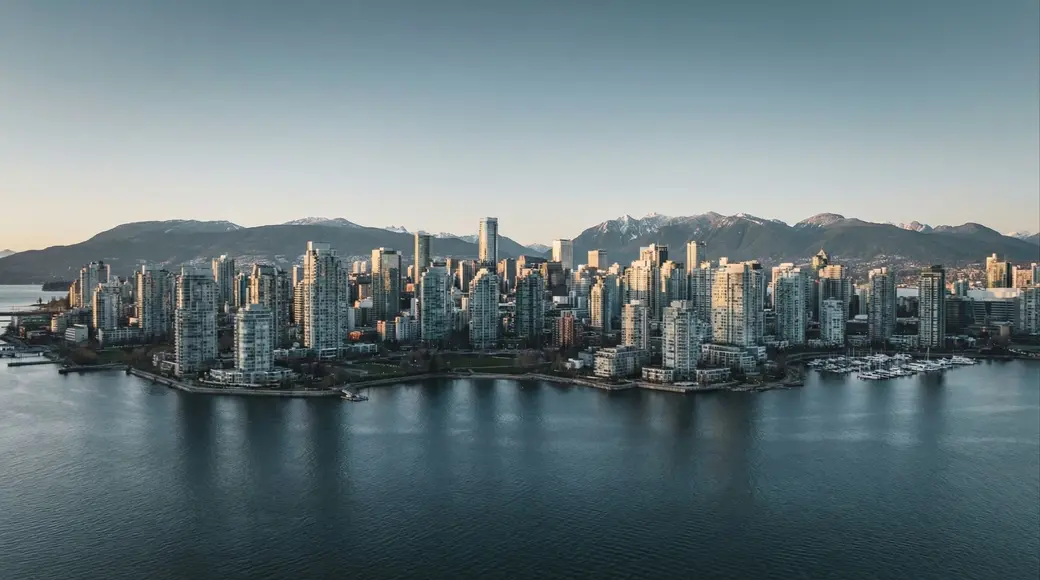
The Carbon Floor: How Climate Policy Is Quietly Setting the Price of Your Next Home
In simple terms — this is about why housing prices don't drop easily, even when the market slows.
Most people focus on interest rates when they try to understand housing costs. That makes sense — rates are visible, they move the headlines, and they directly affect what you can borrow. But they only tell half the story.
The other half lives in the supply chain. When the Bank of Canada cuts rates, it affects what buyers can afford to borrow. It does nothing about what it costs to build a home. That calculus lives in the cost of materials, the diesel bill, and the feasibility spreadsheets of developers who quietly cancel projects that no longer work financially. The carbon tax has its hands in all three.
Three Channels, One Direction
The carbon tax doesn't announce itself with a single line item on a construction budget. It works through compounding channels, each adding a small increment to costs that — when aggregated — fundamentally alter project economics.
Channel 1: The Supply Chain Tax
Concrete, steel, and glass are the bones of any housing project — and among the most energy-intensive products to manufacture. When factories pay more for energy, the cost of those materials rises before a single truck leaves the yard.
This isn't just the gas in the contractor's truck. It's baked into the physical structure of the building itself, invisible on any single invoice but present in every square foot.
Channel 2: Logistics and Freight
Canada's geography is an underappreciated factor in housing costs. Lumber from the interior of British Columbia may travel thousands of kilometres before reaching a job site in the Lower Mainland or Ontario.
Roofing products, windows, fixtures — each leg of that journey carries a fuel surcharge that reflects the carbon cost of diesel. In a country this vast, freight is a significant line item, and carbon pricing ensures that line item grows year over year.
Channel 3: Development Feasibility
This is the mechanism most consequential for the overall market — and the least discussed. Residential development, especially the mid-density infill and condominium construction that Canadian cities need, operates on margins that would make most industries uncomfortable.
The Hidden Supply Problem
A 2–3% increase in total build cost is not an inconvenience for a developer working on a comfortable margin. It is a project cancellation for one working on marginal economics. Every project that dies in a feasibility spreadsheet is a unit that will never exist — suppressing supply and holding a floor under the price of everything already built.
Source: Canadian Home Builders' Association (CHBA)
The Policy Paradox
Here's the contradiction that rarely gets named directly. Government housing policy is now strongly oriented toward increasing urban density — more concrete towers, more mid-rise infill, more steel-frame construction in transit corridors.
The country needs more units, and urban intensification is the stated path. At the same time, carbon policy is making it more expensive to produce the concrete and steel those density targets require — at every stage of manufacturing and logistics.
Density targets become harder to achieve when the materials density requires become more expensive to produce. Supply doesn't increase when the marginal project is no longer viable. These are not abstract concerns — they are mechanics that show up in cancelled permit applications and stalled project timelines.
What This Means for Buyers and Investors
For anyone trying to model where Canadian real estate prices have structural support, the carbon cost story offers something that interest rate projections do not: a floor that is directionally certain.
Rate forecasting is inherently uncertain. Central banks respond to inflation data, employment figures, and global credit conditions — and the direction can change quickly.
But the trajectory of input costs in Canadian construction is not uncertain in the same way. Policy-driven increases to energy costs in manufacturing and logistics, in a country with Canada's geography and supply chains, trend one direction.
The Investor Takeaway
Even a significant rate-cutting cycle — while it would improve affordability on the demand side — would not close the gap between what new construction costs to build and what buyers can pay. The relief would be partial. The structural floor, set by input costs that rate policy doesn't touch, would remain. Properties that already exist carry an increasing premium over replacement cost. That premium is not going away.
Will the Policy Architecture Shift?
The short answer is: eventually, yes — but it will take time. Carbon pricing is politically entrenched. The revenue is built into government budgets. Carving out exemptions for construction materials is complex and sets precedents other industries will immediately push for.
And yet the pressure will build. As housing affordability continues to dominate public concern, the uncomfortable question of what is actively making construction more expensive will increasingly need to be answered. The industry has been raising it quietly for years.
What might a policy adjustment look like? Possibilities include carbon rebates tied to unit production for residential developers, exemptions for specific structural materials used in multi-family housing, or recycling carbon revenues into a dedicated new housing supply fund. None of these are politically costless. All of them would help close a paradox that current policy is simply refusing to name.
Debbie Evans | REALTOR®
eXp Realty | West Vancouver & North Shore Markets
Understanding what drives housing costs — beyond just interest rates — is the conversation worth having before you make your next move. If you're buying, selling, or trying to make sense of where the market is actually going, I'm here to help you see the full picture.
This content is for informational purposes only and does not constitute financial or investment advice. Policy analysis reflects publicly available information and editorial interpretation as of April 2026. Always consult appropriate professionals regarding your specific situation.
Categories
- All Blogs (97)
- aboriginal title ruling (2)
- bc housing market (23)
- bc real estate (55)
- Bill C-15 (1)
- build canada homes (8)
- Buyers Guide (4)
- canada strong fund (3)
- Canada-U.S. Trade (2)
- canadian real estate (15)
- Climate Change (2)
- Design & Build (4)
- Dundarave West Vancouver (1)
- Equity Growth (1)
- freehold (1)
- Home Buying Tips (1)
- housing policy (1)
- land claims (2)
- Land Claims / BC Real Estate (1)
- leasehold (1)
- local news (1)
- Lower Lonsdale (2)
- Market & Policy Analysis (1)
- Market Commentary (6)
- market insights (23)
- Multigenerational Living (2)
- North Vancouver Real Estate (19)
- open house (1)
- Open House Security (1)
- presale (1)
- real estate insights (7)
- Real Estate Market & Housing (2)
- Squamish Market Update (7)
- squamish real estate (8)
- squamish update (3)
- Vancouver Real Estate (17)
- West Vancouver Living (15)
- West Vancouver Real Estate (26)
- Whistler Market Update (4)
Recent Posts






Have a Question? Let’s Talk. I’m Here to Help.

North Shore & Vancouver Realtor License ID: 175378
+1(778) 875-4934 | debbie.evans@exprealty.com