
Carbon Tax Fatigue: The Shift That Will Reshape Canadian Housing Policy
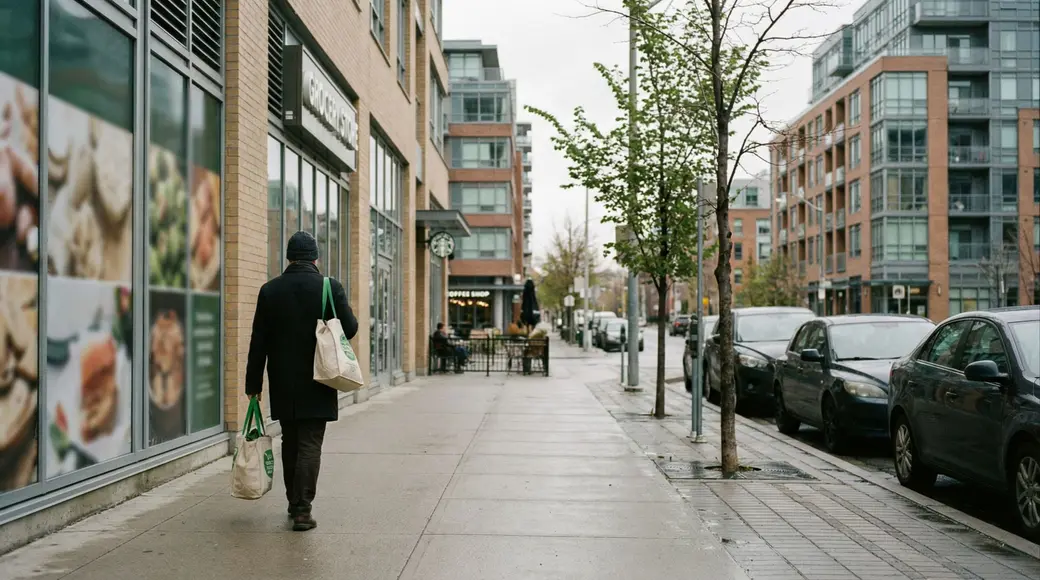
Carbon Tax Fatigue: The Shift That Will Reshape Canadian Housing Policy
Pollsters have a phrase for what's happening: "climate displaced, not disappeared." Canadians haven't rejected the science — 63% still accept climate change as fact. What they've rejected is the luxury of prioritizing it when rent is due, groceries cost more than they did three years ago, and 71% expect living costs to worsen further through 2026.
For real estate watchers, this shift is not merely a political curiosity. It is the precondition for a policy correction that the construction and housing sectors have been quietly anticipating. When the public mandate for climate-first policy collapses, the political calculus around carbon pricing — and the exemptions the building industry has been requesting — fundamentally changes.
What Actually Keeps Canadians Up at Night
The most revealing data isn't about any single issue — it's the ranking. As of March 2026, here is where Canadian priorities actually sit:
- Cost of Living — 64% cite it as a top-three priority. Dominant concern for 18 consecutive months.
- Canada–U.S. Relations / Trump administration — 42% have surged into the top three.
- The Economy (general) — 41%
- Housing Affordability — 29% rank it among their top five concerns.
- Environment / Climate Change — 3% — a 10-point collapse from its August 2021 peak.
Source: Abacus Data, March 2026
How We Got Here: A Timeline
August 2021 — Environmental concern at its peak
13% of Canadians named the environment as their top concern. Post-pandemic momentum, major climate legislation being debated globally, and an affordability crisis that was present but had not yet become the defining political issue.
2022–2023 — The inflation and rate shock
The Bank of Canada's rate hiking cycle — from 0.25% to 5.0% — combined with persistent inflation to crush household budgets. Long-term concerns yielded to immediate survival priorities. Environmental concern began a steady decline.
2024–2025 — Cost of living entrenches as the dominant issue
Carbon pricing reached $80 per tonne. Energy costs, grocery bills, and housing costs compounded. The per-person economic cost of carbon policy is now estimated at over $1,100 annually. "Carbon tax fatigue" entered the mainstream political vocabulary.
February 2026 — 3%
Environmental concern reached its lowest recorded level in modern Canadian polling history. Geopolitical tensions with the United States further crowded the agenda. The survival trade-off is now fully entrenched.
The Jobs vs. Environment Shift
The most politically consequential data point in this cycle is the underlying values shift that makes policy change possible. When asked whether jobs or environmental protection should come first if forced to choose:
- 2020: A dead heat — 50/50. No governing mandate in either direction.
- 2026: 60% now say jobs should come first — a 10-point swing in six years.
Source: inFocus with David Coletto, 2026
Why This Number Matters for Real Estate
A 60/40 split in favour of economic priorities over environmental ones is not a soft preference — it is an electoral permission structure. Governments that read this correctly will pursue adjustments to carbon policy that protect construction and housing supply. For the development industry, this is the number that signals when the political window for carbon relief actually opens.
What This Means for the Real Estate Market
Construction exemptions become politically viable
For the first time, there is sufficient political cover to carve out carbon relief specific to residential construction materials. The public mandate now exists. The question is which government moves first — and how quickly the industry organizes to make the ask clearly and loudly.
The cost floor remains until policy shifts
Until exemptions arrive, carbon pricing continues compounding into materials costs, freight surcharges, and development feasibility. Buyers who don't understand this are misreading where their market floor is set — and why rate cuts alone won't solve the affordability problem.
Marginal projects stay cancelled
The feasibility math for mid-density housing does not improve until input costs ease. Every month of delay is a month of supply that will not exist. The shortage deepens regardless of what rates do.
Existing inventory holds a structural premium
Properties that already exist are insulated from the cost-to-build problem. As new construction feasibility deteriorates, the premium for existing inventory over replacement cost narrows — or inverts entirely in constrained markets like the North Shore and West Vancouver.
What Most Buyers Don't Realize
When the average Canadian buyer looks at housing prices and asks why they remain elevated, they typically receive two answers: interest rates and supply. Both are true. Neither is complete.
The carbon policy layer — adding over $1,100 annually per person in economic burden, baked into the materials and logistics chains that produce new housing — is the factor that most buyers have not priced into their understanding of the market.
Understanding where prices come from matters because it changes how you model where they're going. Interest rates will fluctuate. Carbon policy costs, absent a political correction, trend one direction. A buyer or investor who understands both inputs is better positioned than one who is watching only the Bank of Canada.
Debbie Evans | REALTOR®
eXp Realty | West Vancouver & North Shore Markets
The forces shaping housing prices go well beyond what shows up in the headlines. If you want to understand what's really driving the market — and what it means for your next move — I'm happy to have that conversation. This is the kind of analysis that matters before you buy, sell, or wait.
This content is for informational purposes only and does not constitute financial or investment advice. Public opinion data sourced from Abacus Data, Business in Vancouver, inFocus with David Coletto, and Wealth Professional Canada (March–April 2026). The $1,100 per-person cost estimate reflects recently published economic analysis; individual impact varies by province and household. Always consult appropriate professionals regarding your specific situation.
Categories
- All Blogs (97)
- aboriginal title ruling (2)
- bc housing market (23)
- bc real estate (55)
- Bill C-15 (1)
- build canada homes (8)
- Buyers Guide (4)
- canada strong fund (3)
- Canada-U.S. Trade (2)
- canadian real estate (15)
- Climate Change (2)
- Design & Build (4)
- Dundarave West Vancouver (1)
- Equity Growth (1)
- freehold (1)
- Home Buying Tips (1)
- housing policy (1)
- land claims (2)
- Land Claims / BC Real Estate (1)
- leasehold (1)
- local news (1)
- Lower Lonsdale (2)
- Market & Policy Analysis (1)
- Market Commentary (6)
- market insights (23)
- Multigenerational Living (2)
- North Vancouver Real Estate (19)
- open house (1)
- Open House Security (1)
- presale (1)
- real estate insights (7)
- Real Estate Market & Housing (2)
- Squamish Market Update (7)
- squamish real estate (8)
- squamish update (3)
- Vancouver Real Estate (17)
- West Vancouver Living (15)
- West Vancouver Real Estate (26)
- Whistler Market Update (4)
Recent Posts







Have a Question? Let’s Talk. I’m Here to Help.

North Shore & Vancouver Realtor License ID: 175378
+1(778) 875-4934 | debbie.evans@exprealty.com