
Is Vancouver Shifting from Homeownership to Renting? What the Data Really Shows
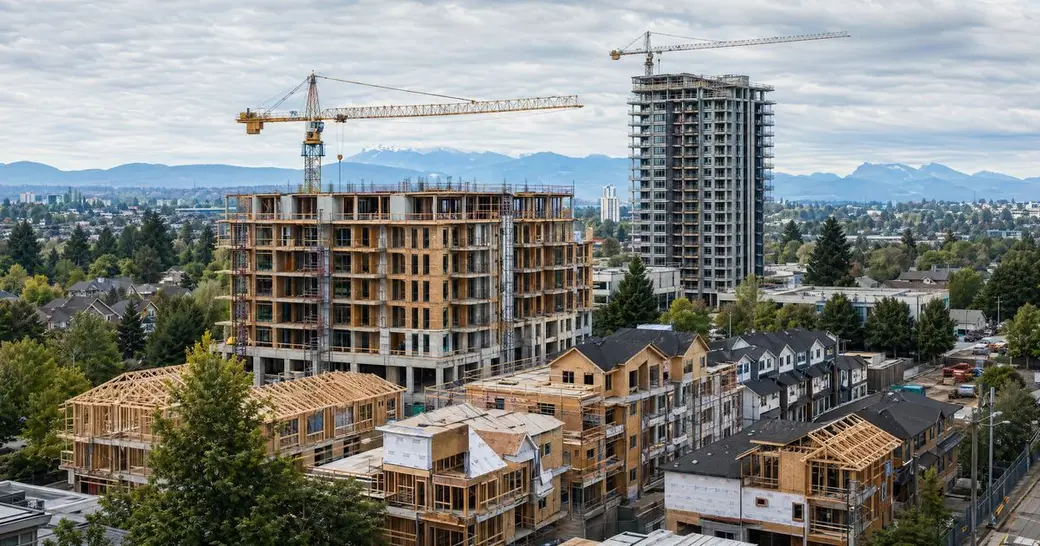
Is Vancouver Shifting from Homeownership to Renting? What the Data Really Shows
86% of new homes completed in the City of Vancouver over the past year were purpose-built rentals. 80% of what's been approved is rental too. Here's what's actually driving that number — and what it means depending on where you sit in the market.
I hear some version of this question constantly, at open houses and over coffee with clients: "Is it still worth buying, or should I just keep renting?" The honest answer still depends on your personal situation — but there's a data story underneath that question worth understanding on its own terms.
So let's look at what's actually being built in this city, why, and what it might mean for the years ahead.
The Headline Numbers
The City of Vancouver tracks its housing delivery against provincial targets, and the most recent reporting cycles tell a consistent story.
Those are City of Vancouver figures specifically — from the municipality's own Provincial Housing Target Order progress reporting.[1,2] Zoom out to the wider region, and the pattern holds: industry pipeline data puts the number of purpose-built rental units under construction across Metro Vancouver at roughly 18,000 to 20,000 as of mid-2025 — compared with an estimated 10,000 units completed across the entire previous decade.[3,4] Whichever way you slice it, rental construction is running at a scale this region has not seen in decades.
An 80/20 rental-to-ownership split in approvals is not just a snapshot of one busy year — it is a forward signal. Approvals today become completions two to four years from now. If the overwhelming majority of what's in the pipeline is rental, that tells you something about the ownership supply that won't be arriving later this decade, not just what's arriving now.
Why the Shift Is Happening
This isn't a mystery, and it isn't a single cause. Three forces are working together.
1. Local Zoning Incentives
The City of Vancouver's Secured Rental Policy makes it considerably easier to get a purpose-built rental project approved than a strata condo project. Rental-only zoning in commercial areas allows six-storey buildings via a development permit — without the rezoning process a condo project would require — along with development cost levy waivers and reduced parking requirements. The policy exists explicitly to close what City staff describe as a "viability gap": rental returns are typically thinner than condo profit margins, so the City built in incentives to make the numbers work for developers.
2. Federal Tax Policy
In late 2023, the federal government raised the GST rebate on new purpose-built rental construction from 36% to 100% for qualifying projects. On a mid-size apartment building, that can represent millions of dollars in tax relief — money a condo project of the same size would not receive. That rebate does not apply to individually sold condo units, which has made rental development meaningfully more attractive to build than it was three years ago.
3. A Slower Condo Market
At the same time incentives for rental have grown, the economics of pre-sale condos have weakened. Higher borrowing costs have made it harder for developers to hit the pre-sale thresholds — often around 70% of units sold — that lenders require before releasing construction financing. Some projects that were originally planned as condos have been converted to rental partway through, simply to keep the project financially viable.
The Condo Market Is Showing the Same Story from the Other Side
If rental construction is surging, the flip side should show up in the resale condo market — and it does.
Vacancy in purpose-built rentals across the region climbed sharply through 2025, and rent growth slowed to its lowest pace in two decades — landlords are now offering incentives like free months and moving allowances that were rare just a few years ago.[5] At the same time, unsold completed condo inventory in the Vancouver region hit record levels through the first half of 2026, and the apartment/condo segment has been the softest part of the resale market, even as detached-home activity has held up better.[6,7]
Some of today's high rental vacancy reflects a one-time effect: a wave of already-approved projects completing at once, plus unsold condos being converted to rental. That's a "pipeline clearing" phenomenon, not necessarily a permanent oversupply. Several industry analysts have flagged that rental starts — new projects breaking ground — have actually begun to soften, which could translate into a tighter rental market again by 2027 or 2028. It's a good moment to be a renter. It may not stay that way indefinitely.
What This Means, Depending on Where You Sit
- The pipeline of new ownership supply is genuinely shrinking, which historically puts upward pressure on resale prices once demand recovers
- Construction takes years — the market can't quickly add ownership supply if buyer demand rebounds
- Current softness in the condo segment may represent a window, but it's worth understanding that window against the pipeline data, not just today's listing prices
- A design-informed read on a specific building or unit — floor plan efficiency, renovation potential, how a unit will hold value over time — matters more when supply is constrained
- More choice and slower rent growth than in several years, with some landlords offering incentives
- The rental supply picture further out is less certain — much of today's supply is a temporary flush, not a permanent structural gain
- The landlord profile is shifting toward larger, more institutional operators as purpose-built rental scales up
- Renting strategically while building capital toward ownership remains a legitimate choice — but it works best with an actual plan, not an open-ended wait
Questions Worth Asking Before You Decide
A Starting Point for Your Own Analysis
- What's my actual time horizon — five years, ten years, or indefinite? The data looks different depending on the answer.
- Am I renting by choice or by constraint right now? If by constraint, what would need to change, and is that realistic in the next 12–24 months?
- Have I run the full cost comparison — strata fees, potential special levies, property transfer tax, and ongoing maintenance — against what I'm paying to rent today?
- If I'm buying, does the building or floor plan I'm considering hold long-term value — through layout, natural light, storage, and renovation potential — or am I just buying the lowest price per square foot?
- If I'm selling, does my property's condition, floor plan, and presentation position it well against a resale market where the condo segment specifically has softened?
My Read on This
I'm not going to tell you the market is about to boom or about to crash — that kind of prediction rarely holds up, and it isn't my job to make it for you. What I will say is that the shift toward purpose-built rental construction in this city is real, it's driven by clear and traceable policy and financing incentives, and it has a genuine forward implication: the ownership supply that isn't being started today won't be available to buyers in 2028 or 2029.
Whether that argues for buying now, waiting, or continuing to rent depends entirely on your own financial position and timeline — not on a single statistic. What I'd rather you walk away with is a clear-eyed understanding of what's actually happening in the construction pipeline, so whatever decision you make is grounded in the real picture rather than market noise in either direction.
Housing markets move in cycles, but construction pipelines move in years. Understanding where today's approvals are quietly shaping tomorrow's inventory is one of the more useful things you can know before you make your next move.
I've spent nearly 40 years working across design, construction, and real estate on this coast, and in that time I've watched entire neighbourhoods change character — sometimes gradually, sometimes seemingly overnight once a policy shift takes hold. What strikes me about this particular moment is how directly you can trace the connection: a zoning incentive or a tax rebate gets introduced, and within a couple of years you can see exactly what it produced on the ground. That's not something I've always been able to say so plainly.
The part I think gets overlooked is what this means for the homes that already exist. As new condo supply thins out, well-designed resale homes — the ones with efficient floor plans, good natural light, and genuine renovation potential — become more valuable relative to what's being built new. If you already own, or you're evaluating a purchase, understanding what makes a floor plan work over the long term matters more in a market like this than it did five years ago.
That's simply where my two professional backgrounds intersect, and it's the lens I bring to every listing and every buyer consultation.
Related Reading
A few other pieces on westvanliving.ca that connect to this topic:
- Why Is This Condo So Much Cheaper? Leasehold vs Freehold in West Vancouver
- The Rental Economy Is Here: What It Means for Buyers, Renters and Homeowners in Canada
- BC's 2,200 Condo Conversion Plan: The Facts Behind the Headlines
- Why Buyers Are Missing Opportunities in Today's Market
Note to Debbie: I've linked the four posts I could confirm exact URLs for from your existing blog. If you'd like North Vancouver Market Update, West Vancouver Market Update, First-Time Buyers, or Downsizing posts added too, send me those slugs and I'll drop them in.
Frequently Asked Questions
Questions I hear regularly from clients about this shift toward rental construction.
Is this trend specific to the City of Vancouver, or does it apply across the region?
Both, with different figures. The 86% completions and 80% approvals numbers are specific to the City of Vancouver's own reporting to the Province. The broader rental construction boom — the roughly 18,000–20,000 units under construction — is a Metro Vancouver regional figure. The underlying drivers (zoning incentives, federal tax policy, condo market softness) apply across most of the region, though the scale varies by municipality.
Does this mean it's a bad time to buy a condo?
Not necessarily — it means the supply picture for ownership housing is thinning at the same time the resale condo segment has softened, which is a genuinely unusual combination. Whether that's a buying opportunity or a reason for caution depends on your personal timeline, financing, and what you're buying. I'd encourage anyone weighing this decision to look at the specific building and unit, not just the macro trend.
Will rental vacancy stay this high?
Uncertain. Current vacancy is elevated partly because of a wave of projects completing at once and some condo-to-rental conversions — both somewhat temporary effects. At the same time, rental construction starts have begun to soften, which several industry analysts believe could tighten the rental market again within a few years. I'd treat today's conditions as a snapshot, not a permanent state.
Why would a developer build rental instead of condos if condos historically made more money?
Because the relative economics have changed. Zoning incentives and cost levy waivers reduce the cost of building rental. The enhanced federal GST rebate reduces it further. Meanwhile, pre-sale condo financing has become harder to secure because fewer buyers are willing to commit at pre-construction pricing in the current rate environment. Rental has become the more financeable, more approvable option for many projects — not necessarily the more profitable one in every case, but often the more viable one to actually build.
Sources & References
- [1] City of Vancouver — Provincial Housing Target Order Progress Report, Oct 2024–Sept 2025, presented to Council November 13, 2025. council.vancouver.ca
- [2] City of Vancouver — "Vancouver surpasses 2025 housing targets with decades-high rental delivery," April 8, 2026. vancouver.ca
- [3] Avison Young — British Columbia Multi-Family Market Overview, H1 2025, published September 24, 2025.
- [4] Rennie & Associates — Fall 2025 Multi-Family Landscape Report, Metro Vancouver rental pipeline data.
- [5] Canada Mortgage and Housing Corporation (CMHC) — 2025 Rental Market Report, released December 11, 2025.
- [6] CMHC — Vancouver CMA unsold condo inventory data, May 2026.
- [7] Greater Vancouver Realtors (GVR) — Monthly MLS® market statistics, May–June 2026.
Debbie Evans | REALTOR® & Registered Interior Designer
eXp Realty | West Vancouver, North Shore & Sea-to-Sky Markets
Nearly 40 years of combined real estate and design experience means every conversation with me covers both sides of a decision — the market data and what a property can actually become. If you'd like to talk through what this shift means for your own buying, selling, or renting decision, I'm happy to have that conversation.
westvanliving.ca · debbie.evans@exprealty.com · +1 (778) 875-4934
This article is prepared for general informational and educational purposes only and does not constitute financial, legal, or investment advice. It reflects publicly available data from the City of Vancouver, CMHC, and industry sources as cited above, current as of publication. Housing market conditions change; readers should verify current figures and consult qualified professionals before making buying, selling, or investment decisions. This article does not take a position for or against any specific housing policy and is intended to report and explain publicly available data.
Categories
- All Blogs (103)
- aboriginal title ruling (2)
- B.C. Policy (1)
- bc housing market (24)
- bc real estate (56)
- Bill C-15 (1)
- build canada homes (10)
- Buyers Guide (4)
- canada strong fund (4)
- Canada-U.S. Trade (2)
- canadian real estate (16)
- Canadian Real Estate & Housing (1)
- Climate Change (2)
- Cost of Living (2)
- Design & Build (4)
- Dundarave West Vancouver (1)
- Equity Growth (1)
- Federal Policy (1)
- freehold (1)
- Home Buying Tips (1)
- Household Debt (1)
- housing policy (1)
- land claims (2)
- Land Claims / BC Real Estate (1)
- leasehold (1)
- local news (1)
- Lower Lonsdale (2)
- Market & Policy Analysis (1)
- Market Commentary (6)
- market insights (23)
- Market Intelligence (1)
- Mortgage Delinquencies (1)
- Mortgage Renewals (1)
- Multigenerational Living (2)
- North Vancouver Real Estate (19)
- open house (1)
- Open House Security (1)
- presale (1)
- real estate insights (7)
- Real Estate Market & Housing (2)
- renovation (1)
- Squamish Market Update (7)
- squamish real estate (8)
- squamish update (3)
- Vancouver Real Estate (17)
- West Vancouver Living (15)
- West Vancouver Real Estate (26)
- Whistler Market Update (4)
Recent Posts







Have a Question? Let’s Talk. I’m Here to Help.

North Shore & Vancouver Realtor License ID: 175378
+1(778) 875-4934 | debbie.evans@exprealty.com