
BC Housing Policy Explained: Condo Conversions, Bill C-26, PST Changes & Government Borrowing
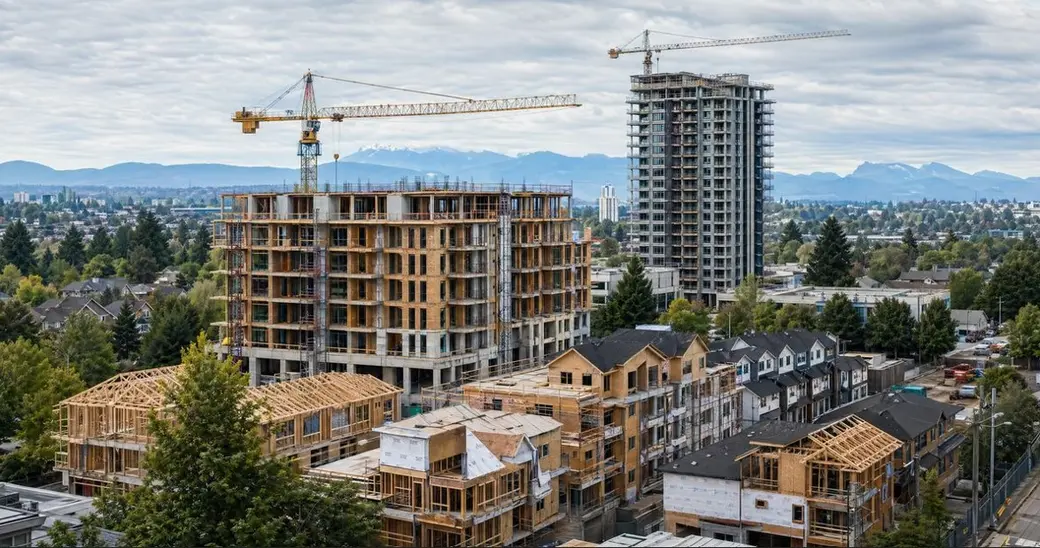
BC Housing Policy Explained: Condo Conversions, Bill C-26, PST Changes & Government Borrowing
BC's Housing Blitz: What Just Happened, Who Pays, and What It Means Long Term
Over the past several weeks, I've published a series of articles examining different aspects of BC's housing policies, market conditions, and development economics. This article brings those pieces together to explain how recent announcements fit into the bigger picture.
In the span of 48 hours last week, two major federal housing bills received Royal Assent and a multi-billion dollar BC condo conversion program was announced. The announcements came quickly, the language was complex, and questions have been coming in steadily since.
I work on both sides of this industry — as a REALTOR® and as a Registered Interior Designer with nearly 40 years in real estate, design, and construction. I'm not here to tell you what to think about any of this. What I can do is lay out what actually happened, where the money comes from, and what questions remain unanswered — so you can form your own informed view.
First: Who Actually Owns These Condos?
One of the most common questions I've received is a fundamental one — and it changes everything about how you interpret this program.
The condos being discussed in BC's conversion program are not homes that people are being displaced from. They are unsold developer inventory — completed units that were built, finished, and never purchased by an end buyer. The developer still holds title. Nobody lives in them.
The BC condo conversion program targets completed, unsold condominium units currently held on developers' balance sheets. These are not occupied homes. They are finished units sitting in inventory, with developers carrying the financing costs on empty product in a market where presales have stalled. While program eligibility will depend on the specific criteria established by BC Housing and participating developers, the announcement is directed at completed, unsold developer inventory.
This is an important distinction. The government is not purchasing homes from private individuals. It is proposing to purchase unsold inventory from developers — converting that inventory into rent-to-own or affordable housing units using public funding.
Once that is understood, a different set of questions naturally follows: At what price? On what terms? And who bears the risk if the program doesn't perform as projected?
Those details have not been fully disclosed publicly. I covered the condo conversion announcement in detail when it was first released — you can read that post here: BC's 2,200 Condo Conversion Plan: What Buyers, Sellers and Taxpayers Need to Know.
What Just Passed — and When
The legislative activity of the past two weeks has been significant. Here is the timeline as it actually unfolded:
BC's provincial budget projects a record deficit of $13.3 billion for 2026–27. The budget includes an expansion of PST to certain professional services, effective October 1, 2026, and an increase to the lowest personal income tax bracket. Nineteen business organizations called for the PST expansion to be scrapped within a week of the budget being tabled.
Prime Minister Carney and Premier Eby jointly announce a program to convert over 2,200 unsold Metro Vancouver condos into affordable housing units through the Build Communities Strong Fund. BC's provincial share is approximately $150 million in direct funding, with the remainder structured as leveraged financing through BC Housing.
This legislation establishes Build Canada Homes as a federal Crown corporation with a mandate to deliver affordable housing at scale. Critics in Parliament questioned why a new Crown corporation was needed when CMHC already exists with a similar mandate. The government's position was that Build Canada Homes would operate with greater flexibility and speed.
This legislation authorizes up to $1.713 billion in payments from the federal Consolidated Revenue Fund to provinces and territories to support housing supply. The amount and timing of each payment are determined by the Minister of Finance. During Senate debate, senators raised concerns about the absence of an allocation formula, reporting requirements, and clawback provisions. The government's stated rationale was that flexibility was needed to move funding quickly.
Bill C-26 authorizes $1.713 billion in federal payments with no legislated allocation formula, no mandatory reporting requirements, and no clawback provisions in the bill as passed. The Minister of Finance determines the amount and timing of each payment. Researchers have also raised questions about how Build Canada Homes will measure its own performance as it ramps up operations.
Where Does the Money Come From?
This is the question I've seen asked most often — and it deserves a direct answer.
There is no dedicated fund, no earmarked tax, and no specific revenue stream set aside to pay for these programs. The money comes from the same place all government spending comes from when revenues don't cover expenditures: borrowing.
BC borrows from domestic and international capital markets, the Canada Pension Plan Investment Fund, institutional lenders, and provincial trusteed funds — issuing bonds that pay interest until repaid. The province's taxpayer-supported debt has nearly doubled in three fiscal years.
Governments routinely borrow to finance long-term infrastructure and public programs. The discussion is not whether borrowing occurs, but how much borrowing is sustainable over time.
The PST expansion and the personal income tax rate increase introduced in Budget 2026 are projected to raise approximately $500 million this year. That is a general revenue measure applied against a $13.3 billion deficit. It is not earmarked for the condo conversion program or any specific housing initiative.
When a government runs a deficit, it spends more than it collects. The difference is borrowed. That borrowing accumulates as debt. That debt carries interest. When interest costs rise — as they are projected to do significantly in BC over the next three years — every dollar spent on debt servicing is a dollar unavailable for programs and services. By 2028–29, BC is projected to spend 8 cents of every revenue dollar on debt interest, up from under 5 cents today.
I explored BC's broader fiscal and economic picture in more detail in an earlier post: BC Has Everything. So Why Are We Still Borrowing?
The Contradiction Worth Understanding
Some industry observers have noted that several of these policies appear to pull in different directions simultaneously.
Reducing Development Costs
- Bill C-26 sends $1.713B to provinces to reduce development fees
- BC–Canada partnership purchases unsold inventory to relieve developer balance sheets
- Build Canada Homes mandated to accelerate affordable housing delivery
Policies That May Increase Development Costs
- PST expanded to architectural and engineering services — October 1, 2026
- PST expanded to accounting and other professional fees used in development
- PST is not refundable for businesses the way GST is — it is a permanent cost embedded in every project
Architectural, engineering, and accounting services are not discretionary on a development project. They are required before a permit is issued, before financing is secured, and before any revenue is generated. Adding PST to those services increases early-stage capital exposure — precisely when development projects carry the most financial risk and the least ability to absorb additional cost.
I covered the PST expansion in detail, including its specific impact on pre-construction professional services, in an earlier post: At a Time of Housing Urgency, Is Adding 7% PST to Pre-Construction Costs Moving Us Forward?
The Question Existing Owners Are Asking
There is a perspective on this program that hasn't received much attention in the broader coverage — the existing owner in the same building.
Consider this scenario. A buyer purchased a unit in a new development at market price — say $1,000,000. The market softened. They closed anyway, honouring their contract, because walking away would have meant losing their deposit and potential legal exposure. They now own in that building.
The government then purchases the unsold units next door — at an undisclosed price — and makes them available through a rent-to-own program.
What did the incoming rent-to-own occupant pay for their unit?
The pricing terms for government-acquired units have not been publicly disclosed. The purchase price, the rent-to-own terms, and the eventual buy-out structure are not part of the public announcement to date.
Did the incoming occupant require the same down payment?
Rent-to-own programs typically operate differently from conventional mortgage financing. Qualification criteria, deposit requirements, and monthly payment structures vary by program design. Those details have not been released for this specific initiative.
What does a discounted adjacent unit do to the existing owner's assessed value?
This is an open question. Comparable sales are a primary input in property assessment. If government-acquired units transact at below-market prices — and if those transactions become part of the public record — there is a legitimate question about how that affects assessed values and market comparables in the same building.
Is there any disclosure or compensation mechanism for existing owners in affected buildings?
As of publication, these details have not been publicly released.
These are not rhetorical questions. They are the practical questions any existing owner in an affected building would reasonably and legitimately ask. They remain unanswered in the public record as of the date of this post.
Does This Help or Hinder Long-Term Housing Supply?
That is ultimately the most important question — and it is genuinely difficult to answer with confidence at this stage, because several key variables are unknown.
What the program does in the short term is clear: it relieves pressure on developers holding unsold completed inventory, it converts some of that inventory to affordable use, and it signals government willingness to intervene in a stalled market.
What is less clear is what it does to the long-term incentive structure of the development industry. Some economists and market participants have questioned whether programs of this nature could influence future development risk calculations — and whether that encourages more building or simply raises the floor on acceptable risk.
What is also less clear is the long-term fiscal impact. BC's debt-to-GDP ratio was approximately 15% pre-pandemic. It is projected to reach 37.4% by 2028–29 — its highest level on record. Every new program added to a deficit budget adds to that trajectory.
Short-term interventions that address a current inventory problem can be appropriate policy tools. The more substantive question is whether the cumulative effect of increasing development costs through PST expansion, purchasing distressed inventory through public funds, and financing both through record deficit borrowing produces better housing outcomes over a 10- to 20-year horizon — or simply defers the structural problem while adding to the debt load that future taxpayers will service.
I am not in a position to answer that question definitively. Nobody is yet. But it is the right question to be asking — and it is worth tracking as the program details become clearer over the coming months.
A Note on My Perspective
I want to be transparent about where I sit in relation to all of this — because I think it matters for how you read my commentary.
I am a REALTOR® with eXp Realty serving buyers and sellers across West Vancouver, North Vancouver, Vancouver, and the Sea-to-Sky corridor. I am also a Registered Interior Designer with nearly 40 years of experience in residential design, construction, and renovation. I work on development projects as a designer. I have buyer and seller clients directly affected by market conditions. I have watched the design industry contract alongside the development pipeline.
I have no partisan position on any of this. My interest is in understanding what is actually happening — because my clients need that clarity to make informed decisions, and because I believe the housing conversation in this province deserves more than simplified narratives in either direction.
My goal with every post is the same: share the facts as I find them, explain what I am seeing, and let readers form their own views.
Categories
- All Blogs (102)
- aboriginal title ruling (2)
- B.C. Policy (1)
- bc housing market (23)
- bc real estate (56)
- Bill C-15 (1)
- build canada homes (10)
- Buyers Guide (4)
- canada strong fund (4)
- Canada-U.S. Trade (2)
- canadian real estate (16)
- Canadian Real Estate & Housing (1)
- Climate Change (2)
- Cost of Living (2)
- Design & Build (4)
- Dundarave West Vancouver (1)
- Equity Growth (1)
- Federal Policy (1)
- freehold (1)
- Home Buying Tips (1)
- Household Debt (1)
- housing policy (1)
- land claims (2)
- Land Claims / BC Real Estate (1)
- leasehold (1)
- local news (1)
- Lower Lonsdale (2)
- Market & Policy Analysis (1)
- Market Commentary (6)
- market insights (23)
- Mortgage Delinquencies (1)
- Mortgage Renewals (1)
- Multigenerational Living (2)
- North Vancouver Real Estate (19)
- open house (1)
- Open House Security (1)
- presale (1)
- real estate insights (7)
- Real Estate Market & Housing (2)
- renovation (1)
- Squamish Market Update (7)
- squamish real estate (8)
- squamish update (3)
- Vancouver Real Estate (17)
- West Vancouver Living (15)
- West Vancouver Real Estate (26)
- Whistler Market Update (4)
Recent Posts








Have a Question? Let’s Talk. I’m Here to Help.

North Shore & Vancouver Realtor License ID: 175378
+1(778) 875-4934 | debbie.evans@exprealty.com