
BC's 2,200 Condo Conversion Plan: What Buyers, Sellers and Taxpayers Need to Know
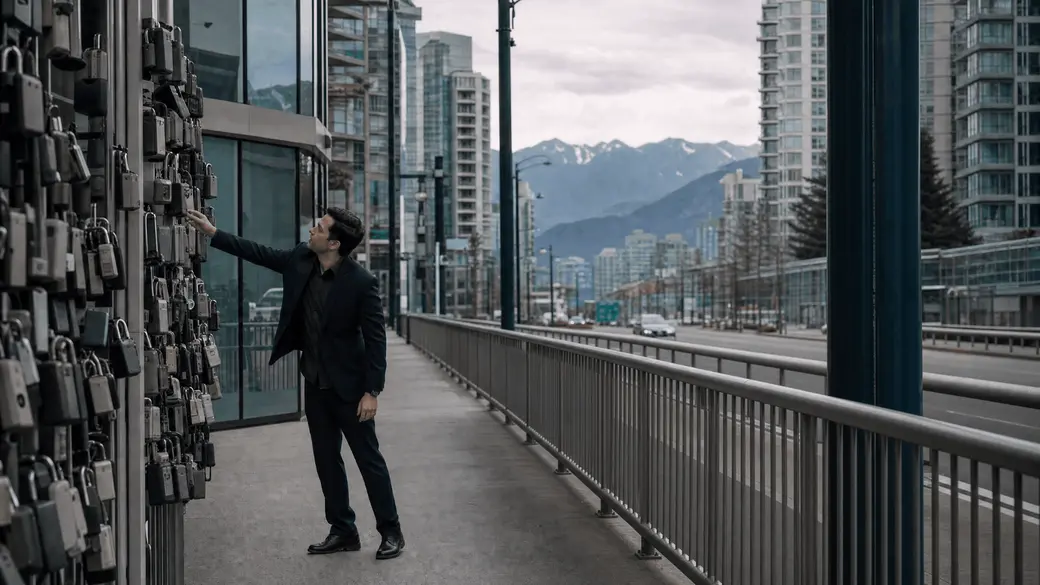
BC's 2,200 Condo Conversion Plan: What Buyers, Sellers and Taxpayers Need to Know
On June 18, 2026, Prime Minister Mark Carney and BC Premier David Eby announced that the federal and provincial governments would purchase more than 2,200 vacant condominium units in British Columbia and convert them into affordable housing. The announcement has generated significant debate — described as a bailout by critics, a pragmatic housing solution by proponents, and a transparency concern by others. This post sets aside the political noise and focuses on what the plan actually involves, what questions remain unanswered, and what it means for buyers, sellers, and investors in Metro Vancouver.
What Was Actually Announced
The condo conversion program is one component of a broader $5 billion federal investment in BC infrastructure called the Build Communities Strong Fund, announced alongside a series of related housing measures.
The specific condo component — described as the Canada–British Columbia Partnership on Condo Conversion — will use what the Prime Minister's Office called "innovative financing tools" to acquire more than 2,200 completed but unsold condominium units across Metro Vancouver and convert them into affordable homes.
The program will be advanced through Build Canada Homes and BC Housing. The government stated it represents "one of the fastest and most efficient ways to increase housing supply." Carney indicated units would otherwise sit empty "potentially for another couple of years."
What the government did not announce — and had not yet disclosed at the time of writing — is the price it plans to pay for the units, whether it intends to purchase them below market value, the specific buildings and developers involved, or the criteria for selecting which units qualify.
Why There Are 4,376 Vacant Units in the First Place
To evaluate the plan fairly, you need to understand the market conditions that created the inventory problem it is designed to address.
Metro Vancouver's condo pre-sale model ran at full speed through 2020 and 2021, fuelled by low interest rates, strong investor demand, and consistent price appreciation. Developers launched projects at prices that reflected expectations of continued upward movement in the market. Many of those projects have since completed — but in a number of cases, buyers who purchased at peak pricing have been unable to qualify for mortgages at completion, or have walked away from deposits on units that appraised below contracted prices.
The Market Context
According to CMHC's Spring 2026 Housing Supply Report, condominium presales collapsed in both Vancouver and Toronto as unsold inventories climbed. In Metro Vancouver specifically, the agency noted the highest unsold condominium inventory at completion among all major Canadian markets it tracked. The West Vancouver attached market is currently sitting at a 9% sales ratio year-to-date — deep buyer's market territory — with median prices down and days on market at 35 days, compared to a historical average of 26. The problem is real and well-documented in the data.
This context is important because it shapes how the government's intervention should be evaluated. The inventory that exists is not a temporary supply blip — it reflects a structural mismatch between what was built, at what price, and what the current market can absorb.
What Analysts and Industry Observers Are Saying
The announcement drew immediate and substantive responses from real estate analysts, economists, and industry representatives. Their perspectives are worth examining carefully — they address the mechanics of the plan rather than the politics of it.
The Market Analysis Case Against
Daniel Foch, a real estate analyst and host of The Canadian Real Estate Show, described the plan as a response to what he characterised as a "condo absorption problem" — one that, in his view, is being reframed as an affordable housing initiative. His argument is structural: if these units were clearing naturally at affordable prices under standard market terms, government intervention would not be necessary. He observed that developers built too much of the wrong product at prices end-users can no longer absorb — and that the program's design effectively engineers the buyer, the financing, and the subsidy stack rather than allowing the market to find its own correction point.
Vancouver REALTOR® and market commentator Steve Saretsky agreed that the new condo market had effectively reached a standstill — investor-buyers and first-time buyers have both largely withdrawn. While he described the government's sudden entry as a significant shift — effectively making the state the largest single buyer of condos in the province — he questioned whether acquiring brand-new, higher-priced inventory is an economically viable mechanism for achieving long-term affordability.
SFU urban planner Andy Yan, whose analysis showed that a third of all vacant condos in Metro Vancouver are priced above $1 million, raised a related concern: whether public funds are being deployed to absorb inventory that was priced beyond what most affordability-focused buyers could ever reach — even after conversion.
The Fraser Institute has drawn a parallel to similar developer-relief packages in other provinces, arguing that when a developer builds the wrong homes at the wrong price, the appropriate consequence is absorbing those losses — not having them transferred to public accounts. Their economic critique is that artificial insulation from market corrections distorts the incentive structure for future development decisions and slows the reallocation of land and labour toward more viable projects.
The Case For the Program
Chris Atchison, President of the BC Construction Association, offered the clearest defence from an industry perspective. He argued that the funding injects much-needed certainty into a construction sector that has been hit hard by supply chain disruptions, labour shortages, and elevated borrowing costs. From his vantage point, this capital provides builders with the baseline confidence required to maintain project pipelines and keep the construction workforce employed — concerns that are real and well-documented in the sector.
The government's own framing, through Premier Eby, is that existing completed housing is available that people would love to occupy but cannot afford to purchase at current market prices — and that converting it to affordable use is faster and more cost-effective than building from scratch, which in Metro Vancouver involves land acquisition, rezoning, environmental review, and multi-year construction timelines.
The Unanswered Question That Matters Most
Neither the federal nor provincial government has disclosed what price it intends to pay for these units. That single number determines whether this is a genuine affordability initiative or a market intervention that transfers risk from developers to public accounts. If the government pays meaningfully below-market bulk prices and attaches enforceable affordability conditions with real income thresholds, the public interest case strengthens considerably. If it pays at or near market value with limited conditions, the criticism from analysts like Foch and Saretsky — that this is inventory relief for developers rather than an affordability program for residents — becomes harder to dismiss. As of this writing, that number has not been made public.
The Rennie Connection — What Is Documented
Several commentators have raised questions about the relationship between the government's housing policy direction and BC's development industry — specifically the role of Bob Rennie, the founder of Rennie Real Estate, one of Metro Vancouver's largest condo marketing firms.
What is documented in credible news sources is this:
- In March 2025, Rennie hosted a Liberal Party fundraiser at his company's premises in Vancouver. The guest list of 146 attendees included a significant concentration of Metro Vancouver's development industry leadership — among them the CEOs and principals of Polygon, Pinnacle, Westbank, Concord Pacific, Wesbild, Macdonald Development, Beedie, Reliance Properties, Holborn, and Wall Financial. Also on the list: Thind Properties founder Daljit Thind. (Sources: theBreaker.news / Bob Mackin Substack, March 2026)
- At a March 4, 2025 industry panel event (Conversations Live, hosted by Postmedia), Rennie publicly stated he was "working with Carney" on housing policy. He described a proposed rental program involving CMHC financing and foreign buyer participation. (Sources: Business in Vancouver, Castanet, March 2025)
- Rennie is a long-standing Liberal Party fundraiser in BC.
What Is Not Established
Whether any specific policy in the June 18 announcement was shaped by Rennie's input has not been established by credible reporting. The documented facts are that a major industry figure with close political ties to the current government publicly claimed involvement in housing policy discussions, hosted a fundraiser attended by much of the development industry, and that the government subsequently announced a program that benefits developers holding unsold inventory. Whether those facts constitute meaningful policy influence, or coincidence, is a judgment call — not an established fact. Readers and journalists should apply that distinction carefully.
The Thind Properties Question
One of the sharper criticisms of the government program concerns Thind Properties — a Burnaby-based developer whose projects were placed into receivership in late 2024 and early 2025, representing one of the most significant real estate insolvencies in Metro Vancouver's recent history.
Between November 2024 and January 2025, BC Supreme Court judges placed multiple Thind Properties projects into receivership — District Northwest in Surrey, Highline and Minoru Square (both financed by KingSett Mortgage Corporation with combined debt of approximately $250 million), and subsequently the Eclipse condo tower in Burnaby. In total, Thind's mortgage obligations with KingSett alone approached half a billion dollars. Court proceedings resulted in the loss of personal assets previously held by Daljit Thind. Pre-sale purchasers who had contracted at peak prices found themselves completing on units worth less than they had agreed to pay.
The Selective Intervention Problem
The government's condo acquisition plan is structured to assist developers holding unsold completed inventory. Thind Properties' situation was different in structure — its projects were largely pre-sold — and those proceedings proceeded through receivership without reported public intervention. Pre-sale purchasers who deposited tens of thousands of dollars — in some cases saving for years — found themselves in court trying to recover their money or complete on units worth less than contracted. Daljit Thind was listed as an attendee at the same fundraiser, per the published guest list reported by Bob Mackin. The question of why some developer losses are absorbed by government acquisition while others are allowed to proceed through receivership has not been addressed publicly.
What This Means for the Local Market
Setting the political debate aside, the practical market implications for buyers and sellers in West Vancouver, North Vancouver, and Metro Vancouver more broadly are worth considering carefully.
If You Are Buying
- Government acquisition of 2,200+ units removes inventory from the resale pool — potentially reducing direct competition in some buildings and price brackets
- It does not resolve the fundamental affordability gap in freehold West Vancouver real estate — those are separate markets
- The West Vancouver attached market remains a deep buyer's market at 9% sales ratio YTD — that condition does not change immediately because of this announcement
- If affordability conditions are attached to acquired units, they will not compete directly with market-priced resale product
- Watch for disclosure of purchase pricing — it will tell you whether the government cleared the market at distressed prices or near-market prices
If You Are Selling
- Removal of 2,200+ completed but unsold units from competing inventory is marginally positive for active sellers in the condo segment
- The deeper issue — buyer hesitation rooted in affordability constraints and rate sensitivity — is not addressed by this program
- West Vancouver attached median prices are down significantly from their 2024 peak; $1,105,000 YTD 2026 vs. $1,333,204 in 2024
- Days on market have extended to 35 days YTD — pricing strategy and presentation matter more than in prior years
- Long-term, if the program succeeds in converting units to affordable housing, it adds supply in the sub-market segment — which does not directly compete with the $1M+ West Vancouver condo market
Metro Vancouver has approximately 4,376 completed vacant condos — a 76% increase year-over-year. The government is proposing to acquire roughly half of them. Whatever one thinks of the policy mechanism, the underlying supply-demand picture in this market is not simple. There is simultaneously a shortage of genuinely affordable housing, an oversupply of high-priced condos no one can afford, and a construction pipeline that is not producing new starts at the rate needed for future supply. The policy debate tends to flatten that complexity. The market does not.
The Opportunity Cost Question: Is This the Best Use of $3 Billion?
Beyond the mechanics of the program itself, there is a broader question that receives less attention in the housing debate: whether a federal commitment of this scale, directed specifically at private-sector condominium inventory in British Columbia, represents the most productive use of public capital at this moment in Canada's economic cycle.
Opportunity cost analysis is not partisan. It is a standard economic lens — the recognition that every dollar committed to one purpose is unavailable for another. Several other sectors present documented, quantifiable funding deficits that are worth holding alongside the $3 billion condo figure.
Healthcare Infrastructure
Canada's emergency room system is under documented and severe pressure. A March 2026 CBC News investigation found emergency departments operating at over 100% capacity in multiple provinces, patients spending up to six days in overflow stretchers, and the president of the Canadian Medical Association describing the system as close to a "breaking point." In Ontario specifically, the province's hospital association estimated in early 2026 that the hospital sector requires approximately $2.7 billion in stabilisation funding — a figure comparable to the BC condo acquisition program — to address structural operational deficits. The Ontario government provided $1.1 billion, which the association described as insufficient. Over 6.5 million Canadians currently have no family doctor or regular primary care provider.
Scale Comparison
The Ontario Hospital Association's documented stabilisation funding gap of $2.7 billion for 2025–26 is roughly equivalent to the federal and provincial investment in the BC condo conversion program. Both represent significant capital commitments. Whether the condo program offers a stronger return on public investment than addressing hospital infrastructure deficits is a question of priority-setting that has not been publicly examined in the context of this announcement.
Public Transit — TransLink's Structural Deficit
Metro Vancouver's own transit authority presents a directly local comparison. TransLink has been facing a documented $600 million annual operating deficit starting in 2026 — the result of declining gas tax revenue, inflation, and stagnant fares. The agency warned repeatedly that without new stable funding, it faced cuts of up to 50% of bus services, elimination of the West Coast Express, and reductions to SkyTrain and SeaBus frequency. Those cuts were projected to remove up to 500,000 people from walking distance of transit service and cost the regional economy over $1 billion annually.
A provincial plan announced in 2025 provided $312 million over three years — enough to fund services to end of 2027 and cut the structural deficit in half. It did not resolve the underlying funding gap. Simultaneously, Canada's three largest transit authorities — TransLink, the TTC, and Montreal's STM — jointly petitioned the federal government in early 2026 to reverse a $5 billion reduction to the Canada Public Transit Fund that the Carney government had already implemented. The timing of that transit funding reduction alongside a $3 billion condo acquisition commitment has not been directly addressed in the government's public communications.
Critical Minerals — Already a Priority, But Underfunded Relative to Need
It is worth noting that the federal government has not ignored critical minerals — in March 2026 at the PDAC Convention, Natural Resources Canada announced over $3.6 billion in new programs and investments in the sector, including a $2 billion Critical Minerals Sovereign Fund and the $1.5 billion First and Last Mile Fund for mining infrastructure. Canada's positioning in copper, lithium, and nickel supply chains has received meaningful capital commitment.
The relevant comparison is not whether critical minerals are funded, but whether the scale of capital deployed in real estate inventory relief — a market correction problem — is proportionate to the strategic economic return, relative to sectors where Canada has genuine competitive advantages and long-term global demand on its side.
The Broader Question for Taxpayers and Business Owners
As a business owner navigating the current economic environment, the question you are likely asking is a practical one: does this deployment of public capital create the conditions for a stronger economy — better infrastructure, a healthier workforce, more competitive industries — or does it primarily protect private sector actors from the consequences of decisions made during an overheated market cycle?
That is not a question with a clean answer. Stabilising the construction sector has real economic value — construction employment, supply chain activity, and the downstream spending that follows are legitimate economic multipliers. The government's rationale is not without merit. But the opportunity cost exists regardless of whether the government acknowledges it. The $3 billion committed to this program is unavailable for the hospital stabilisation gap in Ontario, the TransLink structural deficit in Metro Vancouver, or the critical minerals infrastructure that positions Canada in the global supply chain of the next decade.
A Note on Framing
This section presents the opportunity cost question as economic analysis, not advocacy. Reasonable people can weigh these trade-offs differently. The purpose here is to ensure readers — particularly those who own property, pay taxes, or run businesses in this region — have a complete picture of what this capital commitment represents within the broader context of Canada's fiscal priorities. The government's priorities are a legitimate subject of public scrutiny, particularly when the spending is concentrated in one industry, in one province, with undisclosed terms.
What to Watch For
This story is not finished. Several developments in the coming months will determine whether the criticism or the defence of this program proves more accurate:
- Purchase price disclosure. When the government publishes what it paid per unit, that figure will clarify whether this is a below-market bulk acquisition or a market-rate purchase that effectively transfers developer losses to public accounts.
- Affordability conditions. What income thresholds, rent restrictions, and resale limitations will be attached to the converted units? Without those details, the affordability claim cannot be evaluated.
- Developer selection criteria. Which developers' units are being acquired, and by what process? Transparency here matters given the publicly reported connections between senior development industry figures and the government's fundraising activities.
- Thind pre-sale buyer outcomes. Dozens of purchasers who deposited money on Thind Properties units are in court attempting to recover funds or invalidate contracts. How those cases resolve — and whether any public intervention is forthcoming — will be instructive.
Frequently Asked Questions
What exactly did the government announce on June 18?
Prime Minister Carney and BC Premier Eby announced the Canada–British Columbia Partnership on Condo Conversion, a program to acquire more than 2,200 completed but unsold condominium units in Metro Vancouver and convert them into affordable homes. The announcement was part of a broader $5 billion Build Communities Strong Fund commitment. Neither government disclosed the purchase price, the buildings involved, or the specific affordability conditions that will apply.
Why are there so many vacant completed condos in Metro Vancouver?
CMHC data shows 4,376 completed vacant condos in Metro Vancouver as of May 2026 — a 76% increase from the same period in 2025. The primary cause is a mismatch between the prices at which units were pre-sold during the 2020–2022 peak market and current market values. Some pre-sale buyers cannot qualify for mortgages at completion; others have walked away from deposits rather than complete on units that have appraised below contracted prices. Developers who priced based on continued appreciation are now holding completed inventory they cannot sell at original pricing.
Is this a bailout for developers?
That depends on the price the government pays and the conditions it attaches. If the government acquires units at meaningfully below-market bulk prices with enforceable affordability requirements, it is closer to a public interest acquisition. If it pays near-market prices with limited conditions, it is closer to a direct transfer of developer losses to public accounts — which is the concern raised by analysts including Daniel Foch, Steve Saretsky, Andy Yan of SFU, and economists at the Fraser Institute. The answer to this question requires information the government has not yet released. Both characterisations are in active circulation among credible market observers; neither has been fully confirmed or refuted by the data available as of this writing.
What is Bob Rennie's connection to this, and why does it matter?
Bob Rennie is the founder of Rennie Real Estate, one of Metro Vancouver's largest condo marketing firms. He publicly stated in March 2025 that he was "working with Carney" on housing policy, and hosted a Liberal Party fundraiser attended by much of the development industry's leadership — including principals of the firms that hold the type of unsold inventory the government is now proposing to acquire. These are documented facts from credible news sources. Whether his involvement shaped specific policy outcomes is not established by available reporting. The connection is relevant context for evaluating the program; it is not, by itself, evidence of wrongdoing or improper influence.
What happened to Thind Properties, and why did they not receive help?
Thind Properties, a Burnaby-based developer, had multiple projects placed into receivership between November 2024 and January 2025 following mortgage defaults totalling nearly half a billion dollars with KingSett Mortgage Corporation. The projects affected include District Northwest in Surrey, Highline and Minoru Square, and the Eclipse tower in Burnaby. Court proceedings resulted in the loss of personal assets previously held by Daljit Thind. Dozens of pre-sale purchasers who deposited funds are now in BC Supreme Court attempting to recover deposits or invalidate contracts. Unlike the situation the new program is designed to address — completed unsold inventory — Thind's projects involved pre-sold units in receivership, and no comparable public intervention has been reported. Why the government's assistance is structured to benefit holders of completed unsold inventory but not developers or pre-sale buyers caught in receivership is a legitimate policy question that has not been publicly addressed.
How does this affect the West Vancouver and North Shore condo market?
The most direct effect is a modest reduction in competing inventory for sellers of market-priced condos — if 2,200+ units are removed from the unsold pool, there is less direct competition in certain buildings and price brackets. However, the West Vancouver attached market remains in deep buyer's market territory at a 9% YTD sales ratio, with median prices of $1,105,000 YTD 2026, down from $1,333,204 in 2024. The program does not address the fundamental buyer hesitation rooted in affordability and rate sensitivity. If converted units carry income and resale restrictions, they will occupy a different market segment than the $800,000–$2M+ West Vancouver condo market and will not compete directly with resale product at those price points.
Will this make housing more affordable in Metro Vancouver?
In the short term, converting 2,200 units to affordable housing adds supply in a market that needs it at lower price points — and does so faster than new construction could. The speed argument is real. What the program does not address is the underlying structural problem: Metro Vancouver is not building new ownership-oriented supply at anything close to the rate needed, land costs remain among the highest in North America, and the developers who might build future supply are in financial distress. Converting existing inventory to affordable housing is one part of a much larger equation that this program alone does not solve.
Sources & References
- Prime Minister's Office — "Canada and British Columbia Forge New Partnership to Accelerate Housing," June 18, 2026. pm.gc.ca
- CBC News — "Critics slam government plan to 'bail out' sagging condo sector in BC," Katie DeRosa, June 19, 2026. cbc.ca
- CBC News / CTV News — "Time for a housing bailout? Metro Vancouver condo developer sounds alarm on industry in crisis." ctvnews.ca
- Daniel Foch — The Canadian Real Estate Show — Analysis of BC condo absorption problem and government acquisition program. YouTube
- Steve Saretsky — Vancouver Market Commentary — Condo market standstill and government entry as buyer of last resort, June 2026.
- Andy Yan, SFU City Program — Quoted in CBC News, June 19, 2026; analysis of vacant condo pricing distribution in Metro Vancouver.
- Fraser Institute — "Ontario Government Should Not Bail Out Housing Developers Who Made Bad Decisions" — economic analysis of developer relief programs. fraserinstitute.org
- Chris Atchison, BC Construction Association — Quoted in Yahoo News / CBC, June 2026, on construction sector impact and program rationale. ca.news.yahoo.com
- Business in Vancouver — "BC condo marketer Bob Rennie pitches incoming PM on foreign investment in rentals," March 13, 2025. biv.com
- theBreaker.news — "Who's who of Vancouver real estate attended Mark Carney fundraiser," March 15, 2025. thebreaker.news
- Bob Mackin / Substack — "Vancouver real estate heavyweights turn out for Carney at Rennie's HQ," March 24, 2026. bobmackin.substack.com
- CBC News — "Dozens of pre-sale purchasers in troubled Lower Mainland condo tower claim contracts invalid," Jason Proctor, May 26, 2026. cbc.ca
- CBC News — "Developer accused of misappropriating funds, as 2 more condo projects placed into receivership," December 14, 2024. cbc.ca
- Business in Vancouver / STOREYS — "Thind Properties project placed into receivership, two more under threat," November 2024. biv.com
- CMHC — Completed and Unabsorbed Units data, Metro Vancouver, May 2026. cmhc-schl.gc.ca
- CMHC — Spring 2026 Housing Supply Report, March 2026.
- SnapStats® / Greater Vancouver REALTORS® — West Vancouver Attached Market Statistics, YTD May 2026.
- CBC News — "Canada's hospital emergency rooms have hit a breaking point. Is it the new normal?" Natalie Stechyson, March 13, 2026. cbc.ca
- Canadian Centre for Policy Alternatives (CCPA) — "Failure, by design: Ontario's deepening hospital funding crisis," May 2026. Ontario Hospital Association estimate of $2.7 billion stabilisation funding requirement for 2025–26. policyalternatives.ca
- Global News — "Plan to avert TransLink cuts includes fare and tax hikes, new provincial cash," April 10, 2025. TransLink $600M annual operating deficit documentation. globalnews.ca
- Daily Hive / Urbanized — "Canada's three largest public transit authorities warn federal funding delays are driving up project costs," May 2026. Canada Public Transit Fund $5B reduction under Carney government. dailyhive.com
- Natural Resources Canada — "Government of Canada invests to unlock Canada's critical minerals advantage," March 3, 2026. $3.6B in critical minerals programs announced at PDAC 2026. canada.ca
Debbie Evans | REALTOR® & Registered Interior Designer
eXp Realty | West Vancouver · North Shore · Sea-to-Sky
Nearly 40 years of combined real estate and design experience across West Vancouver, the North Shore, and the Sea-to-Sky corridor. My role is to help clients understand the market as it actually is — not as the headlines describe it. If you are trying to evaluate how these policy changes affect your buying, selling, or investment strategy, that conversation is worth having before you make your next move.
westvanliving.ca · debbie.evans@exprealty.com
This article is prepared for informational and educational purposes only. It does not constitute legal, financial, or investment advice. All information is sourced from publicly available news reporting, government communications, and MLS market data as referenced above. Market statistics are sourced from SnapStats® / Greater Vancouver REALTORS® MLS data through May 2026. Readers should seek independent legal, financial, and real estate advice before making any property decision. The connections and associations described in this post are drawn from credible published sources. No finding or inference of wrongdoing, improper conduct, or undue influence is intended or should be drawn beyond what is explicitly established in those sources.
Categories
- All Blogs (98)
- aboriginal title ruling (2)
- bc housing market (23)
- bc real estate (56)
- Bill C-15 (1)
- build canada homes (8)
- Buyers Guide (4)
- canada strong fund (3)
- Canada-U.S. Trade (2)
- canadian real estate (15)
- Climate Change (2)
- Design & Build (4)
- Dundarave West Vancouver (1)
- Equity Growth (1)
- freehold (1)
- Home Buying Tips (1)
- housing policy (1)
- land claims (2)
- Land Claims / BC Real Estate (1)
- leasehold (1)
- local news (1)
- Lower Lonsdale (2)
- Market & Policy Analysis (1)
- Market Commentary (6)
- market insights (23)
- Multigenerational Living (2)
- North Vancouver Real Estate (19)
- open house (1)
- Open House Security (1)
- presale (1)
- real estate insights (7)
- Real Estate Market & Housing (2)
- renovation (1)
- Squamish Market Update (7)
- squamish real estate (8)
- squamish update (3)
- Vancouver Real Estate (17)
- West Vancouver Living (15)
- West Vancouver Real Estate (26)
- Whistler Market Update (4)
Recent Posts








Have a Question? Let’s Talk. I’m Here to Help.

North Shore & Vancouver Realtor License ID: 175378
+1(778) 875-4934 | debbie.evans@exprealty.com