
Deep Cove North Vancouver Real Estate: What Buyers Need to Know in 2026

Deep Cove North Vancouver Real Estate: What Buyers Need to Know in 2026
The Village at the End of the Road — and Why That's Exactly the Point
Deep Cove is the neighbourhood that people describe in terms that sound like fiction until you've been there. A protected cove on Indian Arm, surrounded by forest and mountains, with a village strip of kayak rentals, bakeries, and local restaurants that draws visitors from across the Lower Mainland — and a residential community that treats all of that as simply the backdrop to daily life. It is one of the most distinctive and genuinely irreplaceable neighbourhoods in all of Metro Vancouver, and for the right buyer, it represents a way of living that cannot be found anywhere else.
An Overview of the Area
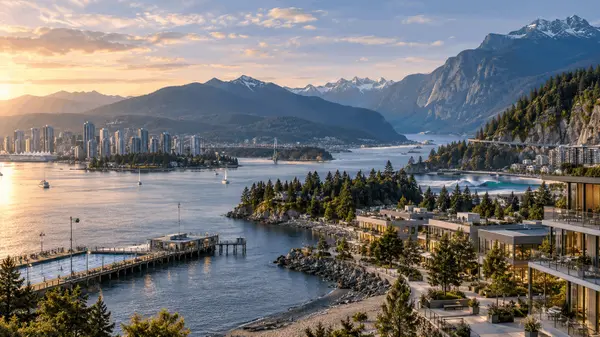
Deep Cove sits at the eastern terminus of North Vancouver, nestled at the head of Indian Arm — a spectacular fjord that extends 40 kilometres north from Burrard Inlet into the Coast Mountains. The cove itself is protected, calm, and visually extraordinary — ringed by forested slopes that rise steeply from the water's edge and reflect in the inlet on still mornings in a way that stops people in their tracks.
The village is small and deliberate. Deep Cove Honey Doughnuts, Cove Bike Shop, a handful of restaurants and cafés, a kayak outfitter, and the public wharf define the commercial strip. It is not a comprehensive retail environment — and residents understand that. The appeal is not convenience. It is character, community, and the particular quality of a place that has held its identity against significant pressure to become something more generic.
Residential streets climb from the cove up through forested hillsides, with homes ranging from original waterfront cottages to mid-century ranchers to newer custom builds on elevated lots with views across the inlet and toward the mountains of the Garibaldi Range beyond. The sense of geographic separation from the rest of the Lower Mainland is real and intentional — Deep Cove is accessed by a single road in, and that physical characteristic shapes everything about the community that has formed here.
Lifestyle and Walkability
Deep Cove's walkability is unique — not broad, but intensely local. The village core is walkable from a meaningful number of residential streets, and what it offers within that compact radius is genuinely special: waterfront access, kayak launches, trails to Quarry Rock and the Baden-Powell, coffee, and a community gathering point that functions in the way that village cores are supposed to but rarely do anymore.
Quarry Rock — one of the most popular short hikes in the entire Lower Mainland, with its panoramic view over Indian Arm — begins at the end of the village. The Baden-Powell Trail connects Deep Cove to the broader North Shore trail network. Kayaking, paddleboarding, and sailing on Indian Arm are available year-round from the public wharf and the kayak rental shop. The outdoor lifestyle here is not aspirational — it is simply what daily life looks like.
For daily needs beyond the village, residents drive to Parkgate Village — approximately ten minutes away — which provides a full grocery store, pharmacy, and retail services. The commute to downtown Vancouver runs 35 to 50 minutes by car, with limited bus service. Deep Cove is emphatically car-dependent for anything beyond the village itself, and the single-road access means that peak-hour traffic on Dollarton Highway requires honest assessment from buyers who commute regularly.
Seycove Secondary serves Deep Cove and has a well-regarded arts and outdoor education programme that mirrors the character of the community. Deep Cove Elementary feeds into it. For families, the school community here is as tight-knit as the neighbourhood itself.
Real Estate and Pricing
Deep Cove is an almost exclusively detached market. Supply is structurally constrained by geography — the neighbourhood is bounded by water, park, and mountain on three sides — and inventory at any given time is among the lowest of any residential community in Metro Vancouver. When properties come to market here, they attract serious attention quickly.
Detached Homes
Detached pricing in Deep Cove ranges from approximately $1.9M for older, smaller homes in need of updating to $5M and above for waterfront properties or significant custom homes with inlet views. The median sits in the $2.5M to $3.2M range — a premium that reflects both the scarcity of supply and the irreplaceable nature of what the neighbourhood delivers. Waterfront and direct inlet-view properties trade at the upper end and are rarely available.
The Scarcity Premium
Deep Cove carries a scarcity premium that is justified by genuine supply constraint. The neighbourhood cannot expand — there is simply no land available to develop in any meaningful way. The existing housing stock is what it is, and turnover is low among residents who have committed to the Deep Cove lifestyle. Buyers who understand that scarcity as a structural feature — rather than a temporary market condition — tend to approach the pricing here with more patience and fewer objections.
Value Perspective
Deep Cove pricing appears high relative to other North Vancouver detached markets until you account for what cannot be quantified in a price per square foot: the inlet, the village, the trails, the community identity, and the geographic separation that makes Deep Cove feel like a different world from the rest of Metro Vancouver. Buyers who have lived there consistently describe it as the only neighbourhood they've ever owned in where the experience exceeded what they paid for. That is not a common thing to hear in real estate — and it is worth taking seriously.
Pros and Cons
What Works Here
- Indian Arm waterfront and cove access — one of the most dramatic natural settings in Metro Vancouver
- Quarry Rock and Baden-Powell trail access directly from the village
- Genuine, irreplaceable village character on Deep Cove village strip
- Year-round kayaking, paddleboarding, and sailing from the public wharf
- Exceptionally tight-knit community with strong identity
- Structurally constrained supply supports long-term value
- Seycove Secondary — strong arts and outdoor education programme
- One of the most photographed and loved neighbourhoods in all of BC
What to Consider
- Single road in and out — peak-hour traffic on Dollarton Highway is a genuine constraint
- Car-dependent for daily needs beyond the village
- Commute to downtown Vancouver is 35–50 minutes under normal conditions
- Weekend tourist traffic in the village during peak seasons
- Very limited inventory — suitable properties rarely come to market
- Older housing stock requires thorough inspection
- Limited transit service
What Buyers Often Overlook
The Single-Road Access Reality
Deep Cove's geographic isolation is its greatest asset and its most significant practical constraint. There is one road in and one road out — Dollarton Highway — and during peak commute hours, summer weekends, and any incident on that corridor, travel times can extend significantly. For buyers who commute daily to downtown Vancouver or who have schedules that require reliable peak-hour access, this is not a theoretical concern. It is the most important lifestyle variable to stress-test before committing to a Deep Cove purchase.
The Weekend Village Traffic
Deep Cove's village attracts visitors from across the Lower Mainland, particularly in summer. On weekend mornings, the parking lots fill early, the lineup at the doughnut shop extends down the street, and the cove fills with kayakers and paddleboarders from rental operations. For residents who embrace this as part of the neighbourhood's energy, it is charming. For those who expected consistent quiet, it requires adjustment. Understanding what the village looks and feels like on a July Saturday morning — versus a Tuesday in November — is important context before deciding this is your neighbourhood.
The Age and Condition of the Housing Stock
Much of Deep Cove's residential inventory was built between the 1950s and 1980s. The condition of individual properties varies widely, and the marine environment — salt air, humidity, and the particular demands of coastal living — accelerates wear on structures that have not been consistently maintained. A thorough inspection by someone with experience in coastal residential construction is essential before committing to any Deep Cove purchase.
Buyer's Note
Deep Cove is one of those neighbourhoods where the emotional pull is so strong that buyers sometimes underweight the practical variables. The single road access, the commute, and the condition of the older housing stock are all real considerations that deserve the same weight as the cove, the trails, and the village. The neighbourhood delivers everything it promises — but only for buyers whose lifestyle and logistics can genuinely accommodate what living there actually requires.
Who Deep Cove is Best For
- Water and outdoor lifestyle buyers for whom daily access to Indian Arm, kayaking, hiking, and a waterfront village is the central definition of quality of life
- Remote workers and professionals with flexible schedules who can manage the commute on their own terms and want a living environment that is genuinely extraordinary
- Families who want to raise children in a specific kind of community — tight-knit, nature-connected, with a school that reflects those values
- Long-term hold buyers who understand the structural supply constraint and are buying for the experience as much as the investment
- Buyers relocating from comparable coastal communities — the Gulf Islands, the Sunshine Coast, smaller BC coastal towns — who want that quality of community within reach of a major city
- Anyone who has visited Deep Cove and immediately understood — this neighbourhood self-selects its buyers more completely than almost any other in Metro Vancouver
Final Summary
Deep Cove is not a neighbourhood for everyone — and it would be less extraordinary if it were. The single road, the commute, the seasonal village traffic, the limited daily services: these are not flaws in the product. They are the price of admission to a community and a setting that has no equivalent anywhere in Metro Vancouver.
The buyers who belong here already know it — often from a single visit. What they need is the preparation to buy correctly: understanding the commute honestly, inspecting the older housing stock thoroughly, and identifying the specific properties within the neighbourhood that deliver the inlet access, the trail proximity, and the view quality that justify what Deep Cove commands.
Debbie Evans | REALTOR®
eXp Realty | West Vancouver & North Shore Markets
Deep Cove properties move quickly and with limited public exposure. If this is where you're heading, preparation matters — knowing which properties are worth pursuing, what the older housing stock will cost to bring to standard, and whether your lifestyle genuinely fits what living here requires. I bring both the market knowledge and the construction insight to that conversation. Reach out before the right property moves without you.
This content is for informational purposes only and does not constitute financial or investment advice. Market data is based on current MLS® listings and recent sales activity and is subject to change. Always consult appropriate professionals regarding your specific situation.
Deep Cove North Vancouver Real Estate: What Buyers Need to Know in 2026
The Village at the End of the Road — and Why That's Exactly the Point
Deep Cove is the neighbourhood that people describe in terms that sound like fiction until you've been there. A protected cove on Indian Arm, surrounded by forest and mountains, with a village strip of kayak rentals, bakeries, and local restaurants that draws visitors from across the Lower Mainland — and a residential community that treats all of that as simply the backdrop to daily life. It is one of the most distinctive and genuinely irreplaceable neighbourhoods in all of Metro Vancouver, and for the right buyer, it represents a way of living that cannot be found anywhere else.
An Overview of the Area
Deep Cove sits at the eastern terminus of North Vancouver, nestled at the head of Indian Arm — a spectacular fjord that extends 40 kilometres north from Burrard Inlet into the Coast Mountains. The cove itself is protected, calm, and visually extraordinary — ringed by forested slopes that rise steeply from the water's edge and reflect in the inlet on still mornings in a way that stops people in their tracks.
The village is small and deliberate. Deep Cove Honey Doughnuts, Cove Bike Shop, a handful of restaurants and cafés, a kayak outfitter, and the public wharf define the commercial strip. It is not a comprehensive retail environment — and residents understand that. The appeal is not convenience. It is character, community, and the particular quality of a place that has held its identity against significant pressure to become something more generic.
Residential streets climb from the cove up through forested hillsides, with homes ranging from original waterfront cottages to mid-century ranchers to newer custom builds on elevated lots with views across the inlet and toward the mountains of the Garibaldi Range beyond. The sense of geographic separation from the rest of the Lower Mainland is real and intentional — Deep Cove is accessed by a single road in, and that physical characteristic shapes everything about the community that has formed here.
Lifestyle and Walkability
Deep Cove's walkability is unique — not broad, but intensely local. The village core is walkable from a meaningful number of residential streets, and what it offers within that compact radius is genuinely special: waterfront access, kayak launches, trails to Quarry Rock and the Baden-Powell, coffee, and a community gathering point that functions in the way that village cores are supposed to but rarely do anymore.
Quarry Rock — one of the most popular short hikes in the entire Lower Mainland, with its panoramic view over Indian Arm — begins at the end of the village. The Baden-Powell Trail connects Deep Cove to the broader North Shore trail network. Kayaking, paddleboarding, and sailing on Indian Arm are available year-round from the public wharf and the kayak rental shop. The outdoor lifestyle here is not aspirational — it is simply what daily life looks like.
For daily needs beyond the village, residents drive to Parkgate Village — approximately ten minutes away — which provides a full grocery store, pharmacy, and retail services. The commute to downtown Vancouver runs 35 to 50 minutes by car, with limited bus service. Deep Cove is emphatically car-dependent for anything beyond the village itself, and the single-road access means that peak-hour traffic on Dollarton Highway requires honest assessment from buyers who commute regularly.
Seycove Secondary serves Deep Cove and has a well-regarded arts and outdoor education programme that mirrors the character of the community. Deep Cove Elementary feeds into it. For families, the school community here is as tight-knit as the neighbourhood itself.
Real Estate and Pricing
Deep Cove is an almost exclusively detached market. Supply is structurally constrained by geography — the neighbourhood is bounded by water, park, and mountain on three sides — and inventory at any given time is among the lowest of any residential community in Metro Vancouver. When properties come to market here, they attract serious attention quickly.
Detached Homes
Detached pricing in Deep Cove ranges from approximately $1.9M for older, smaller homes in need of updating to $5M and above for waterfront properties or significant custom homes with inlet views. The median sits in the $2.5M to $3.2M range — a premium that reflects both the scarcity of supply and the irreplaceable nature of what the neighbourhood delivers. Waterfront and direct inlet-view properties trade at the upper end and are rarely available.
The Scarcity Premium
Deep Cove carries a scarcity premium that is justified by genuine supply constraint. The neighbourhood cannot expand — there is simply no land available to develop in any meaningful way. The existing housing stock is what it is, and turnover is low among residents who have committed to the Deep Cove lifestyle. Buyers who understand that scarcity as a structural feature — rather than a temporary market condition — tend to approach the pricing here with more patience and fewer objections.
Value Perspective
Deep Cove pricing appears high relative to other North Vancouver detached markets until you account for what cannot be quantified in a price per square foot: the inlet, the village, the trails, the community identity, and the geographic separation that makes Deep Cove feel like a different world from the rest of Metro Vancouver. Buyers who have lived there consistently describe it as the only neighbourhood they've ever owned in where the experience exceeded what they paid for. That is not a common thing to hear in real estate — and it is worth taking seriously.
Pros and Cons
What Works Here
- Indian Arm waterfront and cove access — one of the most dramatic natural settings in Metro Vancouver
- Quarry Rock and Baden-Powell trail access directly from the village
- Genuine, irreplaceable village character on Deep Cove village strip
- Year-round kayaking, paddleboarding, and sailing from the public wharf
- Exceptionally tight-knit community with strong identity
- Structurally constrained supply supports long-term value
- Seycove Secondary — strong arts and outdoor education programme
- One of the most photographed and loved neighbourhoods in all of BC
What to Consider
- Single road in and out — peak-hour traffic on Dollarton Highway is a genuine constraint
- Car-dependent for daily needs beyond the village
- Commute to downtown Vancouver is 35–50 minutes under normal conditions
- Weekend tourist traffic in the village during peak seasons
- Very limited inventory — suitable properties rarely come to market
- Older housing stock requires thorough inspection
- Limited transit service
What Buyers Often Overlook
The Single-Road Access Reality
Deep Cove's geographic isolation is its greatest asset and its most significant practical constraint. There is one road in and one road out — Dollarton Highway — and during peak commute hours, summer weekends, and any incident on that corridor, travel times can extend significantly. For buyers who commute daily to downtown Vancouver or who have schedules that require reliable peak-hour access, this is not a theoretical concern. It is the most important lifestyle variable to stress-test before committing to a Deep Cove purchase.
The Weekend Village Traffic
Deep Cove's village attracts visitors from across the Lower Mainland, particularly in summer. On weekend mornings, the parking lots fill early, the lineup at the doughnut shop extends down the street, and the cove fills with kayakers and paddleboarders from rental operations. For residents who embrace this as part of the neighbourhood's energy, it is charming. For those who expected consistent quiet, it requires adjustment. Understanding what the village looks and feels like on a July Saturday morning — versus a Tuesday in November — is important context before deciding this is your neighbourhood.
The Age and Condition of the Housing Stock
Much of Deep Cove's residential inventory was built between the 1950s and 1980s. The condition of individual properties varies widely, and the marine environment — salt air, humidity, and the particular demands of coastal living — accelerates wear on structures that have not been consistently maintained. A thorough inspection by someone with experience in coastal residential construction is essential before committing to any Deep Cove purchase.
Buyer's Note
Deep Cove is one of those neighbourhoods where the emotional pull is so strong that buyers sometimes underweight the practical variables. The single road access, the commute, and the condition of the older housing stock are all real considerations that deserve the same weight as the cove, the trails, and the village. The neighbourhood delivers everything it promises — but only for buyers whose lifestyle and logistics can genuinely accommodate what living there actually requires.
Who Deep Cove is Best For
- Water and outdoor lifestyle buyers for whom daily access to Indian Arm, kayaking, hiking, and a waterfront village is the central definition of quality of life
- Remote workers and professionals with flexible schedules who can manage the commute on their own terms and want a living environment that is genuinely extraordinary
- Families who want to raise children in a specific kind of community — tight-knit, nature-connected, with a school that reflects those values
- Long-term hold buyers who understand the structural supply constraint and are buying for the experience as much as the investment
- Buyers relocating from comparable coastal communities — the Gulf Islands, the Sunshine Coast, smaller BC coastal towns — who want that quality of community within reach of a major city
- Anyone who has visited Deep Cove and immediately understood — this neighbourhood self-selects its buyers more completely than almost any other in Metro Vancouver
Final Summary
Deep Cove is not a neighbourhood for everyone — and it would be less extraordinary if it were. The single road, the commute, the seasonal village traffic, the limited daily services: these are not flaws in the product. They are the price of admission to a community and a setting that has no equivalent anywhere in Metro Vancouver.
The buyers who belong here already know it — often from a single visit. What they need is the preparation to buy correctly: understanding the commute honestly, inspecting the older housing stock thoroughly, and identifying the specific properties within the neighbourhood that deliver the inlet access, the trail proximity, and the view quality that justify what Deep Cove commands.
Debbie Evans | REALTOR®
eXp Realty | West Vancouver & North Shore Markets
Deep Cove properties move quickly and with limited public exposure. If this is where you're heading, preparation matters — knowing which properties are worth pursuing, what the older housing stock will cost to bring to standard, and whether your lifestyle genuinely fits what living here requires. I bring both the market knowledge and the construction insight to that conversation. Reach out before the right property moves without you.
This content is for informational purposes only and does not constitute financial or investment advice. Market data is based on current MLS® listings and recent sales activity and is subject to change. Always consult appropriate professionals regarding your specific situation.
Frequently Asked Questions — Deep Cove
Common questions from buyers considering Deep Cove in 2026.
Is Deep Cove worth the commute to downtown Vancouver?
For buyers who work downtown, the commute is 35 to 50 minutes depending on traffic — longer than most North Shore neighbourhoods. Whether it is worth it depends entirely on how central the natural environment is to your daily life. Buyers who thrive in Deep Cove typically regard the commute as an acceptable trade for living beside Indian Arm, Quarry Rock, and one of the most distinct village communities in Metro Vancouver.
What are property prices like in Deep Cove?
Deep Cove is almost entirely a detached market with very limited inventory. Pricing generally starts around $1.9M for entry-level homes and rises well above $5M for waterfront properties on Indian Arm. Because supply is so constrained, well-priced properties attract strong interest quickly. Buyers should be prepared to move decisively when something suitable appears.
What is the single-road access issue buyers should know about?
Deep Cove is accessed via a single road corridor, which means traffic can back up significantly during summer weekends and peak commute hours. This is not a dealbreaker for most residents — they tend to plan around it — but it is a genuine lifestyle factor that buyers should experience firsthand before committing to a purchase.
Is Deep Cove good for families?
Deep Cove is excellent for families who prioritize an outdoor lifestyle, a strong community identity, and a safe village-scale environment for children. Seycove Secondary has a well-regarded arts and outdoor education programme that reflects the neighbourhood's character. The tight-knit community and abundance of recreational opportunities — kayaking, hiking, swimming — make it particularly appealing to families who want their children to grow up with genuine access to nature.
What should buyers look out for in Deep Cove properties?
Much of Deep Cove's housing stock was built from the 1950s through the 1980s. The marine environment — salt air and coastal humidity — accelerates wear on structures that have not been consistently maintained. A thorough home inspection by an inspector experienced with North Shore coastal construction is essential. Some properties also sit on sloped lots, so understanding drainage, retaining walls, and usable outdoor space is important before making an offer.
Does Deep Cove hold its value well over time?
Deep Cove has historically held its value well due to extreme supply constraint and the irreplaceable nature of its setting. There is simply no other neighbourhood like it on the North Shore. That scarcity supports pricing through market cycles in a way that more abundant neighbourhoods cannot replicate. Waterfront and view properties command the strongest premiums and tend to be the most resilient over time.
Categories
- All Blogs (97)
- aboriginal title ruling (2)
- bc housing market (23)
- bc real estate (55)
- Bill C-15 (1)
- build canada homes (8)
- Buyers Guide (4)
- canada strong fund (3)
- Canada-U.S. Trade (2)
- canadian real estate (15)
- Climate Change (2)
- Design & Build (4)
- Dundarave West Vancouver (1)
- Equity Growth (1)
- freehold (1)
- Home Buying Tips (1)
- housing policy (1)
- land claims (2)
- Land Claims / BC Real Estate (1)
- leasehold (1)
- local news (1)
- Lower Lonsdale (2)
- Market & Policy Analysis (1)
- Market Commentary (6)
- market insights (23)
- Multigenerational Living (2)
- North Vancouver Real Estate (19)
- open house (1)
- Open House Security (1)
- presale (1)
- real estate insights (7)
- Real Estate Market & Housing (2)
- Squamish Market Update (7)
- squamish real estate (8)
- squamish update (3)
- Vancouver Real Estate (17)
- West Vancouver Living (15)
- West Vancouver Real Estate (26)
- Whistler Market Update (4)
Recent Posts







Have a Question? Let’s Talk. I’m Here to Help.

North Shore & Vancouver Realtor License ID: 175378
+1(778) 875-4934 | debbie.evans@exprealty.com