
Horseshoe Bay West Vancouver Real Estate: Prices, Homes & What Buyers Need to Know (2026)
Horseshoe Bay West Vancouver Real Estate: What Buyers Need to Know in 2026
The Village at the Edge of Everything
Horseshoe Bay is the only neighbourhood in West Vancouver that functions as both a village and a gateway. It sits at the western terminus of Highway 1, where BC Ferries departs for the Sunshine Coast and Vancouver Island — and yet, between the ferry departures and the highway traffic, a genuine residential community quietly exists. Small in scale, distinct in character, and increasingly overlooked by buyers who assume its commercial function defines its livability. It doesn't. For the right buyer, Horseshoe Bay is one of the most compelling and undervalued positions in all of West Vancouver.An Overview of the Area
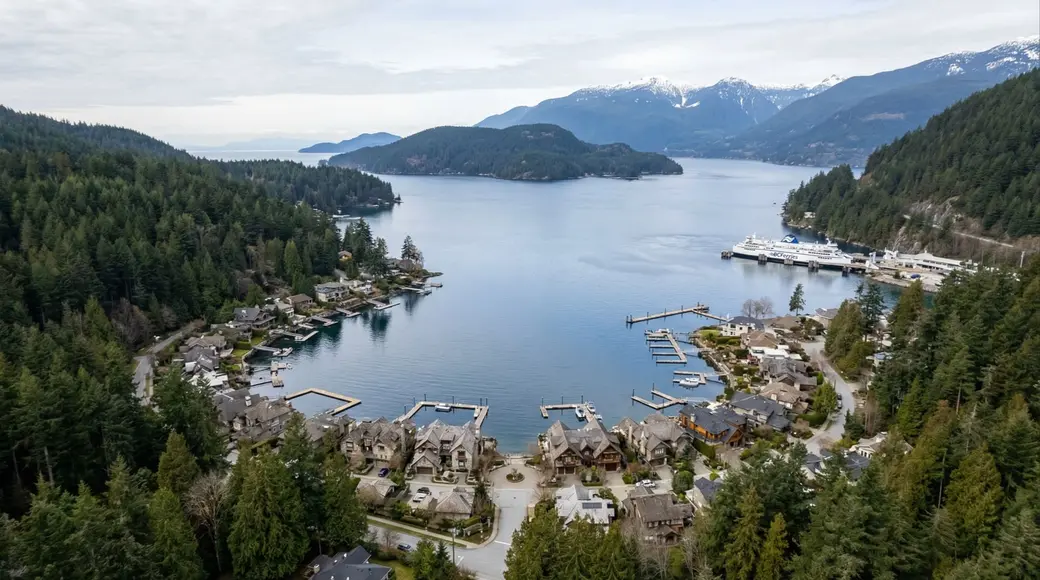
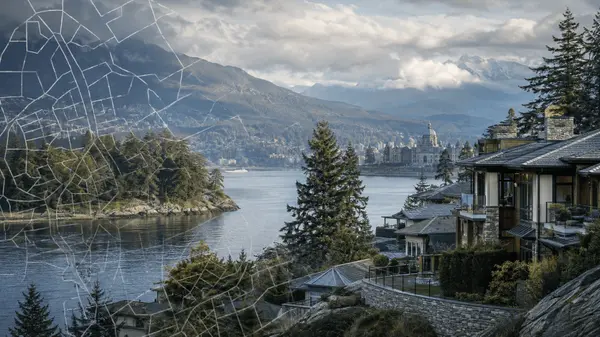
Horseshoe Bay occupies a protected cove at the base of steep, forested mountains on the western edge of West Vancouver. The village itself is compact — a small commercial strip along Bay Street, a marina, a public park at the water's edge, and a grid of residential streets that climb quickly into the hillside above. The natural setting is dramatic: mountains rise sharply from the shoreline, the bay offers calm water and views across to Bowen Island, and the surrounding forest creates a sense of enclosure and privacy unusual for a community this close to a major transit hub.
Despite its location at the junction of Howe Sound and the Sea-to-Sky corridor, Horseshoe Bay maintains a pace that feels closer to a small coastal town than a Metro Vancouver suburb. The ferry terminal brings a daily rhythm of arriving and departing travellers, but the residential neighbourhoods above and around the bay are largely untouched by that movement. Many homeowners here have lived in Horseshoe Bay for decades, drawn by the water access, the mountain proximity, and a community identity that has stayed intact through significant change elsewhere in the Lower Mainland.
Lifestyle and Walkability
Horseshoe Bay's walkability is unique in the West Vancouver context — not because it functions like an urban neighbourhood, but because the village core is genuinely accessible on foot from a meaningful portion of the residential streets. Bay Street supports a small collection of restaurants, a pub, a fish and chip shop, a café, and local service businesses. It is not a commercial strip of the scale found in Ambleside or Dundarave, but for day-to-day needs and casual dining, the walkability factor is considerably higher than most people expect from a neighbourhood this far west.
The waterfront park is the neighbourhood's anchor. It provides direct access to the bay, open lawn, benches facing Bowen Island, and a launching point for kayaks and paddleboards. The marina accommodates both recreational and working vessels, and the BC Ferries terminal — while a source of traffic on busy weekends — also means that the Sunshine Coast and Vancouver Island are effectively walkable from your front door in a way that is simply not available anywhere else in Metro Vancouver.
Hiking access is immediate. The Baden-Powell Trail runs directly through the area, and Whyte Lake — one of the most underrated day hikes on the North Shore — begins just minutes from the village. For water-based recreation, Horseshoe Bay has few equals in Greater Vancouver. Boaters, kayakers, divers, and fishermen all operate here year-round. The marine environment in Howe Sound has been recovering steadily in recent years, and the bay itself sees regular whale and seal sightings.
Commuting from Horseshoe Bay to downtown Vancouver takes approximately 35 to 45 minutes by car under normal conditions. There is bus service along Marine Drive, though the frequency is limited. For residents who work remotely, or whose work schedule allows off-peak travel, the commute is manageable. For those who require peak-hour reliability into downtown, it requires honest assessment.
Real Estate and Pricing
Horseshoe Bay is a predominantly detached market with some older strata and townhome product interspersed. The residential streets above the village range from compact lots on steep grades to more generous flat or view properties along the ridgeline. Housing stock spans from 1950s bungalows to 1990s custom builds, with a small number of newer infill homes beginning to appear.
Detached Homes
Detached pricing in Horseshoe Bay typically runs from approximately $1.6M on the lower end — older homes on steeper lots with limited views — to $4M and above for significant properties with unobstructed water and Bowen Island views. The median detached price sits in the $2.1M to $2.5M range, which positions Horseshoe Bay as one of the most accessible detached markets in all of West Vancouver. Lot sizes vary considerably depending on grade and street, and the view premium here is real and measurable.
Strata and Attached Product
A limited supply of older townhomes and low-rise strata units exists within walking distance of the village. These typically range from $800K to $1.3M and represent an entry point into the West Vancouver market that is difficult to match elsewhere. The quality and condition of this product varies widely and requires careful review.
Value Perspective
Horseshoe Bay is frequently undervalued by buyers who conflate the ferry terminal traffic with the residential experience. The buyers who look past that assumption find a detached market where $2M to $2.5M delivers water views, mountain access, a functioning village core, and a lot size that is difficult to source at this price anywhere else west of Ambleside. The village is not growing in density — and the ferry access, rather than diminishing value, creates a lifestyle connection to the rest of coastal BC that buyers increasingly recognize as an asset rather than an inconvenience.
Pros and Cons
What Works Here
- One of the most affordable detached entry points in West Vancouver
- Dramatic natural setting — mountains, bay, and Bowen Island views
- Walkable village core with restaurants and waterfront park
- Immediate water and trail access year-round
- Direct ferry access to Sunshine Coast and Vancouver Island
- Tight-knit, established community with long-term residents
- Marine recreation — boating, kayaking, diving, fishing
- Howe Sound wildlife — orcas, humpbacks, and sea lions regularly sighted
What to Consider
- Ferry and highway traffic creates congestion on summer weekends and holidays
- Limited transit frequency — car dependency for most daily trips
- Steep grades on many residential streets affect walkability and lot usability
- Older housing stock requires significant due diligence
- Limited shopping and services within the village
- Highway 1 noise audible in some properties depending on siting
- Peak-hour commute to downtown Vancouver can be challenging
What Buyers Often Overlook
The Ferry Terminal as a Lifestyle Asset
Most buyers approaching Horseshoe Bay view the BC Ferries terminal as a liability — a source of traffic and noise that detracts from residential appeal. That framing misses the point. For the buyer who values access to the Sunshine Coast or Vancouver Island, Horseshoe Bay is the only neighbourhood in Greater Vancouver where a ferry to Gibsons, Sechelt, or Nanaimo is a ten-minute walk from home. That connectivity has real value for a specific buyer profile, and it is not priced into the market the way it arguably should be.
The Grade and Orientation of the Lot
Horseshoe Bay's topography is steep. The difference in livability, usability, and long-term value between a flat lot near the water and a steeply sloped lot further up the hillside is significant — and not always obvious from a listing price. South and southwest-facing properties with unobstructed sight lines across the bay carry premiums that are justified by the view quality and the limited supply of such positions. A north-facing lot on a steep grade may look attractive at first glance and require a much more honest conversation about what it actually delivers day to day.
The Condition and Age of the Structure
The bulk of Horseshoe Bay's housing stock was built between the 1950s and the 1990s. As with most of West Vancouver's older inventory, the range in condition is wide. A home that reads as well-maintained on the surface may carry deferred work in foundations, roof systems, plumbing, and drainage that is specific to the challenges of building on steep coastal terrain. This is not unique to Horseshoe Bay — but the grade and the marine environment together create conditions that require a more thorough inspection than a comparable property on flat ground elsewhere in Metro Vancouver.
The Noise Variable
Highway 1 noise affects certain properties in Horseshoe Bay — particularly those with direct exposure to the interchange or the approach to the Cypress interchanges above. The marine environment itself produces sound: foghorns, ferry departures, and the ambient noise of a working harbour. For some buyers, this is part of the character of living at the edge of the sound. For others, it is a dealbreaker. It is not something that should be assumed to be uniform across the neighbourhood.
Buyer's Note
In Horseshoe Bay, the physical condition of the lot matters as much as the structure on it. Drainage, slope stability, retaining walls, and proximity to the highway and marine environment all require expert review. The price point can look compelling — and for the right property, it absolutely is. But the work to understand what that property will cost to own, maintain, and eventually improve is not optional. It is where the real evaluation begins.
Who Horseshoe Bay is Best For
- Buyers seeking an entry point into West Vancouver's detached market at a price that still represents genuine value on a meaningful lot
- Water and outdoor recreation enthusiasts for whom immediate access to Howe Sound, trails, and marine activity is a non-negotiable
- Remote workers and professionals with flexible schedules who can manage the commute in exchange for a significantly different quality of daily life
- Those with connections to the Sunshine Coast or Vancouver Island who want ferry access as a genuine part of their lifestyle — not a logistical obstacle
- Renovation and value buyers with construction knowledge who recognize the upside in well-sited older stock in a location that cannot be replicated
- Long-term hold buyers attracted by limited supply, constrained geography, and a village identity that has remained intact through significant regional growth
Final Summary
Horseshoe Bay is a neighbourhood that requires a specific buyer — not because it is difficult to appreciate, but because it asks you to look past surface-level assumptions and engage with what it actually delivers. The ferry terminal, the highway proximity, the older housing stock: none of these are disqualifying. They are the context within which a genuine coastal village community exists, largely intact, at a price point that is increasingly rare in West Vancouver.
The buyers who do well here are the ones who understand the lot they are buying, the structure they are acquiring, and the lifestyle they are choosing. They are not compromising. They are making a deliberate decision to live at the edge of the city, at the edge of the sound, and at the point where the rest of coastal British Columbia begins.
Debbie Evans | REALTOR®
eXp Realty | West Vancouver & North Shore Markets
If you're considering buying or selling in Horseshoe Bay, the evaluation starts before you make an offer. Understanding the lot, the grade, the noise exposure, and what the structure will truly cost to bring to its potential — that's the conversation I bring to every property we look at together. My background in interior design and construction means I see what the listing photos don't show you.
This content is for informational purposes only and does not constitute financial or investment advice. Market data is based on current MLS® listings and recent sales activity and is subject to change. Always consult appropriate professionals regarding your specific situation.
Categories
- All Blogs (97)
- aboriginal title ruling (2)
- bc housing market (23)
- bc real estate (55)
- Bill C-15 (1)
- build canada homes (8)
- Buyers Guide (4)
- canada strong fund (3)
- Canada-U.S. Trade (2)
- canadian real estate (15)
- Climate Change (2)
- Design & Build (4)
- Dundarave West Vancouver (1)
- Equity Growth (1)
- freehold (1)
- Home Buying Tips (1)
- housing policy (1)
- land claims (2)
- Land Claims / BC Real Estate (1)
- leasehold (1)
- local news (1)
- Lower Lonsdale (2)
- Market & Policy Analysis (1)
- Market Commentary (6)
- market insights (23)
- Multigenerational Living (2)
- North Vancouver Real Estate (19)
- open house (1)
- Open House Security (1)
- presale (1)
- real estate insights (7)
- Real Estate Market & Housing (2)
- Squamish Market Update (7)
- squamish real estate (8)
- squamish update (3)
- Vancouver Real Estate (17)
- West Vancouver Living (15)
- West Vancouver Real Estate (26)
- Whistler Market Update (4)
Recent Posts



Have a Question? Let’s Talk. I’m Here to Help.

North Shore & Vancouver Realtor License ID: 175378
+1(778) 875-4934 | debbie.evans@exprealty.com