
Carney's Liberals Vote Down Conservative Property Rights Motion — May 25, 2026

Carney's Liberals Vote Down Conservative Property Rights Motion — May 25, 2026
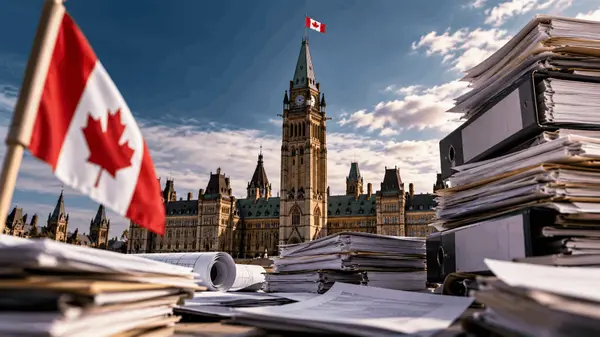
On May 25, 2026, the House of Commons voted down a Conservative opposition motion calling on the federal government to protect private property rights in the wake of a landmark BC court ruling. The Liberals, NDP, and Bloc Québécois all voted against it. Only the Conservatives voted in favour.
The vote has reignited debate over the August 2025 BC Supreme Court ruling in Cowichan Tribes v. Canada — a decision that has sent shockwaves through BC's real estate and financial sectors and raised serious questions about the security of private land ownership across the province.
The Cowichan Ruling: What Actually Happened
In August 2025, BC Supreme Court Justice Barbara Young concluded that the Cowichan Tribes (Quw'utsun Nation) had established Aboriginal title over approximately 732 acres of land in Richmond, BC — the south shore of Lulu Island. The trial was the longest in Canadian history, spanning over 11 years and 513 sitting days.[1]
The ruling declared that Crown and municipal land titles held by the federal government and the City of Richmond were "defective and invalid." The court acknowledged plainly that "the relationship between Aboriginal title and fee simple title remains unsettled" in Canadian law, and that "any uncertainty with respect to the plaintiffs' Aboriginal title rights in respect of land encumbered by privately-held fee simple interests will have to be resolved at a later date."[1,7]
That unresolved uncertainty is precisely what has alarmed homeowners, developers, and lenders across the province.
Real Economic Consequences for BC Property Owners
The concerns are not merely theoretical. In October 2025, the City of Richmond sent letters to approximately 150 property owners within the claim area warning that the ruling could compromise the validity of their ownership.[6]
The most widely reported case involves a Richmond manufacturing company that had been operating in the area for over 40 years. Richmond city councillor Alexa Loo described the situation publicly:[3]
It is worth noting that the bank identified — National Bank — denied in a statement that the Cowichan ruling was a factor, saying "no guidelines have been issued by the Bank in this regard." However, a second and more fully documented case emerged in December 2025.
Montrose Property Holdings, a BC industrial warehouse developer with land inside the claim area, confirmed that a lender had pulled out of a $35 million financing deal after the ruling, citing "uncertainties and risk allocation issues." Montrose said it had spent approximately $7.5 million advancing the project before talks collapsed — and that a prospective tenant also withdrew.[4] These are among the first specific, publicly documented examples of direct financial harm attributed to the ruling's uncertainty.
Why lenders are cautious
Lenders require certainty of title before securing a loan against a property. Where Aboriginal title has been declared — or is actively contested — the relationship between that title and registered fee simple ownership is currently unsettled in Canadian law. Until that question is resolved through appeal, some lenders are choosing not to finance new projects in affected areas. The appeal process is expected to take three to ten years.
What the Conservative Motion Actually Called For
The Conservatives tabled an opposition motion calling on the Liberal government to take several specific steps:[2,5]
- Create a special parliamentary committee to study the legal, constitutional, and political steps needed to protect private property rights
- Reverse a federal litigation guideline that prevented government lawyers from arguing that private property takes priority over other forms of title
- Require all future agreements with First Nations to include explicit protection of fee simple property rights
- Publish a plan within 30 days outlining how the government would protect Canadians affected by both the Cowichan ruling and a separate Musqueam Rights Recognition Agreement
Was Carney Responsible for the No Vote?
The short answer: yes, but the framing matters.
As Prime Minister leading a minority government, Carney sets his caucus's direction on opposition motions. The Liberal vote against this motion was unified — which reflects cabinet direction even if individual MPs were not formally ordered to vote a specific way. In that sense, this was the Carney government's call.
Carney did push back publicly before the vote, stating: "Private property rights are fundamental in this country, this government will always defend them — that is why we immediately appealed the Cowichan decision."[5] His government's position is that the appeal process, not a parliamentary motion, is the correct mechanism for resolving the legal uncertainty.
Liberal MP Robertson echoed this during debate: "Many of us disagree with the uncertainty that's being whipped up by the member and some of his colleagues trying to turn this into a very difficult situation, when what we need is clarity from the courts."[2]
Important context
The Conservative motion was non-binding — passing it would not have changed property law or directly protected a single homeowner. Opponents argued that Parliament instructing lawyers on how to argue a live appeal could itself create legal complications. This does not mean the underlying concern is invalid — the economic disruption is real and documented — but the motion was as much a political statement as a practical remedy.
The Broader Stakes for British Columbia
Conservative MP Marc Dalton stated that the Cowichan ruling sets a troubling precedent for all BC residents, given the numerous outstanding land claims across the province.[2] With claims covering large portions of British Columbia, the legal uncertainty created by this case could compound over years — potentially decades — as appeals work through the courts.
Conservative MP Jeff Kibble, who represents the Cowichan-Malahat-Langford riding, put it directly after the vote: "It's damaging reconciliation and it's a failure of leadership of the prime minister."[2]
For its part, the Carney government has appealed the ruling and appointed a special representative to study the issue. Whether that constitutes adequate action — or a way to avoid the harder political question while homeowners and developers wait out a decade-long appeal — is exactly what this vote was about.
BC Real Estate & Development Implications: What Uncertainty Does to Markets
The legal outcome of the Cowichan appeal may be years away. But markets do not wait for legal certainty. They price it in — or price it out — right now. Understanding how uncertainty functions in real estate and development is, in my view, the most practically useful lens through which to read this situation.
How Uncertainty Affects Lending Before Legal Outcomes Are Finalized
Lenders do not underwrite on optimism. They underwrite on title security. A mortgage is secured against a property — and for that security to be meaningful, the lender needs confidence that the title is valid, defensible, and enforceable. When a court introduces language like "defective and invalid" into the title record of a specific area, even on a temporary stay, lenders respond to the risk that word creates — not to the probability that it will ultimately be resolved in their favour.
This is standard risk management, not an overreaction. Lenders have credit committees, regulatory requirements, and portfolio risk thresholds. A property in an area under active Aboriginal title litigation sits in a different risk category than one that does not — regardless of how the case is likely to resolve. The practical result: conservative lenders restrict new financing in affected areas, tighten conditions on refinancing, and require additional legal opinions before proceeding. Developers seeking construction financing face the same environment. None of this requires a homeowner to actually lose their property to cause real, immediate economic disruption.
How lenders treat title risk
Construction and development financing typically requires a lender's lawyer to confirm clean, unencumbered title before funds advance. Where Aboriginal title has been declared — even subject to appeal — that confirmation becomes legally complicated or impossible to give. The lender's exposure is not just financial; it is also professional and regulatory. The result is not a formal ban on lending in affected areas, but a practical chilling effect: deals that would have closed routinely now require extraordinary steps, and many do not proceed at all.
Why Developers Pause Projects — Even Viable Ones
Development is a sequential business. Every stage — land acquisition, entitlement, design, permitting, financing, construction, marketing — depends on the one before it. Title uncertainty does not just affect the financing stage; it introduces risk at every point in that sequence.
A developer who acquires land in an area subject to an active Aboriginal title claim takes on a risk that was not priced into the purchase. If the claim affects their ability to obtain construction financing — as Montrose Property Holdings discovered — the entire pro forma collapses, regardless of how sound the project was otherwise. For developers considering land acquisition in or near affected areas, the rational response is to pause, redirect capital to less complicated sites, or demand a discount large enough to compensate for the additional risk. In a market like Metro Vancouver, where sites are expensive and margins are already tight, that discount may not be negotiable — which means the project simply does not happen.
Paused projects do not generate housing supply. They do not generate construction employment. They do not generate the tax revenue municipalities depend on to fund infrastructure. The costs of prolonged uncertainty accumulate quietly across many cancelled or deferred decisions, none of which individually makes headlines.
How Risk Affects Land Values and Financing
In a functioning market, land value reflects the highest and best use of that land — the most productive development it can support under current zoning and market conditions. Uncertainty about title directly compresses that value, because the highest and best use is only achievable if the land can be financed, permitted, and developed without legal encumbrances.
When lenders become cautious, the pool of qualified buyers for affected land shrinks. Fewer buyers means less competitive bidding. Less competitive bidding means lower prices. Owners who need to sell face a discount that has nothing to do with the physical characteristics of their property and everything to do with the legal cloud over its title. This effect is most acute for owners of commercial and industrial land — the most development-active category — but it applies across the land market in affected areas.
The concern is not limited to Richmond. Any municipality in BC where a significant Aboriginal title claim could be filed faces a latent version of the same risk. The Cowichan decision has made that latent risk visible in a way it was not before August 2025.
Why Municipalities Need Clarity
Municipalities depend on development activity — permit fees, development cost charges, property tax revenue from new construction — to fund the infrastructure and services a growing population requires. They also depend on a functioning land title system to administer zoning, issue permits, and enforce bylaws. When that system is in question, even partially, the administrative complexity multiplies.
Richmond sent letters to 150 property owners not because the city wanted to create alarm, but because it had a legal obligation to inform landowners of a material change in the status of their titles. That obligation itself signals how deeply the ruling reached into the routine machinery of municipal government. Councils need to know which projects they can permit, which infrastructure plans remain viable, and what their liability exposure looks like if they issue permits on land whose title is subsequently found to be encumbered. None of those questions have clean answers while the appeal is pending.
The municipal planning problem
Official Community Plans, zoning bylaws, and long-range capital plans are all built on the assumption that land titles within municipal boundaries are stable and legally secure. A ruling that introduces structural uncertainty into that assumption — even for a defined area — forces municipalities to add legal review layers to planning and permitting processes they previously handled as routine. That adds time, cost, and risk to every development application in affected areas, and has the downstream effect of slowing housing approvals precisely when BC needs to be accelerating them.
Prolonged Uncertainty and Housing Supply
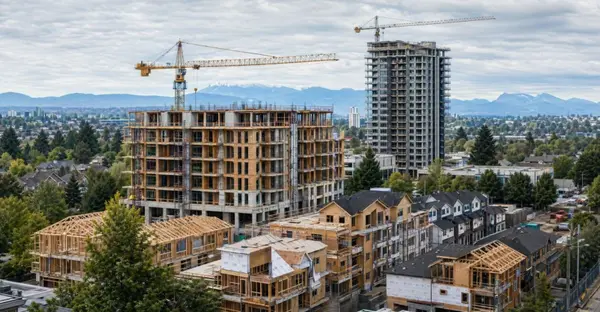
BC is already undersupplied with housing relative to demand. The province has introduced significant legislative reform — including Bill 44 — specifically to accelerate the delivery of new units in established neighbourhoods. That policy work is undermined, in affected areas, by a parallel legal environment in which the very foundation of the land title system is under question.
Prolonged uncertainty does not produce a dramatic housing market collapse. What it produces is slower — and in some ways harder to reverse. Developers redirect capital to other markets. Lenders apply conditions that make projects unfeasible. Property owners defer decisions to sell or redevelop, waiting for clarity that may be years away. Municipal planning processes slow under the weight of additional legal review. Each of these decisions, made individually and rationally, adds up to a cumulative reduction in housing supply that compounds over the duration of the appeal. The 3-to-10-year timeline cited for resolution is not an abstract legal inconvenience. In housing terms, it represents an entire development cycle — or more — of suppressed activity in affected areas.
Frequently Asked Questions
Common questions about the Cowichan ruling, what it means for property owners, and what happened in Parliament this week.
Does the Cowichan ruling mean I could lose my home?
Almost certainly not — if you were not a named party in the case. Multiple legal experts, including specialists in Indigenous and property law, have confirmed that the ruling does not invalidate the titles of private homeowners who were not parties to the litigation.[8,9] The court's finding of "defective and invalid" title applied specifically to Crown and municipal lands. The Cowichan Tribes have also publicly stated they have no intention of stripping private landowners of title. That said, "very unlikely" is not the same as "resolved" — and the uncertainty is real enough that lenders are acting cautiously, which has practical consequences for anyone trying to finance or develop in the affected area.
Why did the Liberals vote against the motion if they say they support property rights?
The Liberal government's stated position is that the appeal — which they filed — is the proper legal mechanism for resolving this question, and that Parliament should not attempt to direct the outcome of live court proceedings. They also argued the Conservative motion went further than protecting property rights, specifically by requiring lawyers to argue that private property has absolute priority over all other forms of title — a position that would conflict with Canada's constitutional obligations under Section 35 of the Constitution Act, which protects Indigenous rights. Whether you find that reasoning sufficient is a matter of judgment, but it is the position the government has consistently held.
What is Aboriginal title, and how is it different from fee simple ownership?
Fee simple title is the form of private ownership most Canadians are familiar with — registered through the provincial land title system, transferable by sale, and protected under provincial law. Aboriginal title is a distinct form of land ownership recognized under Canadian constitutional law (Section 35) and affirmed by the Supreme Court of Canada in the 2014 Tsilhqot'in decision. It reflects Indigenous peoples' prior and continuous occupation of their traditional territories. The legal relationship between Aboriginal title and existing fee simple titles — particularly in urban areas where land has changed hands many times — is precisely what remains unsettled and what the Cowichan appeal will need to clarify.[7,10]
Can I still get a mortgage on property in the Cowichan claim area?
It depends on the lender and the specific property. Some lenders have become cautious about new financing on properties within or near the claim area due to the title uncertainty. The most documented case involves a manufacturing company whose bank declined to finance a new $100 million project — though that bank denied the ruling was the reason.[3] A clearer case is Montrose Property Holdings, which lost both a lender and a tenant on a $35 million industrial development.[4] Existing mortgages are generally not being pulled. The greater risk is for new purchases, new developments, and refinancing on properties where title uncertainty is directly flagged. If you are buying, selling, or developing in the affected area, getting current legal advice specific to your property is essential.
How long will the appeal process take?
Richmond city councillor Alexa Loo stated publicly that the appeal process "could take anywhere from three to five years to ten years."[3] This is consistent with how complex constitutional cases typically move through the BC Court of Appeal and, likely, to the Supreme Court of Canada. In the meantime, the ruling is suspended — the judge in the case issued an 18-month stay to give the Cowichan Tribes, Canada, and Richmond time to make necessary arrangements. That suspension means the immediate practical effects on existing landowners are limited, but the cloud over new financing and development activity is real and will persist throughout the appeal.
Is this only a Richmond issue, or does it affect the rest of BC?
It is not only a Richmond issue. The Cowichan ruling is significant in part because it is the first time a Canadian court has declared Aboriginal title over land that includes privately held fee simple properties in an urban area. Legal experts have noted this could set a precedent for other outstanding land claims — and there are many across British Columbia. An Algonquin First Nation filed a similar title claim in Quebec Superior Court in the weeks following the Cowichan decision.[6] The legal and financial uncertainty is concentrated in Richmond today, but the precedent has province-wide — and potentially national — implications.
Sources & References
- [1] BC Supreme Court — Cowichan Tribes v. Canada (Attorney General), 2025 BCSC 1490, August 7, 2025. bccourts.ca
- [2] The Canadian Press (Sarah Ritchie) — "Majority of MPs vote down Conservative motion calling for private property protection," May 25, 2026. cheknews.ca
- [3] Global News / The Canadian Press — "Richmond company refused financing for $100M project after Cowichan case: councillor," October 30, 2025. globalnews.ca
- [4] Vancouver Sun (Gordon Hoekstra) — "B.C. company loses lender, tenant for development after Cowichan ruling," December 8, 2025. timescolonist.com
- [5] Global News — "Pierre Poilievre in North Vancouver to make announcement on property rights," May 22, 2026. globalnews.ca
- [6] Global News — "What to know about Cowichan land title case in B.C. and push for clarity," October 31, 2025. globalnews.ca
- [7] BD&P Law — "BC Supreme Court's recent Cowichan Decision," 2025. bdplaw.com
- [8] JFK Law — "Cowichan Tribes and Private Property: Separating Fact from Fiction," November 27, 2025. jfklaw.ca
- [9] Policy Options / IRPP — "The Cowichan ruling isn't a threat to private property," December 8, 2025. policyoptions.irpp.org
- [10] Torys LLP — "Can Aboriginal title be declared in respect of privately-held lands?" January 15, 2026. torys.com
- [11] Fraser Institute — "How two governments breached the public interest and rights of private landowners in B.C.," March 8, 2026. fraserinstitute.org
Debbie Evans | REALTOR® & Registered Interior Designer
eXp Realty | West Vancouver, North Shore & Sea-to-Sky Markets
If you have questions about how the Cowichan ruling or broader land title uncertainty might affect a property you own, are purchasing, or are considering developing — that conversation is worth having before circumstances force the decision. I bring nearly forty years of design, construction, and real estate experience to these discussions, and I understand both the emotional and strategic dimensions of property decisions in this market.
This content is for informational and educational purposes only and does not constitute financial, legal, or investment advice. All legislative, court, and parliamentary references reflect publicly available documentation as of May 2026. The legal situation described is under active appeal and may change. Property owners and buyers should seek independent legal and real estate advice specific to their circumstances before making any decisions related to land in or near areas subject to Aboriginal title claims.
Categories
- All Blogs (103)
- aboriginal title ruling (2)
- B.C. Policy (1)
- bc housing market (24)
- bc real estate (56)
- Bill C-15 (1)
- build canada homes (10)
- Buyers Guide (4)
- canada strong fund (4)
- Canada-U.S. Trade (2)
- canadian real estate (16)
- Canadian Real Estate & Housing (1)
- Climate Change (2)
- Cost of Living (2)
- Design & Build (4)
- Dundarave West Vancouver (1)
- Equity Growth (1)
- Federal Policy (1)
- freehold (1)
- Home Buying Tips (1)
- Household Debt (1)
- housing policy (1)
- land claims (2)
- Land Claims / BC Real Estate (1)
- leasehold (1)
- local news (1)
- Lower Lonsdale (2)
- Market & Policy Analysis (1)
- Market Commentary (6)
- market insights (23)
- Market Intelligence (1)
- Mortgage Delinquencies (1)
- Mortgage Renewals (1)
- Multigenerational Living (2)
- North Vancouver Real Estate (19)
- open house (1)
- Open House Security (1)
- presale (1)
- real estate insights (7)
- Real Estate Market & Housing (2)
- renovation (1)
- Squamish Market Update (7)
- squamish real estate (8)
- squamish update (3)
- Vancouver Real Estate (17)
- West Vancouver Living (15)
- West Vancouver Real Estate (26)
- Whistler Market Update (4)
Recent Posts






Have a Question? Let’s Talk. I’m Here to Help.

North Shore & Vancouver Realtor License ID: 175378
+1(778) 875-4934 | debbie.evans@exprealty.com