
Today's Supreme Court Ruling on Aboriginal Title: What It Really Means for Canadian Real Estate
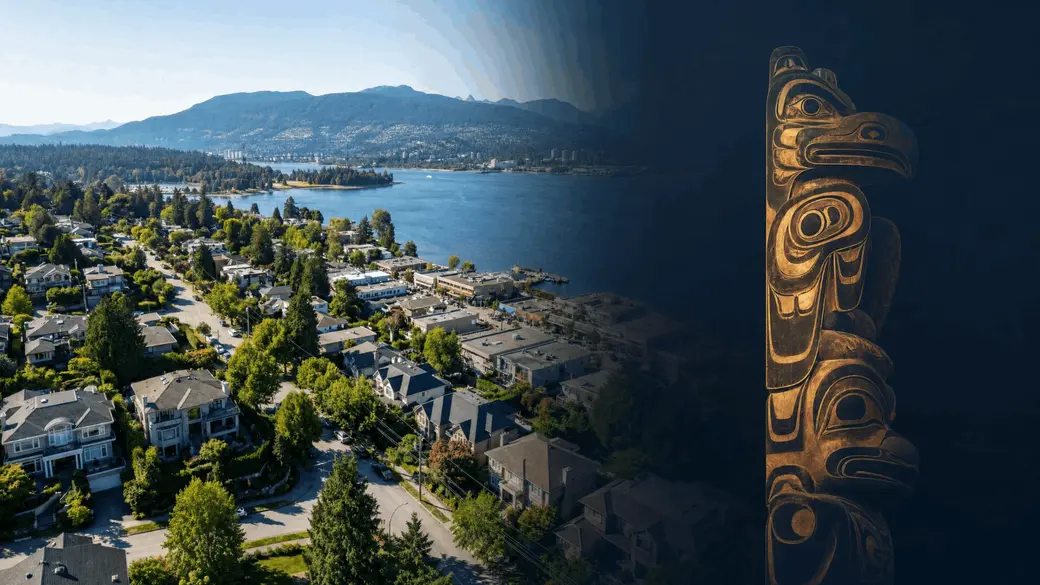
Today's Supreme Court Ruling on Aboriginal Title: What It Really Means for Canadian Real Estate
I get some version of this question almost every single day: "That Aboriginal title stuff — that's a BC thing, right?" Today's ruling will only reinforce that misconception. It shouldn't. This is a national issue, it is not resolved, and if you own, buy, or invest in property anywhere in Canada, here is what you actually need to know.
What Actually Happened Today
The Supreme Court of Canada declined to hear an appeal from the Wolastoqey Nation in New Brunswick. In practical terms, this means a December 2025 ruling by the New Brunswick Court of Appeal now stands as final — at least in that province — and it says Aboriginal title cannot be declared over privately owned land.
Instead, First Nations may seek financial compensation from the Crown — meaning federal and provincial governments — for the loss of traditional territories. Not the land back. Money. From taxpayers. With no defined amount, no formula, and no established timeline for how that compensation is calculated or paid.
Notice what that government statement acknowledges: the Cowichan case in BC is still live, still being appealed, and this ruling will be used as an argument in it. That is not a settled legal landscape. That is one side gaining ammunition in an ongoing fight.
Why This Is Not Settled — Despite What the Headlines Say
Canada now has two directly contradictory court rulings operating simultaneously on the same legal question. This is the part most coverage today missed entirely.
The NB Court of Appeal ruled that declaring title over private land would "sound the death knell of reconciliation." Compensation from the Crown is the directed remedy. Private owners are protected. The Supreme Court declined to hear the appeal — so this stands in NB.
The BC Supreme Court ruled the opposite — that Aboriginal title co-exists with and overrides standard fee-simple private ownership. Crown, municipal, and private land were all included. The federal government, BC, and City of Richmond are actively appealing.
These two rulings cannot both be correct. The Supreme Court of Canada will eventually have to resolve this contradiction directly. That case — almost certainly centred on the Cowichan appeal — will be one of the most consequential property law decisions in Canadian history. It has not happened yet.
The Part Nobody Is Talking About: This Is Not a BC Problem
The single most common thing I hear from clients and colleagues outside BC is that Aboriginal title claims are a BC story. This is factually incorrect, and today's ruling is a sharp reminder of that.
The Wolastoqey claim covers a significant portion of New Brunswick — including private industrial forest land owned by major softwood lumber producers such as J.D. Irving. An Algonquin First Nation filed a similar title claim in Quebec in the months following the Cowichan decision. Ontario has seen rulings touching treaty rights and fee-simple ownership. Outside of the numbered treaty areas of the Prairies and parts of Ontario, most of Canada sits on land that was never formally surrendered by Indigenous peoples.
What this means nationally
Canada has been quietly carrying a legal contradiction for decades: governments sold land and issued property titles on territory that Indigenous peoples never formally surrendered. Courts are now saying that out loud. Today's ruling addresses one province. It does not resolve the underlying national question.
The Compensation Question Nobody Has Answered
Today's ruling directs First Nations toward financial compensation from the Crown rather than land ownership claims. This raises three questions that remain entirely unanswered in today's coverage and in the ruling itself:
- How much? No amount, no formula, no framework has been established for calculating compensation for traditional territory losses.
- Who pays? The Crown — meaning federal and provincial governments, meaning taxpayers. The Crown granted these private lands in the first place, often without Indigenous consent under colonial-era policy. Private landowners keep the land. The public pays for the history.
- For what exactly? The difference between a legal declaration of Aboriginal title and a legal finding of Aboriginal title matters enormously. A declaration is binding. A finding acknowledges that title was never surrendered and paves the way for a compensation claim — but is not binding on third parties. The Wolastoqey case can continue as a finding. What that ultimately produces in dollar terms is undefined.
The structural accountability gap
The Crown granted traditional Indigenous land to private parties — in many cases in the 18th and 19th centuries, without consent. Today's legal framework says that land cannot be returned, but compensation is owed. The entity that created the problem (the Crown) is shielded from returning the remedy (the land), while the cost of resolution falls on present-day taxpayers who had no role in the original grants. Private landowners retain full title. This is the framework now in place — and it has no defined price tag.
What This Means for Property Owners and Investors Right Now
If You Own Property in Canada
Your title is not at immediate risk. No ruling today changes existing registered titles. But understanding whether your property sits within an active or potential Aboriginal title claim area is now part of informed property ownership — the same way you'd want to know about a flood zone or heritage overlay. Most Canadians have never checked this. In light of today's developments, that conversation is worth having.
If You Are Buying or Developing
Due diligence now includes claim area exposure. This is not alarmism — it is the same standard of care that applies to any other material encumbrance or legal uncertainty affecting title. The financial sector has already demonstrated it will treat claim-area properties with caution. A $35 million industrial development in Richmond lost both its lender and its tenant following the Cowichan ruling. A $100 million project was refused financing. These are documented cases, not hypotheticals.
If You Are a Lender or Investor
Title insurance policies vary significantly in how they handle Aboriginal title risk — and many standard policies contain exclusions that are not obvious on a first reading. The Cowichan appeal timeline has been described publicly as three to ten years. That is an entire development cycle of legal uncertainty in affected areas. Underwriting assumptions built before August 2025 may need revisiting.
Frequently Asked Questions
Questions I hear every day about Aboriginal title, what today's ruling means, and how it affects property ownership across Canada.
Does today's ruling mean Aboriginal title claims are finished in Canada?
No. Today's ruling applies only to New Brunswick and only to the specific question of whether Aboriginal title can be declared over private land. The Cowichan case in BC — which reached the opposite conclusion — is still under active appeal. That appeal involves the federal government, the BC provincial government, and the City of Richmond, and is expected to take three to ten years to resolve. The Wolastoqey claim in New Brunswick also continues — it can now proceed as a finding of title, which paves the way for a Crown compensation claim. Nothing is concluded. The legal evolution is ongoing.
Is this really only a BC issue?
No — and this is the most important misconception I encounter daily. The Wolastoqey Nation's claim covers approximately 60% of New Brunswick. An Algonquin First Nation filed a similar claim in Quebec following the Cowichan decision. Ontario has seen court decisions touching on the relationship between treaty rights and fee-simple ownership. Outside of the numbered treaty areas of the Prairies and parts of Ontario, most of Canada sits on land that was never formally surrendered. Every province has exposure to this question. The fact that BC is the most visible flashpoint does not mean the issue is geographically contained.
What is the difference between a declaration and a finding of Aboriginal title?
A declaration of Aboriginal title is a binding court order — it formally establishes that a First Nation holds title to specific land as a matter of law. This is what the Cowichan decision in BC issued, and what the New Brunswick court said it would not grant over private land. A finding of Aboriginal title acknowledges that title was never surrendered and supports a compensation claim against the Crown, but is not binding on third parties such as private landowners. Under today's ruling, the Wolastoqey case can continue as a finding — meaning they can still pursue compensation from the federal and provincial governments, but cannot assert ownership of private land.
How much compensation could be involved — and who pays?
No amount has been defined, no formula established, and no timeline set. This is one of the most significant unanswered questions in today's ruling. What is clear is that compensation flows from the Crown — meaning federal and provincial governments, funded by taxpayers. Private landowners are not parties to the compensation claim and are not financially liable. The Crown, which issued the original land grants without Indigenous consent, bears the cost of resolving the resulting claims. The total exposure across all active and potential claims in Canada has not been publicly quantified.
Does this affect my ability to get a mortgage or sell my property?
For most Canadians, no — not directly or immediately. The documented financial impacts have been concentrated in areas with active, declared title claims (primarily the Cowichan claim area in Richmond, BC). In those areas, some lenders have declined to finance new development projects due to title uncertainty — a $35 million industrial project in Richmond lost both its lender and its tenant after the Cowichan ruling. For properties elsewhere in Canada, there is no immediate practical disruption. However, as more claims are filed and the legal landscape evolves, it is worth understanding whether any active claims exist near property you own, are purchasing, or are financing.
What about municipal land — is that treated differently than private land?
This is one of the genuinely unsettled questions. The Cowichan decision in BC included Crown, municipal, and private land — treating municipal land as part of the claim area. The New Brunswick ruling specifically excluded private land but did not create a comprehensive framework for how municipal or public lands should be treated. The Cowichan appeal will need to address this directly. In the meantime, municipalities in BC with potential claim exposure — not just Richmond — are watching the appeal closely, as the ruling's implications for zoning, permitting, and infrastructure planning depend heavily on how this question is resolved.
What should I actually do if I'm concerned about a property I own or am buying?
Start with a conversation — with your realtor, your lawyer, or both. The first step is understanding whether the property sits within or near an active claim area. If it does, the questions become more specific: reviewing your title insurance policy for Aboriginal title exclusions, understanding the current appeal timeline, and making sure any purchase or development decision accounts for the uncertainty that may persist for years. For the vast majority of Canadians, the direct risk to existing ownership is low. The greater practical concern right now is around new purchases, new financing, and new development in affected areas — not existing titles.
Is the Supreme Court of Canada going to weigh in directly on this eventually?
Almost certainly yes. Canada now has two directly contradictory provincial court rulings on the same legal question — one in BC saying Aboriginal title can override private ownership, one in New Brunswick saying it cannot. That contradiction cannot stand indefinitely. The most likely path to resolution is through the Cowichan appeal, which will move through the BC Court of Appeal and then, in all likelihood, to the Supreme Court of Canada. Legal experts have described that final resolution as potentially taking three to ten years. When it comes, it will be one of the most significant property law decisions in Canadian history.
Sources & References
- [1] CBC News — "Supreme Court won't hear appeal of Wolastoqey title ruling," May 28, 2026. cbc.ca
- [2] The Canadian Press — "Aboriginal title can't apply to private land, Supreme Court of Canada decides," May 28, 2026. Multiple outlets including cfjctoday.com
- [3] The Globe and Mail — "Lawyers ask B.C. Supreme Court judge to reopen Cowichan land title case," May 26, 2026. theglobeandmail.com
- [4] Osler, Hoskin & Harcourt LLP — "Aboriginal title and private property: divergent approaches in Cowichan and Wolastoqey," March 24, 2026. osler.com
- [5] Deeded.ca — "BC Land Claims 2026: What's Happening Now and What It Means for Canadian Homeowners," February 18, 2026. deeded.ca
- [6] The Globe and Mail (Joseph T. Robertson) — "Clarity in the law of Aboriginal title is not optional," March 26, 2026. theglobeandmail.com
- [7] National Magazine (Canadian Bar Association) — "At odds over Aboriginal title," January 27, 2026. nationalmagazine.ca
- [8] Torys LLP — "Can Aboriginal title be declared in respect of privately-held lands?" January 15, 2026. torys.com
Debbie Evans | REALTOR® & Registered Interior Designer
eXp Realty | West Vancouver, North Shore & Sea-to-Sky Markets
If you have questions about how today's ruling, the Cowichan case, or broader land title uncertainty might affect a property you own, are purchasing, or are considering developing — that conversation is worth having before circumstances force the decision. I cover this topic daily because my clients are asking about it daily. I bring nearly forty years of design, construction, and real estate experience to these discussions, and I understand both the practical and strategic dimensions of property decisions in this market.
This content is for informational and educational purposes only and does not constitute financial, legal, or investment advice. All court, legislative, and governmental references reflect publicly available documentation as of May 28, 2026. The legal situation described is under active appeal and may change. Property owners and buyers should seek independent legal and real estate advice specific to their circumstances before making any decisions related to land in or near areas subject to Aboriginal title claims.
Categories
- All Blogs (97)
- aboriginal title ruling (2)
- bc housing market (23)
- bc real estate (55)
- Bill C-15 (1)
- build canada homes (8)
- Buyers Guide (4)
- canada strong fund (3)
- Canada-U.S. Trade (2)
- canadian real estate (15)
- Climate Change (2)
- Design & Build (4)
- Dundarave West Vancouver (1)
- Equity Growth (1)
- freehold (1)
- Home Buying Tips (1)
- housing policy (1)
- land claims (2)
- Land Claims / BC Real Estate (1)
- leasehold (1)
- local news (1)
- Lower Lonsdale (2)
- Market & Policy Analysis (1)
- Market Commentary (6)
- market insights (23)
- Multigenerational Living (2)
- North Vancouver Real Estate (19)
- open house (1)
- Open House Security (1)
- presale (1)
- real estate insights (7)
- Real Estate Market & Housing (2)
- Squamish Market Update (7)
- squamish real estate (8)
- squamish update (3)
- Vancouver Real Estate (17)
- West Vancouver Living (15)
- West Vancouver Real Estate (26)
- Whistler Market Update (4)
Recent Posts



Have a Question? Let’s Talk. I’m Here to Help.

North Shore & Vancouver Realtor License ID: 175378
+1(778) 875-4934 | debbie.evans@exprealty.com