
Build Canada Homes in Vancouver: What's Actually Being Built and What Buyers Need to Know
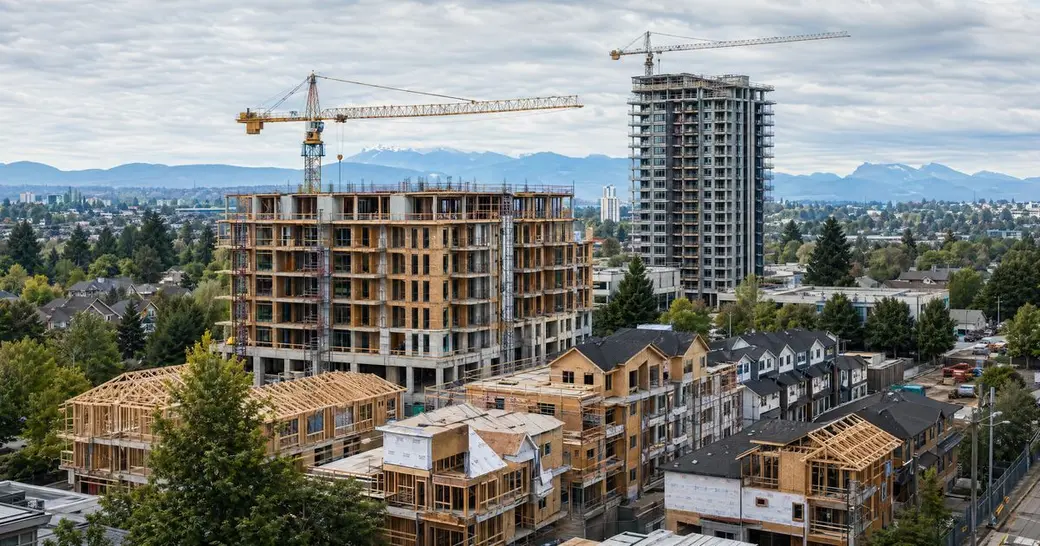
In a previous analysis, I broke down how the Build Canada Homes program works at a structural level — including the leasehold model and the stated goal of reducing upfront costs. This piece goes further. It looks at the specific projects identified in Metro Vancouver, the gap between policy messaging and delivery timelines, and the questions buyers need to be asking before they treat this program as a near-term affordability solution.
Where the Land Is Actually Coming From
One of the most common misconceptions about Build Canada Homes is that it unlocks large amounts of new land. It does not. The land being used is existing federal property — surplus government buildings, underutilized federal sites, and properties identified through the Canada Public Land Bank.
Key Vancouver-area holdings involved include:
- Surplus federal office and service buildings (such as the former Services Canada building at 125 East 10th Avenue)
- Canada Lands Company holdings, including large sites like Jericho Lands and Heather Lands
- Properties absorbed as the program evolves from a federal agency into a Crown corporation
In a land-constrained market like Vancouver, this distinction matters. There is limited federal land available, and much of it is already tied to long-term redevelopment plans. The program is not creating new supply from nothing — it is directing existing public assets toward housing. That is still meaningful, but it sets a ceiling on short-term impact.
The Key Vancouver Projects
125 East 10th Avenue — Mount Pleasant
This former Services Canada building was identified in the Canada Public Land Bank in August 2024 and is one of the program's flagship direct-build sites in Vancouver. Under the Broadway Plan, it allows for approximately a 20-storey rental tower, positioned to take advantage of its proximity to the future Mount Pleasant SkyTrain station.
Project Status — East 10th Avenue
The federal government has been accepting development offers for this site since late 2024. Build Canada Homes has stated a goal of making projects construction-ready within 12 months of framework approval. Completion would likely align with the SkyTrain expansion timeline — approximately 2027–2028. No shovel-in-ground date has been publicly confirmed as of April 2026.
Jericho Lands — West Point Grey
This is by far the larger and more complex of the two primary Vancouver projects. The Jericho Lands is a 90-acre Indigenous-led redevelopment in West Point Grey, led by the MST Partnership (Musqueam, Squamish, and Tsleil-Waututh Nations) in joint venture with Canada Lands Company.
The Official Development Plan (ODP) for Jericho Lands was approved in April 2025, converting the vision into a formal bylaw to provide financing certainty. Approximately 35% of buildings are planned using mass timber construction. The project also includes 30 acres of parkland.
- Late 2025 / Early 2026 Phase 1 rezoning submission expected
- 2027–2028 Phase 1 construction estimated to begin
- ~2036 First 4,000 homes estimated for completion
- 25–30 years Full build-out timeline
The Timeline Reality
Build Canada Homes is frequently discussed in the media as a near-term affordability solution. The projects currently identified in Vancouver tell a different story.
Timeline Gap
The East 10th Avenue site is years away from delivering units. Jericho Lands will not see its first major delivery until approximately 2036, with full build-out spanning a generation. This does not make the projects unimportant — but it does mean they are not a response to today's affordability crisis. They are a long-term infrastructure investment with a very long runway.
For buyers evaluating their options right now, this matters. Policy announcements create the impression of near-term supply. The actual construction calendar does not support that impression in Vancouver.
The Leasehold Structure — and Why It Changes Things
A core feature of Build Canada Homes is the use of leasehold land rather than freehold ownership. The federal government retains ownership of the land and provides long-term leases, removing land value from the purchase price. The stated goal is to make homes significantly more affordable upfront.
In theory, this lowers the entry cost. In practice, it changes the ownership structure entirely — and introduces trade-offs that buyers need to fully understand:
- Buyers do not own the land — only the improvements on it
- Resale appreciation behaves differently than freehold; the land component does not compound
- Financing can be more restrictive — lenders often will not grant a mortgage that outlasts the lease term
- Lease terms, renewal conditions, and ground rent escalation clauses become critical variables
The "20% Savings" Question
One of the most widely cited claims about the program is the potential for approximately 20% savings on purchase price. It is worth unpacking what that actually means — and where the number comes from.
According to program documentation, the 20% figure actually refers to two distinct things depending on the context. First, it refers to targeted construction cost reductions through modern, factory-built, and modular methods. Second, in related provincial initiatives like BC Builds, it refers to a requirement that at least 20% of units carry rents at least 20% below market rate.
Is This Savings, or Just Leasehold Pricing?
In Metro Vancouver, leasehold properties have historically traded at a 10 to 30% discount to comparable freehold homes. That discount is not new — it reflects the absence of land ownership. The question is whether Build Canada Homes is creating a new pricing advantage, or simply delivering housing at a price that leasehold has always commanded. For buyers comparing options, that distinction is important.
Buyer Hesitation in BC — A Real Market Dynamic
Understanding buyer behaviour in British Columbia is central to evaluating whether Build Canada Homes will actually perform as intended. There is already meaningful hesitation around leasehold properties in this market — and it has been documented over time in specific developments where lease terms, renewal conditions, and financing restrictions have affected buyer confidence.
The hesitation is most common when:
- Lease terms are finite and renewals are uncertain
- Ground rent escalation clauses are not clearly disclosed upfront
- Financing options are more limited than buyers expect
- The title structure is not well understood at point of purchase
This does not mean leasehold cannot work — UBC and False Creek are examples where it has functioned over time. But buyer comfort with the structure is not universal in BC, and the program's success depends on reaching buyers who are willing to accept non-ownership of land in exchange for a lower entry price.
Will Buyers Accept the Trade-Off?
The fundamental bet behind Build Canada Homes is that a generation of Vancouver buyers who cannot afford freehold will accept lower upfront pricing in exchange for not owning the land. For some buyers, that will be enough. For others — particularly those thinking about long-term wealth building and intergenerational value — freehold ownership remains the standard they are working toward.
For buyers evaluating Build Canada Homes properties, the decision involves more than the listed price. It involves ownership structure, delivery timeline, long-term resale potential, financing implications, and ongoing costs and restrictions. Affordability is not just about getting into the market — it is about the full financial picture over time.
From a real estate perspective, this is where understanding the structure matters more than the headline.
What This Means in Today's Market
Build Canada Homes is a long-term supply strategy built on existing public land. It is important and it is real. But in Metro Vancouver — where land is limited, timelines are extended, and buyers carry well-documented caution around leasehold — it is not a near-term fix for today's affordability challenge.
Understanding that distinction matters. The housing market is not shaped by policy announcements alone. It is shaped by what actually gets built, when it gets built, and what buyers are genuinely willing to accept when they sign on the dotted line.
Frequently Asked Questions
Common questions about Build Canada Homes and what it means for buyers and sellers in Metro Vancouver.
What is Build Canada Homes?
Build Canada Homes is a federal program launched in September 2025 that uses existing public land — primarily surplus federal properties — to develop affordable housing. The agency operates as a federal Crown corporation and oversees construction directly on federal sites, prioritizing non-profit and co-operative housing partners to keep homes affordable over the long term.
What land is being used in Vancouver specifically?
The primary Vancouver-area sites identified to date are 125 East 10th Avenue in Mount Pleasant (a former Services Canada building) and the Jericho Lands in West Point Grey (a 90-acre site managed by the MST Partnership and Canada Lands Company). Both were already in federal or Crown corporation hands. No new land is being created — the program is redirecting existing public assets toward housing.
Why is the government using leasehold instead of selling the land?
The stated rationale is that keeping land in public ownership permanently removes land value from the purchase price, making homes more affordable. In Vancouver, land can represent 70 to 80% of a property's total value — so a leasehold model theoretically delivers a significant price reduction. The trade-off is that buyers do not own the land and resale dynamics are different from freehold ownership.
How does leasehold financing work — and is it harder to get a mortgage?
Yes, leasehold financing is generally more restrictive. Canadian lenders typically require that the remaining lease term extend well beyond the amortization period of the mortgage — often by 10 to 20 years. For a 25-year mortgage, a lender may require 35 to 45 or more years remaining on the lease. This reduces the pool of available lenders and can affect mortgage terms. Buyers should get independent mortgage advice specific to leasehold before making an offer.
Is the 20% savings claim accurate?
The 20% figure comes from two different sources depending on who is citing it. From a construction standpoint, the program targets up to 20% cost savings through modular and factory-built methods. From a housing cost standpoint, related provincial initiatives require rents at least 20% below market rate. In terms of purchase price, leasehold properties in Metro Vancouver have historically sold at a 10 to 30% discount to freehold — so some savings are real, but they are not unique to this program. They reflect the longstanding pricing of leasehold in this market.
When will units actually be available in Vancouver?
The East 10th Avenue site in Mount Pleasant is the more near-term project, with completion potentially aligning with the SkyTrain opening around 2027 to 2028 — though no confirmed construction start date has been announced. The Jericho Lands will not see its first major delivery until approximately 2036, with full build-out taking 25 to 30 years. These are not short-term supply solutions for today's market.
How does Build Canada Homes affect current buyers and sellers?
In the near term, the program does not change today's market dynamics in any meaningful way. Existing freehold supply, interest rates, pre-sale conditions, and buyer sentiment continue to drive the market. Over the medium and long term — particularly if the Jericho Lands project proceeds as planned — the program adds significant new supply to the West Point Grey and broader Vancouver market, which could affect pricing and demand in those areas over the 2030s and beyond.
Should I buy a Build Canada Homes leasehold property?
That depends on your goals. If your priority is a lower entry price and you are comfortable with non-ownership of land, leasehold can make sense. If you are primarily focused on long-term wealth building, land appreciation, and maximum resale flexibility, freehold ownership typically serves that goal more directly. The right answer depends on your financial position, timeline, and how well you understand the specific lease terms on offer. Independent legal and financial advice is essential before committing to any leasehold purchase.
Sources
- Prime Minister of Canada / PMO — "Prime Minister Carney launches Build Canada Homes," September 14, 2025. pm.gc.ca
- Housing, Infrastructure and Communities Canada — Build Canada Homes Frequently Asked Questions, April 9, 2026. housing-infrastructure.canada.ca
- Government of Canada — "Government tables bill giving Build Canada Homes power to build," February 6, 2026.
- CityHallWatch — "125 East 10th Avenue identified in Canada Public Land Bank," August 26, 2024.
- MST Partnership / Canada Lands Company — Jericho Lands Official Development Plan, approved April 2025.
- Canadian Centre for Housing Rights — Analysis of public land leasing and Crown corporation housing models, 2025–2026.
- BC Builds Program — Provincial initiative context for below-market rental requirements. bc.ca
- City of Vancouver Broadway Plan — Zoning and density permissions for Mount Pleasant transit-oriented sites.
This article is part of an ongoing series covering housing policy and market conditions in Metro Vancouver. A video update on Build Canada Homes — what it means for buyers, the leasehold question, and what is actually being built — is coming soon.
Debbie Evans | REALTOR®
eXp Realty | West Vancouver & North Shore Markets
If you are trying to evaluate how Build Canada Homes — or any of these policy changes — fit into your buying or selling strategy, the conversation is worth having before you make your next move. I am here to help you see the full picture, not just the headlines.
This content is for informational purposes only and does not constitute financial, legal, or investment advice. All information is sourced from publicly available documents, media reporting, and government communications as of April 2026. Buyers should seek independent legal and mortgage advice before entering into any leasehold purchase agreement.
Categories
- All Blogs (98)
- aboriginal title ruling (2)
- bc housing market (23)
- bc real estate (56)
- Bill C-15 (1)
- build canada homes (8)
- Buyers Guide (4)
- canada strong fund (3)
- Canada-U.S. Trade (2)
- canadian real estate (15)
- Climate Change (2)
- Design & Build (4)
- Dundarave West Vancouver (1)
- Equity Growth (1)
- freehold (1)
- Home Buying Tips (1)
- housing policy (1)
- land claims (2)
- Land Claims / BC Real Estate (1)
- leasehold (1)
- local news (1)
- Lower Lonsdale (2)
- Market & Policy Analysis (1)
- Market Commentary (6)
- market insights (23)
- Multigenerational Living (2)
- North Vancouver Real Estate (19)
- open house (1)
- Open House Security (1)
- presale (1)
- real estate insights (7)
- Real Estate Market & Housing (2)
- renovation (1)
- Squamish Market Update (7)
- squamish real estate (8)
- squamish update (3)
- Vancouver Real Estate (17)
- West Vancouver Living (15)
- West Vancouver Real Estate (26)
- Whistler Market Update (4)
Recent Posts





Have a Question? Let’s Talk. I’m Here to Help.

North Shore & Vancouver Realtor License ID: 175378
+1(778) 875-4934 | debbie.evans@exprealty.com