
West Vancouver vs. Squamish: What the Price Per Square Foot Data Actually Shows
The Assumption Most Buyers Carry Into This Market
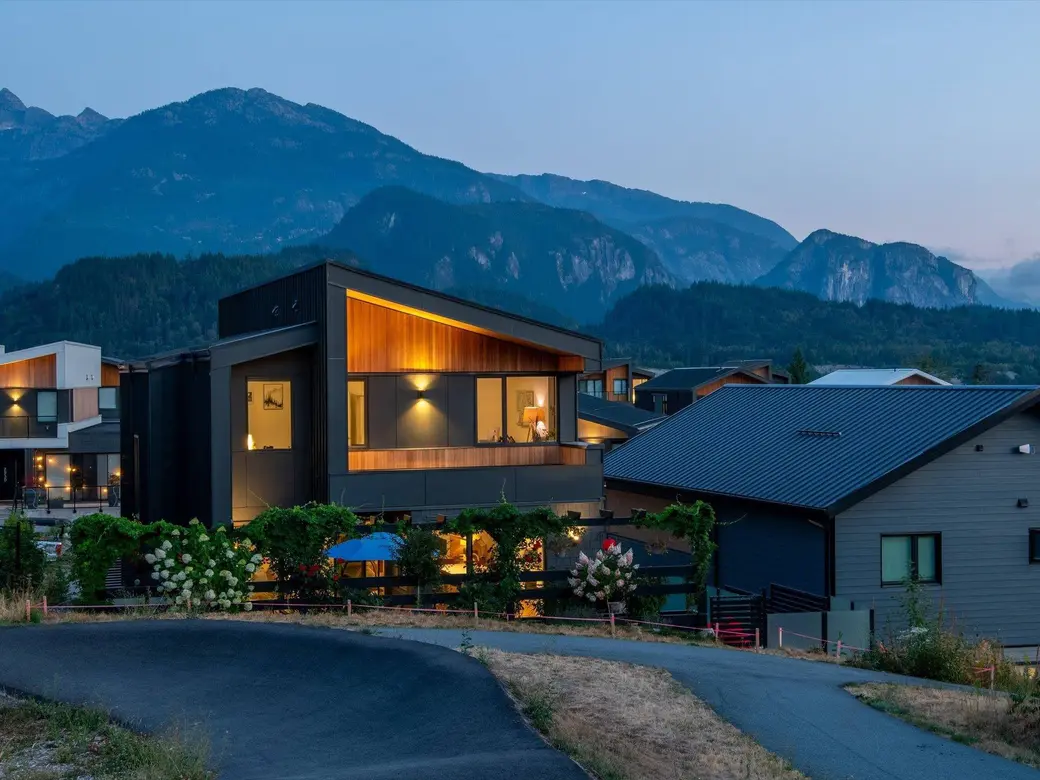
It is one of the most persistent assumptions in Greater Vancouver real estate: that Squamish represents a dramatically more affordable alternative to West Vancouver's British Properties on a price-per-square-foot basis. The logic seems self-evident. West Vancouver is one of Canada's most recognized luxury addresses. Squamish is a growing outdoor lifestyle community an hour north on the Sea-to-Sky corridor — newer, more accessible, and in most buyers' minds, considerably cheaper per square foot.
For much of the past decade, that assumption held reasonably well. British Properties commanded a genuine premium over comparable Squamish construction. Buyers willing to move up the highway were rewarded with newer homes, larger lots, and meaningful per-square-foot savings that helped justify the lifestyle trade-off.
That gap has now largely closed — at least when measured against what homes are actually transacting for, rather than what sellers are asking.
What the Sold Data Shows
When you strip away asking prices and look only at verified MLS sale prices over the past 12 months, both markets produce a surprisingly similar price-per-square-foot range.
In West Vancouver's British Properties, luxury homes have been selling between approximately $556 and $1,003 per square foot, depending on the size, age, and quality of the home. In Squamish, recent luxury sales have produced a range of approximately $532 to $937 per square foot across comparable property types.
What's important here is that these are actual sale prices — not asking prices. And based on that data, the gap between these two markets is far smaller than most buyers assume.
The overlap is not coincidental. It reflects several converging forces that have been reshaping buyer behaviour and transaction prices across both corridors over the past two to three years.
British Properties — Recent Sold Comparables
The following is a sample of verified sales within West Vancouver's British Properties over the past 12 months. The range in per-square-foot values — even within the same neighbourhood — reflects an important pattern discussed further below.
| Property Type | Year Built | Finished Size | Sale Price | $/sqft |
|---|---|---|---|---|
| Luxury — Large Format | 1997 | 10,433 sqft | $5,800,000 | $556 |
| Luxury — Large Format | 2022 | 8,876 sqft | $5,600,000 | $631 |
| Luxury — Large Format | 2016 | 8,040 sqft | $5,890,000 | $733 |
| Luxury — Mid Format | 2021 | 6,158 sqft | $5,450,000 | $885 |
| Luxury — Mid Format | 2019 | 5,986 sqft | $5,550,000 | $927 |
| Developer Custom Build | 2022 | 6,680 sqft | $6,700,000 | $1,003 |
Squamish — Recent Sold Comparables
Verified Squamish luxury sales over the same period show a range that mirrors what is transacting in West Vancouver, particularly when comparing homes of similar size and vintage.
| Property Type | Year Built | Finished Size | Sale Price | $/sqft |
|---|---|---|---|---|
| Custom — Large Format | 2019 | 6,242 sqft | $3,400,000 | $545 |
| Custom — Large Format | 2007 | 5,305 sqft | $2,825,000 | $532 |
| Custom — Mid Format | 2017 | 4,232 sqft | $2,582,500 | $610 |
| Custom — Mid Format | 2017 | 3,554 sqft | $2,640,000 | $743 |
| Custom — Smaller Format | 2017 | 3,330 sqft | $3,120,000 | $937 |
| Custom — Smaller Format | 2012 | 3,101 sqft | $2,825,000 | $911 |
Key Observation
Both markets show the same internal pricing pattern: larger homes consistently sell for less per square foot, while smaller, more efficient homes command a premium. This holds true in both West Vancouver and Squamish — and challenges the assumption that one market carries a consistent pricing advantage over the other.
Three Reasons the Gap Has Narrowed
1. Buyers Are No Longer Paying a Premium for Excess Square Footage
One of the most consistent patterns in recent luxury sales data across both markets is the inverse relationship between home size and price per square foot. The largest homes — those exceeding 8,000 square feet — are transacting at the lowest per-square-foot rates, sometimes well below $650 even in prime locations. Smaller, well-designed homes in the 5,000 to 6,500 square foot range are consistently achieving the highest rates.
This reflects a meaningful shift in buyer behaviour. The era of paying a premium simply for scale has passed. Today's luxury buyer places a higher value on design quality, livability, and efficiency. A 10,000 square foot home that requires significant maintenance, carries elevated property taxes, and feels oversized for its intended use is no longer viewed as inherently more valuable than a thoughtfully designed 5,500 square foot home on the same street.
2. West Vancouver Has Undergone a Significant Price Correction
West Vancouver's luxury market has experienced meaningful compression from its 2021 and 2022 peak. Properties that were listed — and in some cases re-listed repeatedly — at prices reflecting peak-era conditions have gradually found their clearing prices. That process has taken longer in the luxury segment than in the broader market, but the transaction data now reflects it clearly.
Some of the most striking examples involve newer, developer-built homes in the British Properties that were first listed at prices well above $9,000,000 and ultimately transacted at prices closer to $6,700,000 — a decline of approximately $2,500,000 from peak asking price over three years, on a brand-new home. These are not distressed sales or unusual circumstances. They represent where the market has moved.
3. Squamish Pricing Expanded Ahead of Its Fundamental Value Base
The Sea-to-Sky corridor experienced significant price appreciation during the pandemic-era expansion, driven by lifestyle demand, remote work flexibility, and constrained inventory. That expansion brought Squamish pricing into ranges that, in some cases, moved ahead of where the market's fundamentals could sustain it long-term.
Recent sold data shows Squamish transactions largely settling at or close to BC Assessment values — a pattern consistent with a market that has returned to equilibrium after a period of elevated speculative demand. The lifestyle premium is real and is reflected in pricing. But current asking prices that deviate significantly above recent sold comparables in the same area have generally not found buyers at those levels.
Asking Price vs. Market Value: The Gap That Matters
One of the most consistent findings across both markets is the distance between what sellers have listed homes for and what buyers have actually paid. In a correcting market, this gap is not a minor negotiating detail — it is often the defining factor in whether a property sells at all.
Properties priced to reflect 2022 market conditions have consistently accumulated significant days on market before ultimately selling at meaningful discounts to original asking price, or expiring unsold entirely. The sellers who have transacted successfully are those who entered the market at prices grounded in current sold data — not prior cycles or assessed values.
On BC Assessment Values
BC Assessment values are assessed as of July 1 of the prior year and do not capture real-time market movement. In a correcting market, assessed value can lag actual transaction prices by a meaningful margin — sometimes significantly. Across multiple recent West Vancouver sales, properties have transacted at prices noticeably below their current assessed values, confirming that assessment figures should be treated as one reference point, not a pricing anchor.
What This Means for Buyers and Sellers
For buyers currently evaluating West Vancouver against Squamish, the data suggests the decision should be made primarily on lifestyle and location preferences — not on an assumption of dramatic price-per-square-foot savings in one market over the other. On actual transaction data, the savings are far smaller than most buyers expect, and in many cases effectively non-existent once home size, age, and quality are properly normalised.
West Vancouver offers proximity to Vancouver, established school infrastructure, and an address with genuine long-term resale significance. Squamish offers a distinct lifestyle, newer construction at accessible total price points, and a community that continues to develop. Both are legitimate choices. Neither is the obvious financial bargain it may once have appeared to be relative to the other when measured on a price-per-square-foot basis.
For sellers in both markets, accurate pricing relative to current sold comparables — not prior listings, not assessed values, and not what a neighbour asked two years ago — is the single most important factor in achieving a successful transaction in today's environment.
The market isn't pricing based on location alone anymore — it's pricing based on how buyers value space.
Frequently Asked Questions
Common questions about price per square foot and what the current data means for buyers and sellers in West Vancouver and Squamish.
What is the difference between price per square foot and total price?
Total price is the amount a buyer pays for a property. Price per square foot is that total divided by the home's finished floor area — it normalises the comparison across homes of very different sizes. A $6,000,000 home with 10,000 square feet has a lower price per square foot than a $4,000,000 home with 3,500 square feet, even though the total price is higher. Both metrics matter, but price per square foot is often the more honest measure of what the market is paying for a given type of space in a given location.
Why do larger luxury homes often sell at a lower price per square foot?
Several factors contribute to this pattern. The pool of buyers able and willing to purchase very large homes is significantly smaller, which limits competitive bidding. Buyers of large homes are often acutely aware of operating costs — property taxes, maintenance, and utilities — which run considerably higher, making buyers more price-sensitive per square foot. Large homes also frequently include lower-value square footage in secondary spaces that buyers discount relative to primary living areas. And in a market where buyer preferences have shifted toward livability over scale, very large homes face a structural headwind that is clearly reflected in their pricing.
Is Squamish still considered a value market relative to Greater Vancouver?
On a total price basis, yes — the average Squamish transaction price remains meaningfully lower than comparable homes in West Vancouver or North Vancouver. On a price-per-square-foot basis for luxury properties specifically, the gap has largely closed. Whether Squamish represents "value" depends entirely on what the buyer values. If the buyer prioritises maximising space per dollar and is comfortable with the commute, newer Squamish construction may still make sense. If the priority is proximity to Vancouver, established school catchments, or long-term prestige-market positioning, West Vancouver remains in a distinct category despite the convergence in per-square-foot pricing.
Why is there such a wide range in price per square foot even within one neighbourhood?
Price per square foot within a single neighbourhood can vary significantly based on the age and condition of the home, finish quality, lot size and orientation, views, floor plan efficiency, and how long the property was on the market before selling. A home that sold after 200 days on market with multiple price reductions will typically reflect a lower per-square-foot figure than one that sold in its first weeks of listing. Both are valid data points — but understanding the context behind each transaction is as important as the number itself.
How reliable is BC Assessment as a benchmark for current market value?
BC Assessment values are assessed as of July 1 of the prior year. In a stable or rising market, they tend to track fairly closely to transaction prices. In a correcting market, they can lag actual sale prices meaningfully — sometimes by 10% or more. In the current environment, several West Vancouver properties have sold at prices noticeably below their assessed values. Assessment figures are a useful starting reference point, but they should not be treated as a substitute for a current market analysis based on recent comparable sales.
How should buyers use price per square foot data when making a purchase decision?
Price per square foot is a useful benchmarking tool, but it works best when comparing similar properties: similar age, similar quality, similar size range, similar location. It becomes less reliable when applied across significantly different home sizes, or when based on asking prices rather than confirmed sale prices. The most meaningful data point is always what a qualified, motivated buyer actually paid for a comparable home in a recent arm's-length transaction. Everything else is a reference point, not a value.
Debbie Evans | REALTOR®
eXp Realty | West Vancouver, North Shore & Sea-to-Sky Markets
Understanding where the market actually is — not where it was two years ago — is the conversation worth having before you make your next move. If you are buying or selling in West Vancouver, North Vancouver, or the Squamish corridor and want a clear-eyed read on current pricing, I am happy to walk through the data with you.
All data referenced reflects verified MLS sold transactions and BC Assessment records current as of April 2026. Market analysis is provided for informational purposes only and does not constitute financial, legal, or investment advice. All measurements are approximate and should be independently verified. © 2026 Debbie Evans, eXp Realty.
Categories
- All Blogs (97)
- aboriginal title ruling (2)
- bc housing market (23)
- bc real estate (55)
- Bill C-15 (1)
- build canada homes (8)
- Buyers Guide (4)
- canada strong fund (3)
- Canada-U.S. Trade (2)
- canadian real estate (15)
- Climate Change (2)
- Design & Build (4)
- Dundarave West Vancouver (1)
- Equity Growth (1)
- freehold (1)
- Home Buying Tips (1)
- housing policy (1)
- land claims (2)
- Land Claims / BC Real Estate (1)
- leasehold (1)
- local news (1)
- Lower Lonsdale (2)
- Market & Policy Analysis (1)
- Market Commentary (6)
- market insights (23)
- Multigenerational Living (2)
- North Vancouver Real Estate (19)
- open house (1)
- Open House Security (1)
- presale (1)
- real estate insights (7)
- Real Estate Market & Housing (2)
- Squamish Market Update (7)
- squamish real estate (8)
- squamish update (3)
- Vancouver Real Estate (17)
- West Vancouver Living (15)
- West Vancouver Real Estate (26)
- Whistler Market Update (4)
Recent Posts



Have a Question? Let’s Talk. I’m Here to Help.

North Shore & Vancouver Realtor License ID: 175378
+1(778) 875-4934 | debbie.evans@exprealty.com