
Canada’s Hidden Tariff Problem: What Are Interprovincial Trade Barriers Really Costing Us?
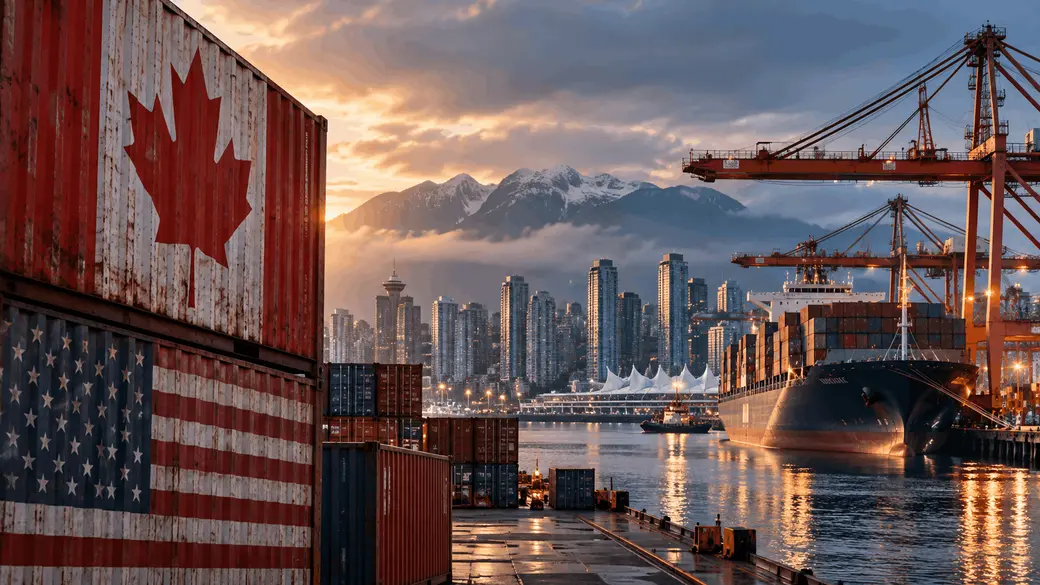
Canada's Hidden Tariff Problem: What Are Interprovincial Trade Barriers Really Costing Us?
Start with the wine.
A winery in the Okanagan can sell a bottle to a customer in Seattle more easily, in some respects, than to a customer in Toronto. That sentence sounds like an exaggeration. For most of the past century, it wasn't. It's the kind of detail that makes an abstract argument about "internal trade barriers" suddenly concrete — and it's why I'm starting there.
Before We Ask Canadians to Buy Canadian, Can We Make It Easier to Sell Canadian?
I knew about the wine problem long before I understood the system behind it. Most Canadians have heard the phrase "interprovincial trade barriers" by now, but if you're like I was, the actual mechanics are fuzzy. Here's the plain-English version, before we get into the studies and the economists arguing over percentage points.
What exactly is an interprovincial trade barrier?
Generally not a literal tariff charged at a provincial border. It's differences in provincial rules, licensing, product standards, permits, transportation regulations, alcohol distribution systems, professional credentials, and procurement rules that make it harder or more expensive to do business across the country. Economists sometimes translate the economic effect of all this into a "tariff-equivalent" percentage for comparison purposes — that's a modelling shorthand, not evidence that a province is charging an actual tariff.
Where did these barriers come from, and why do they still exist?
Canada's federal structure gives provinces real authority over commerce, licensing, and regulation. Over decades, each province built its own systems independently, often for legitimate local reasons — safety standards, local industries, liquor boards, professional licensing. The result is a patchwork nobody designed on purpose. They persist because removing them isn't a unilateral decision: it requires provinces to actively agree to recognize each other's rules, and getting 13 jurisdictions to agree on anything takes time. Statistics Canada's most recent business survey found 41.0% of Canadian businesses purchased goods or services from another province in the prior year, and 26.9% sold into one — with transportation cost, not regulation, the single biggest obstacle businesses actually report (27.4% purchasing, 23.2% selling). Geography explains a real share of this story, which matters for how much regulatory reform alone can fix.
How much could Canada actually gain by removing them?
Use a range, not a single number — you'll see why in the next section. The IMF's own working paper described a "preferred estimate" of 3–7% of GDP from full liberalization, which very roughly translates to somewhere between $90 billion and more than $200 billion depending on the year and the model used. This is increased economic output over time — higher GDP, more business activity — not a cheque mailed to Canadian households, and as you'll see below, not every economist agrees the real-world number lands anywhere near that range.
Who would actually benefit, and how?
For businesses: less duplicate licensing and certification, easier expansion into other provinces, a larger domestic customer base, potentially lower compliance costs, and easier access to skilled workers from elsewhere in Canada. For consumers: potentially more Canadian products available across provincial lines, more competition, and stronger domestic supply chains. I won't promise you lower prices — nobody honest can guarantee that outcome, and I'd rather underpromise here than oversell it.
Could this actually happen fast, or is it genuinely slow?
Both, depending on the barrier. Some things are realistically fixable in months through mutual recognition — if a licence, certification, or product standard accepted in one province is simply accepted in another, that's mostly paperwork and political will. Other barriers are genuinely harder: alcohol distribution systems, agricultural marketing boards, procurement frameworks, and provincial legislation involving real (not pretextual) health or safety differences. The better question isn't "can everything disappear tomorrow" — it's why we aren't already moving faster on the barriers that clearly don't need to exist.
Is Ottawa already trying to speed this up?
Yes, though its power here is real but limited. Bill C-5 — the One Canadian Economy Act — received Royal Assent on June 26, 2025, and its Free Trade and Labour Mobility in Canada Act came into force January 1, 2026. It treats goods, services, and workers that meet provincial requirements as meeting comparable federal requirements, and by June 30, 2025, Ottawa had removed all 20 of its remaining exceptions under the Canadian Free Trade Agreement. In November 2025, federal, provincial, and territorial ministers also approved a Canadian Mutual Recognition Agreement covering most goods. What Ottawa cannot do is force one province to recognize another province's rules — that still requires each province to opt in, which is exactly why the alcohol agreement covers nine provinces and not thirteen jurisdictions.
Here's why the timing matters. Governments at every level are currently investing real money encouraging Canadians to buy Canadian. Effective December 16, 2025, Ottawa's own Buy Canadian procurement policy began prioritizing Canadian suppliers and materials for federal contracts — the federal government purchases more than $37 billion in goods, services, and construction annually, and by June 2026 the policy had already touched over $3 billion in solicitations, with $726 million in contracts awarded. That's real public money and real public messaging asking Canadians to support Canadian businesses.
Ian Lee's Actual Position — What's Verified and What Isn't
Professor Ian Lee of Carleton University's Sprott School of Business has become one of the most-quoted voices on Canada's tariff response, appearing repeatedly on CBC and in The Hub's Trump's Trade War series through 2025 and 2026. His consistent, well-documented position: decades of a "subsidize, protect, and regulate" strategy have weakened Canada's economy, and dismantling interprovincial trade barriers and protectionism is essential to restoring productivity. In one CBC interview, Lee said flatly that Canada is "going to lose" a prolonged tariff war and needs to focus on what it can control domestically. He has also cited a public speech by Bank of Canada Senior Deputy Governor Carolyn Rogers warning that protectionist policies and interprovincial barriers have contributed to Canada's productivity slide — from roughly 90% of U.S. productivity levels to around 50%, per University of Calgary economist Trevor Tombe's estimates.
What I have not been able to verify is a specific, quotable claim from Lee putting a precise number on interprovincial barriers and stating outright that it exceeds the cost of the U.S. tariffs. That comparison exists in the public conversation — Prime Minister Mark Carney has made a version of it directly — but I'm not going to put words in Lee's mouth he hasn't said on the record. Lee belongs to the camp arguing internal reform is Canada's most powerful lever precisely because Ottawa can't control Washington's decisions, but can control its own.
How Big Is the Cost, Really? It Depends Who's Counting
This is where the article could go badly wrong if I picked one number and presented it as settled fact. It isn't. Here are the major estimates, each with its source, date, and method.
The January 2026 IMF report — co-authored by Federico Diez and Yuanchen Yang, with contributions from Tombe — is the most current figure in circulation. It finds roughly four-fifths of the potential GDP gain would come specifically from liberalizing services (licensing, credentials, finance, telecom), not goods. That's a meaningfully different focus than the 2019 IMF paper's smaller, goods-only 4% figure — a reminder that "the IMF says" isn't one number, it's several studies asking different questions at different times.
Provincial and federal politicians cite larger figures still. Ontario's government has put the annual cost at up to $200 billion and roughly 8% of GDP (4% at the low end). Deloitte projects a cumulative $881 billion boost by 2040 — a 2.4% GDP increase, by its own modelling. Federal Internal Trade Minister Anita Anand has cited the same $200-billion figure publicly.
The Skeptics' Case
Not every economist buys it. Marc Lee, senior economist at the Canadian Centre for Policy Alternatives, has published detailed critiques arguing the large GDP figures rely on abstract economic modelling rather than direct measurement of actual barriers, and that most interprovincial trade already flows freely — total interprovincial trade hit $451 billion in 2021, up 44% since 2007. Lee has called the political rush to cite these numbers "political theatre." In a July 2025 interview, he put the comparison to U.S. tariffs directly:
CIBC's chief economist Avery Shenfeld co-authored a separate, similarly cautious report, and Trevor Tombe himself — whose research underlies several of the larger cited figures — has publicly said politicians are cherry-picking his work to promote its most optimistic scenario.
So: is the cost of interprovincial barriers comparable to the U.S. tariffs? The honest answer is that credible economists disagree by a wide margin, the estimates depend heavily on modelling assumptions, and anyone citing a single figure as settled fact — in either direction — is oversimplifying an unsettled debate.
Wine: The Example Everyone Actually Understands
This is where the abstract argument becomes tangible, and it's a genuinely strange piece of Canadian legal history.
In 2012, retired New Brunswick lineman Gerard Comeau was fined $292 by the RCMP for bringing home 14 cases of beer and three bottles of liquor purchased in Quebec — more than his home province's personal-import limit allowed. Comeau fought the fine, and the case eventually reached the Supreme Court of Canada, which many hoped would use Section 121 of the 1867 Constitution Act — which says goods "admitted free" must move freely between provinces — to strike down provincial liquor-control barriers entirely.
It didn't. In April 2018, the Supreme Court ruled unanimously against Comeau, finding that provinces retain broad authority to regulate alcohol within their borders, as long as the rule isn't designed purely to block trade. Ottawa did repeal the old federal Importation of Intoxicating Liquors Act restriction on interprovincial alcohol movement the following year, but that only removed the federal-level obstacle — provinces kept their own systems.
- Apr 2018 Supreme Court rules against Comeau; provincial liquor-control authority upheld
- Jun 2025 Nine provinces and one territory sign a memorandum of understanding to allow direct-to-consumer (DTC) alcohol sales across provincial lines by May 2026
- May 2026 That deadline passes without a functioning cross-country system in place
- Jul 21, 2026 Nine provinces — including B.C. — sign a final DTC alcohol agreement in Charlottetown, one day after new U.S. tariffs specifically targeting Canadian beer, wine and spirits were announced
- Present B.C. already allows DTC wine sales from producers in any province; a full system covering beer and spirits is targeted for February 2027
Quebec, Yukon, and the two other northern territories haven't signed on; the Northwest Territories and Nunavut cited community-level alcohol restrictions reflecting local priorities. And even where the deal is signed, the details remain messy — provinces retain the right to set their own markups and fees on top of what producers already pay at home.
Beyond Wine: The Barriers Businesses Hit Every Week
Wine is the memorable example, but it's far from the only one.
- Professional credential recognition — on August 27, 2026, federal, provincial, and territorial ministers agreed every jurisdiction will recognize a skilled tradesperson's certification from another province within 30 days of application, rather than requiring full re-certification. It's targeted for completion by the end of 2026 — not yet fully in force everywhere.
- Construction standards and building products — differing provincial codes and approval processes add friction and cost to moving materials and licensed trades across provincial lines.
- Not every barrier is pure protectionism. Newfoundland and Labrador Premier Andrew Furey offered a useful example on the Public Policy Forum's WONK podcast: dental hygienists in his province aren't licensed to administer anesthesia, while their counterparts in Saskatchewan and Alberta are. Waving away "all" interprovincial barriers means accepting the lowest common denominator on some genuinely public-safety-driven rules, not just eliminating red tape.
Could This Offset the U.S. Tariffs? Where Things Actually Stand
As of early September 2026, Canada–U.S. trade talks have collapsed. The U.S. imposed a 50% tariff on roughly $27.6 billion of Canadian goods effective August 22, 2026, covering dairy, appliances, and — notably, given the wine story above — alcohol. Canada's matching countermeasures took effect September 8, 2026, at rates of 15%, 25%, and 50% across steel, aluminum, dairy, appliances, agricultural equipment, pulp and paper, plastics, and electronics. The formal CUSMA review concluded earlier this year with the U.S. declining to renew for a new 16-year term, leaving the agreement's future genuinely uncertain.
Prime Minister Carney has argued publicly that eliminating internal trade barriers would benefit Canadians more than the U.S. tariffs can take away, telling voters directly, "We can give ourselves far more than Donald Trump can ever take away." Given the range of credible estimates above — from 4% to 7% GDP gains to economists like Marc Lee calling the comparison a stretch — that's a defensible political argument, but not a settled economic fact. What isn't in dispute: Canada cannot decide what Washington does next. It can decide how difficult it keeps making trade between Manitoba and Ontario, or between a Kelowna winery and a Toronto dinner table.
What This Means for Construction, Housing, and Real Estate
I want to be precise here, because it would be easy — and wrong — to claim that removing interprovincial trade barriers would directly lower home prices on the North Shore. It wouldn't, at least not in any way I could responsibly promise anyone. What's real is the economic transmission, several steps removed from your closing statement:
- Construction material costs and movement: CMHC has estimated that eliminating interprovincial trade barriers could add roughly 30,000 additional housing starts annually nationally, partly by easing west-to-east transportation of domestic building materials — materials that matter more now that U.S. tariffs also apply to softwood lumber and finished wood products like cabinets.
- Skilled trades supply: the credential-recognition reforms discussed above bear directly on how quickly licensed trades can move to where housing demand is strongest, relevant to a country that, per CMHC, needs millions of additional homes built by 2030.
- Business investment, wages, and household income: the broader productivity case ultimately concerns whether households have more purchasing power and job security — both of which factor into buyer confidence over time, the same way trade-war headlines do.
- Interprovincial migration: the IMF's own modelling projects workers would migrate toward provinces seeing the largest productivity gains — a slow-moving dynamic that can eventually shift demand in specific regional housing markets.
My Read
I came into this research expecting a tidier story. It would be satisfying to report that internal trade barriers definitively cost Canada more than the U.S. tariffs, hand you a clean number, and move on. The honest version is messier: the IMF alone has published materially different estimates six years apart using different methods, respected economists at the CCPA and CIBC think the bigger figures are overstated, and even Trevor Tombe — whose research politicians most often cite — says his own work is being cherry-picked.
What I'm comfortable saying plainly: this isn't manufactured controversy, and it isn't “the U.S. tariffs don't matter.” Canada has spent a century building smaller, quieter walls between its own provinces, most Canadians have never had reason to notice them, and a winery in the Okanagan noticed decades before anyone else did. Whatever the final number turns out to be, that part of the argument doesn't depend on which study you believe.
Frequently Asked Questions
Do interprovincial trade barriers cost Canada more than U.S. tariffs?
Economists disagree. IMF studies place the potential GDP gain from full liberalization between 4% (2019 paper) and 7% (January 2026 report, roughly $210 billion). Skeptics, including CCPA senior economist Marc Lee and CIBC's Avery Shenfeld, argue these figures rely on modelling assumptions rather than direct measurement and overstate the real-world gains. There is no single agreed-upon number.
Can I buy wine directly from a B.C. winery if I live in another province?
It depends where you live. B.C. already allows direct-to-consumer wine shipments from producers in any Canadian province. As of the July 2026 nine-province agreement, most other signatory provinces are implementing similar systems, though full rollout (especially for beer and spirits, and in B.C.'s own case) is targeted for completion by February 2027. Quebec, Yukon, Northwest Territories, and Nunavut have not signed the current agreement.
Will removing interprovincial trade barriers lower home prices?
Not directly, and I wouldn't promise anyone that it will. The realistic connection runs through construction material costs, skilled-trades labour supply, business investment, and household income — all of which can, over time, affect housing demand and construction activity. It is not a mechanism for immediate price relief.
What did the Comeau Supreme Court case actually decide?
In April 2018, the Supreme Court of Canada ruled unanimously that provinces retain broad constitutional authority to regulate the interprovincial movement of alcohol, rejecting the argument that Section 121 of the Constitution Act, 1867 guarantees unrestricted free trade between provinces. It did not create a right to buy alcohol freely across provincial lines.
Sources
- International Monetary Fund — Alvarez, Krznar & Tombe, "Internal Trade in Canada: Case for Liberalization," IMF Working Paper 2019/158. imf.org
- CBC News — "Canada could gain nearly 7% in real GDP by removing internal trade barriers, says IMF," January 27, 2026. cbc.ca
- Canadian Centre for Policy Alternatives — Marc Lee, "Those big GDP numbers about interprovincial trade barriers are wrong," February 2025; "The premiers' new clothes," 2025. policyalternatives.ca
- CHEK News — "Politicians overstating benefits of scrapping internal trade barriers: think tank," July 8, 2025. cheknews.ca
- The Globe and Mail — "Interprovincial trade efforts have been praised — but the economic boost may be overhyped," March 26, 2025. theglobeandmail.com
- Statistics Canada — "Interprovincial trade in Canada, 2023 to 2024," May 15, 2025. statcan.gc.ca
- The Hub — "'A catastrophic failure in judgement': Ian Lee on how Canadian leaders have responded to the tariffs," March 2025; additional Ian Lee interview coverage through 2025–2026. thehub.ca
- CBC News — "U.S. tariffs a tool 'to force countries to the negotiating table': professor" (Ian Lee), February 2025. cbc.ca
- Supreme Court of Canada — R. v. Comeau, 2018 SCC 15; The Globe and Mail coverage, April 2018. theglobeandmail.com
- CBC News — "9 premiers to allow wineries, distilleries, breweries to sell directly to consumers across provinces," July 21, 2026; "Can direct-to-consumer sales offset new U.S. tariffs for B.C. wineries?" July 23, 2026. cbc.ca
- Canadian Free Trade Agreement Secretariat — "Premiers Sign Final Agreement Towards Canada-Wide Direct-to-Consumer Alcohol Sales," July 21, 2026. cfta-alec.ca
- The Canadian Press (via CP24/CKOM) — "A look at the challenges that remain with interprovincial trade in Canada," August 28, 2026. cp24.com
- The Canadian Press (via community papers) — "Major progress made on dropping interprovincial trade barriers in Canada," August 27–28, 2026 (30-day trade-credential recognition agreement). grandforksgazette.ca
- Public Policy Forum — "Interprovincial trade barriers: What they are and why they matter," featuring Premier Andrew Furey on the WONK podcast, June 2025. ppforum.ca
- Global News — "Dropping interprovincial trade barriers would add 30K housing starts: CMHC." globalnews.ca
- Deloitte Canada — "The Case for Free Interprovincial Trade." deloitte.com
- Global News — "Ontario estimates interprovincial trade barriers cost the Canadian economy $200 billion per year." globalnews.ca
- Government of Canada / Department of Finance — Counter-tariff lists effective September 8, 2026. canada.ca
- Associated Press (via Yahoo News) — "Carney says lower internal trade barriers will help Canada more than Trump's tariffs will harm it," April 2025. yahoo.com
- Congress.gov, Congressional Research Service — "U.S.-Canada Trade Relations," updated through August 2026 (CUSMA review status). congress.gov
- Government of Canada / Intergovernmental Affairs — "Advancing internal trade" (Bill C-5, One Canadian Economy Act, Canadian Mutual Recognition Agreement status). canada.ca
- Government of Canada / Public Services and Procurement Canada — "Government of Canada implements Buy Canadian Policy," December 16, 2025; Small Business Procurement Program update, July 2026. canada.ca
Debbie Evans | REALTOR® & Registered Interior Designer
eXp Realty | West Vancouver, North Vancouver, Vancouver, Squamish & Whistler
With nearly 40 years of combined experience in interior design, construction, and real estate, I follow policy and trade stories like this one because they eventually work their way into construction costs, labour supply, and buyer confidence — the same forces I watch on every file I work on.
This content is for informational and educational purposes only and does not constitute financial, legal, or investment advice. All figures, studies, and quotes are drawn from the publicly available sources listed above, current as of early September 2026. Economic estimates cited here vary significantly by source and methodology, as detailed in the article; tariff rates, trade negotiations, and interprovincial agreements remain fluid and subject to change.
Categories
- All Blogs (97)
- aboriginal title ruling (2)
- bc housing market (23)
- bc real estate (55)
- Bill C-15 (1)
- build canada homes (8)
- Buyers Guide (4)
- canada strong fund (3)
- Canada-U.S. Trade (2)
- canadian real estate (15)
- Climate Change (2)
- Design & Build (4)
- Dundarave West Vancouver (1)
- Equity Growth (1)
- freehold (1)
- Home Buying Tips (1)
- housing policy (1)
- land claims (2)
- Land Claims / BC Real Estate (1)
- leasehold (1)
- local news (1)
- Lower Lonsdale (2)
- Market & Policy Analysis (1)
- Market Commentary (6)
- market insights (23)
- Multigenerational Living (2)
- North Vancouver Real Estate (19)
- open house (1)
- Open House Security (1)
- presale (1)
- real estate insights (7)
- Real Estate Market & Housing (2)
- Squamish Market Update (7)
- squamish real estate (8)
- squamish update (3)
- Vancouver Real Estate (17)
- West Vancouver Living (15)
- West Vancouver Real Estate (26)
- Whistler Market Update (4)
Recent Posts








Have a Question? Let’s Talk. I’m Here to Help.

North Shore & Vancouver Realtor License ID: 175378
+1(778) 875-4934 | debbie.evans@exprealty.com