
CUSMA Wasn't Rewritten Overnight — What Canadians Need to Know About the 2026 Review

CUSMA Wasn't Rewritten Overnight — What Canadians Need to Know About the 2026 Review
What We Know
- CUSMA was signed in 2018, took effect in 2020, and its six-year review was built into the agreement from the start — this was never a surprise addition.
- The July 1, 2026 review already happened. Canada and Mexico confirmed renewal; the U.S. declined to renew "in its current form" — which triggers annual reviews, not termination. CUSMA remains fully in force.
- Article 32.10 only restricts new free-trade agreements with "non-market economies" like China — it does not prohibit ordinary trade with China or any other country.
- Trump publicly announced a "DEAL" on August 18, explicitly qualified as pending final paperwork. Carney's own language stayed more cautious throughout and never confirmed a completed agreement.
- Talks collapsed Friday night, August 21. Both governments have given specific, on-record, but differing explanations for why.
What We Don't Know
- Exactly what changed in the roughly 48 hours between officials calling the emerging terms "a very good deal" (Aug 19) and the collapse (Aug 21) — no independently verified account of that window exists in public reporting.
- The full scope of what the U.S. meant by restricting Canada's "other trade deals" — Carney has not detailed how broad that provision would have been.
Why the Uncertainty Matters
None of this stays confined to negotiators. Prolonged trade uncertainty of this kind — regardless of which account of the collapse is more accurate — tends to make businesses more cautious about hiring and investment, and households more cautious about major purchases, including homes and renovations. That mechanism is covered in more detail later in this piece.
The Agreement Wasn't Suddenly Changed
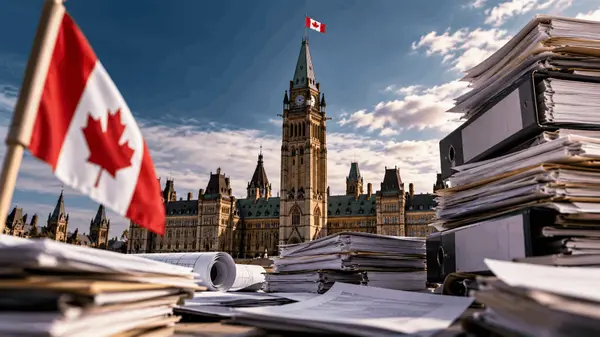
CUSMA (also known as USMCA in the U.S. and T-MEC in Mexico) was signed on November 30, 2018, and came into force on July 1, 2020. Built directly into the treaty text — Article 34.7 — was a requirement that all three countries formally review the agreement on its sixth anniversary: July 1, 2026. That review happened, on schedule, this summer.
Here's what a lot of the current discussion skips: the review already took place, and CUSMA is still fully in force. At the July 1 meeting, Canada and Mexico both confirmed they wanted to extend the agreement another 16 years, to 2052. The U.S., through its Trade Representative, said it would not renew CUSMA "in its current form." That sounds dramatic, but the actual legal consequence is specific and limited: it triggers a shift from six-year reviews to annual reviews, continuing until either all three countries agree to extend it, or the agreement reaches its built-in expiry date of July 1, 2036.
There's a separate, faster mechanism worth knowing about too: under Article 34.6, any of the three countries can withdraw entirely with six months' written notice, no justification required. If that happened, CUSMA would keep operating between the remaining two countries. As of this writing, no country has issued that notice — the U.S. has declined to renew, which is a different and less drastic action than withdrawing.
Why Amendments During a Review Aren't Unusual
It's worth pausing on something easy to lose in the noise: requesting changes to a trade agreement during a scheduled review isn't, by itself, an unusual event. Large commercial contracts get reviewed and renegotiated on a schedule all the time — parties propose amendments, push back on terms, and decide whether to extend or modify the relationship. CUSMA is vastly more complex than an ordinary commercial contract, but the underlying concept holds: the agreement stayed in force the entire time the parties were negotiating changes to it. What made the past several weeks genuinely unusual wasn't that amendments were on the table. It was the escalation into major tariff action while that negotiation was still underway.
From "Deal Announced" to Talks Collapsing
This is the sequence that's generated the most confusion, so it's worth laying out precisely, using each side's own words.
Tuesday, August 18, 10:15 p.m.: With tariffs set to take effect the next morning, Trump posted on Truth Social: "I have paused the 50% Tariffs against Canada, that were scheduled to kick in tomorrow morning for a three day period, based on the fact that Canada and the U.S.A., subject to the finalization of documents, have a DEAL!" That's the exact wording. He did say "DEAL" — but he explicitly qualified it as subject to finalizing paperwork, not as a signed, completed agreement.
Carney's language that same day was noticeably more cautious: "Substantial progress has been made, although there is important work still to be done." He did not describe a completed deal.
Wednesday, August 19: Canadian and U.S. trade officials met in Washington to finalize details. A senior Canadian official called the emerging terms "a very good deal for Canada," while explicitly cautioning that negotiations weren't complete. Trump called the emerging agreement "very fair." The tariff deadline was pushed to Saturday, August 22.
Friday night, August 21: Talks collapsed before that deadline. The paused 50% tariffs on roughly $20 billion in Canadian goods took effect at 12:01 a.m. Saturday.
What each side says went wrong
Carney's account, given at a press conference the following day, cited three specific factors: proposed auto-sector tariff relief that excluded medium- and heavy-duty trucks built in Canada; a last-hour U.S. push to restrict Canada's ability to pursue trade deals with other countries; and demands touching French-language and cultural protections. He summarized it as the U.S. having "asked too much, offered too little."
USTR Jamieson Greer's statement, issued the same morning, placed responsibility with Canada: it had "declined to finalize the trade deal under the terms agreed earlier this week," citing "new demands and walk-backs of other commitments by Canada." Trump, in a follow-up post Sunday, wrote that "Canada wants the benefits of being a State, without being one," and said Canada had charged American farmers "massive amounts" in tariffs for years.
Both accounts are on the record, from named officials, and they don't agree. What actually changed between Wednesday's optimistic framing and Friday's collapse isn't independently verifiable from public reporting — it's a genuine case of two governments describing the other side's actions differently, not one where the evidence clearly settles which account is more accurate.
How Dependent Is Canada on the U.S., Really?
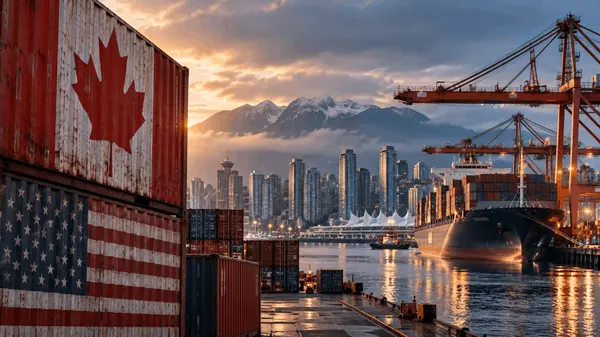
You'll often hear that "75% of Canada's trade" goes to the United States. That figure needs a precise definition, because it's frequently used loosely. Here's what the actual data shows: in 2024, 75.9% of Canada's merchandise (goods) exports went to the U.S. — not total trade, not trade including services, specifically goods exports. In 2025, that share fell to 71.7%, the lowest since the early 1980s, as non-U.S. goods exports rose 17.2% to a record high.
That's a real, measurable shift — not a talking point. It doesn't mean Canada can quickly replace the U.S. market; the scale and proximity of American demand isn't something that gets rebuilt with a new trade partner in a year or two. But it does mean the diversification conversation isn't purely aspirational — the export mix has genuinely started moving, even before this year's escalation.
Why This Reaches Beyond Trade Policy
None of this stays confined to trade negotiators and customs officials. The Bank of Canada's own July 2026 policy report describes current tariffs as having "a persistent negative effect on economic activity" — language that shows up in slower business investment, more cautious hiring, and softer consumer confidence. Locally, Greater Vancouver has already seen the sharpest housing-starts decline in the country this year. Uncertainty doesn't need to turn into an actual recession to affect real decisions — buyers waiting on a home purchase, businesses delaying a hire, homeowners postponing a renovation are all responding to the same underlying unease, whether or not it ever shows up as a headline GDP number.
The Bottom Line
Canada should negotiate firmly in its own interests, and reasonable people can disagree about whether this round of talks was handled well by either side. Neither of those questions requires believing the current dispute came out of nowhere. CUSMA's review process was written into the agreement in 2018 — years before this month's headlines — and the agreement remains fully in force today regardless of how the review concluded.
Understanding what Canada actually signed doesn't mean agreeing with every U.S. tariff or every Canadian negotiating position. It just means separating what was already scheduled and settled from what is genuinely new. The part that's still unresolved — what's actually being fought over in terms of goods origin, tariff enforcement, and China's role in North American supply chains — is where Part 2 of this series picks up.
Sources
- Government of Canada — CUSMA Chapter 34, Final Provisions, Article 34.7 and 34.6. international.gc.ca
- Government of Canada — CUSMA Chapter 32, Exceptions and General Provisions, Article 32.10. international.gc.ca
- White & Case LLP — "USMCA 2026 Joint Review: United States declines to extend Agreement, triggering annual reviews," July 2, 2026. whitecase.com
- McMillan LLP — "Following July 1st Review, CUSMA Remains in Effect Until 2036," July 7, 2026. mcmillan.ca
- Congressional Research Service — "USMCA Joint Review: Process and Role of Congress," Congress.gov. congress.gov
- Statistics Canada — "Canadian international merchandise trade, February 2025," April 3, 2025. statcan.gc.ca
- Global Affairs Canada — Monthly Trade Report, December 2025 edition. international.canada.ca
- Bank of Canada — July 15, 2026 Monetary Policy Report. bankofcanada.ca
Debbie Evans | REALTOR®
eXp Realty | West Vancouver, North Vancouver, Vancouver, Squamish & Whistler
With nearly 40 years of combined experience in interior design, construction, and real estate, I try to read the economic and policy backdrop as clearly as the local market data — because both shape the decisions my clients are making right now. If you have questions about how any of this connects to your own buying, selling, or renovation timeline, I'm glad to talk it through.
This content is for informational purposes only and does not constitute legal, financial, or trade-policy advice. It does not take a position on the merits of any government's trade policy or negotiating position. All figures and treaty text are sourced from the Government of Canada, Statistics Canada, the Bank of Canada, and the legal/trade publications listed above, current as of August 24, 2026.
Categories
- All Blogs (103)
- aboriginal title ruling (2)
- B.C. Policy (1)
- bc housing market (24)
- bc real estate (56)
- Bill C-15 (1)
- build canada homes (10)
- Buyers Guide (4)
- canada strong fund (4)
- Canada-U.S. Trade (2)
- canadian real estate (16)
- Canadian Real Estate & Housing (1)
- Climate Change (2)
- Cost of Living (2)
- Design & Build (4)
- Dundarave West Vancouver (1)
- Equity Growth (1)
- Federal Policy (1)
- freehold (1)
- Home Buying Tips (1)
- Household Debt (1)
- housing policy (1)
- land claims (2)
- Land Claims / BC Real Estate (1)
- leasehold (1)
- local news (1)
- Lower Lonsdale (2)
- Market & Policy Analysis (1)
- Market Commentary (6)
- market insights (23)
- Market Intelligence (1)
- Mortgage Delinquencies (1)
- Mortgage Renewals (1)
- Multigenerational Living (2)
- North Vancouver Real Estate (19)
- open house (1)
- Open House Security (1)
- presale (1)
- real estate insights (7)
- Real Estate Market & Housing (2)
- renovation (1)
- Squamish Market Update (7)
- squamish real estate (8)
- squamish update (3)
- Vancouver Real Estate (17)
- West Vancouver Living (15)
- West Vancouver Real Estate (26)
- Whistler Market Update (4)
Recent Posts








Have a Question? Let’s Talk. I’m Here to Help.

North Shore & Vancouver Realtor License ID: 175378
+1(778) 875-4934 | debbie.evans@exprealty.com