
Build Canada Homes: One Year Later—What Canadians Are Getting for $13 Billion
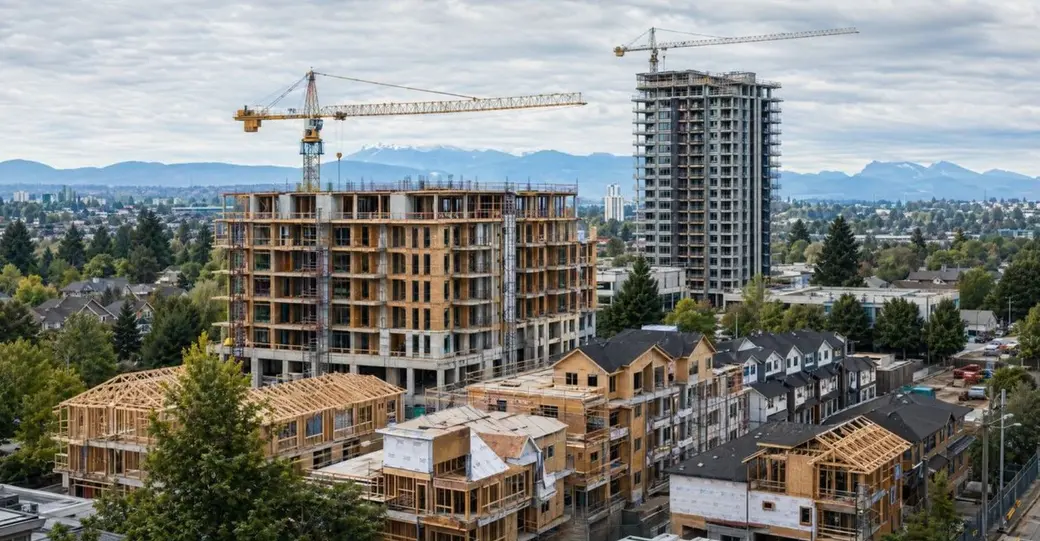
Build Canada Homes: One Year Later—What Canadians Are Getting for $13 Billion
Canada already had CMHC. So why did the federal government create another housing organization with a $13-billion financial envelope—and one year later, what are Canadians actually getting for the money?
Build Canada Homes launched September 14, 2025. Twelve months in, the program has committed funding to thousands of housing units, established partnerships across provinces and municipalities, and advanced several showcase projects on federal land. But behind the headline numbers lies a more complex picture: much of what BCH has financed so far was already planned, permitted, and approved before BCH existed.
Understanding what BCH is actually accomplishing—versus what it still needs to prove—matters for Canadian housing policy and taxpayer accountability.
Why This Matters
Canada created Build Canada Homes with a $13-billion financial envelope to accelerate affordable housing construction. One year later, nearly 17,000 homes have been committed and more than 1,900 are reported under construction—but some prominent early projects were already planned, permitted and approved before BCH existed. This article looks at why BCH was created when Canada already had CMHC, where the money is going, what kind of housing is actually being built, what BCH can legitimately claim after its first year, and what remains unproven.
Why Create BCH When CMHC Already Exists?
CMHC remains Canada's established housing finance and mortgage-insurance organization. It continues core programs including mortgage insurance, the Apartment Construction Loan Program, and housing research.
Build Canada Homes was created to take a fundamentally different role: direct development and investment. BCH's mandate includes using federal public land for housing development, directly supporting and building affordable housing, making loans and contributions, partnering with governments and non-profits, and promoting modern construction methods including modular and mass timber housing.
The government's argument is straightforward: those functions require greater development and investment flexibility than CMHC's traditional financing role provides. The legitimate policy question remains unanswered: Did those additional functions require an entirely separate Crown corporation, or could they have been established as a specialized development arm within CMHC?
Is the $13 Billion New Money or Transferred Funding?
This matters. If the money simply moved from CMHC to BCH, the program doesn't increase overall federal housing investment. If it's genuinely new, it represents an expansion of the federal commitment.
The Parliamentary Budget Officer provides the answer. Over the five-year period from 2025–26 through 2029–30:
Total: $13.0 billion
NEW cash expenditure: $11.6 billion (89%)
On an accrual basis: $7.3 billion total | $6.7 billion new
So approximately 89 percent of BCH's $13-billion cash envelope represents genuinely new federal housing spending. That said, context matters. The PBO also reports that overall federal housing-program spending is scheduled to decline from $9.8 billion in 2025–26 to $4.3 billion by 2028–29 as existing programs expire and budget cuts take effect—partially offset by BCH. The net trajectory of federal housing investment is not solely determined by BCH's arrival.
What Is the $13 Billion Supposed to Accomplish?
According to the PBO, BCH's planned spending across the five-year envelope includes $625 million to help community housing providers acquire existing rental apartments, $1 billion for transitional and supportive housing, and $5.4 billion in grants, contributions and loan concessions supporting affordable housing. The remainder relates to loans, asset development, and direct development.
In terms of impact, the PBO estimates BCH will produce approximately 26,000 additional housing units over five years. That represents an increase of approximately 2.1 percent in housing completions relative to the PBO's baseline projection. Within that total, the PBO estimates BCH has sufficient funding to create approximately 13,000 units affordable to low-income households.
What Kind of Homes Is BCH Building?
This distinction is crucial and frequently misunderstood. Build Canada Homes is primarily an affordable housing program—not principally a program creating homes for individual Canadians to purchase.
BCH's mandate includes affordable rental housing, deeply affordable and community housing, non-profit housing, co-operative housing, supportive housing, transitional housing, mixed-income rental, and acquisition and preservation of existing affordable rental buildings.
Government announcements often use the word "homes," which is accurate but imprecise. A significant portion of BCH's output will be rental and non-market housing rather than individually owned houses or condominiums. This doesn't make those homes less valuable—housing security matters regardless of tenure. But it is important to accurately understand what type of housing the program is producing.
BCH vs. CMHC: The Toronto Comparison
The August 5, 2026 Toronto announcement provides the clearest illustration of how the two organizations are intended to work differently.
| Metric | BCH (Toronto) | CMHC (Toronto) |
|---|---|---|
| Federal investment | $310+ million | $1.8+ billion |
| Projects supported | 9 projects | 9 projects |
| Rental homes created | ~1,900 | ~3,700 |
| Affordable/supportive homes | ~700 | ~1,000 |
| Development sector | Non-market housing | Private-sector market rental |
| Financial instrument | Grants and contributions | Low-cost repayable financing |
Source: Federal housing announcements, August 5, 2026.
Do not simply divide $310M by 1,900 and conclude BCH is "cheaper" than CMHC. These are different financial instruments. CMHC's $1.8 billion is predominantly repayable low-cost financing that carries a return to the federal government. BCH uses grants, contributions, and other non-repayable structures. The comparison illustrates different roles, not necessarily cost-per-unit efficiency.
The Crucial Distinction: Originating vs. Unlocking
This is the revelation that changes how we should evaluate BCH after one year.
Were the roughly 1,900 BCH Toronto homes actually new projects that BCH initiated? No. All nine Toronto BCH projects had already been approved and were ready to build before this funding announcement. According to Prime Minister Mark Carney, many had been ready for a long time but were stalled because they lacked financing. BCH's role was to provide capital to get those previously approved projects moving.
BCH did NOT originate those nine Toronto projects. BCH's contribution was providing capital to unlock previously approved projects that could not proceed because the financing structure didn't work.
Is this still an accomplishment? Yes. Approved housing sitting idle because the financing doesn't work is not producing homes. If BCH gets those projects built, it has solved a real financing problem. But the distinction is essential: unlocking an existing approved project is not the same as originating a new project and taking it from concept through approval to construction. One is capital allocation; the other is development leadership.
What About the Other 1,900+ Homes Under Construction?
We have verified that important early BCH projects—including the Toronto portfolio—were previously approved and shovel-ready. BCH also explicitly prioritized shovel-ready projects in its initial rollout for a practical reason: speed. A brand-new development can require years for land assembly, rezoning, municipal approvals, design, financing, and procurement. Funding projects that have already completed much of that process allows BCH to get construction underway much faster.
However, we do not currently have a complete project-by-project public accounting proving that every one of the nationally reported 1,900+ homes under construction was already approved before BCH existed.
What is reasonable to conclude: A significant feature of BCH's early strategy has been funding or partnering on shovel-ready and previously approved developments. Some of the early construction numbers therefore represent projects BCH helped unlock rather than projects BCH originated. A complete breakdown separating BCH-originated construction from previously approved projects is not yet readily available in public reporting.
The Real Test: Direct Build Projects
If BCH is going to prove it can originate and deliver housing faster than Canada's existing system, it will be through the six Direct Build projects. These are the real test because BCH is starting with federal and public land and shepherding projects from land through design, procurement, construction, and occupancy using its own development model.
The six initial Direct Build locations are Dartmouth, Longueuil, Ottawa, Toronto, Winnipeg, and Edmonton. Through 2026, government announcements have described these as being advanced, with RFQs launched for sites including Toronto's Arbo Downsview, Ottawa's 1495 Heron Road, Winnipeg's Naawi-Oodena, and Edmonton's Village at Griesbach. These projects should ultimately demonstrate whether BCH can actually take public land through development and construction faster and more efficiently than previous approaches. But after one year, it is too early to use them as proof that this model has succeeded. Most are still in procurement or early construction phases.
Is Crown Land Actually Making Housing Cheaper and Faster?
The theory is straightforward: if government already owns the land, developers don't need to purchase expensive urban real estate. Public land can be contributed at nominal value, substantially improving project economics.
Toronto illustrates this advantage. The City is contributing land at nominal value to BCH projects and providing more than $530 million in additional capital and incentives. That should meaningfully improve project affordability and feasibility.
But after one year, there is not yet enough completed BCH Direct Build housing to demonstrate conclusively what the final taxpayer cost per completed unit or actual construction timeline will be. This remains an important measurement to track as projects complete.
Commitments vs. Construction vs. Completed
By summer 2026, government reported thousands of homes through BCH partnerships, reaching nearly 17,000 committed homes with more than 1,900 under construction. These terms matter tremendously:
- "Committed" does not mean completed.
- "Committed" does not necessarily mean under construction.
- "Supported by BCH" does not necessarily mean BCH originated the development.
- "Under construction" does not necessarily mean BCH took the project from concept to shovel.
Completed homes are the only metric that definitively proves housing supply has increased.
What About Canadian Contractors and Materials?
BCH has stated it will prioritize Canadian materials and modern construction methods including factory-built housing, modular construction, and mass timber. The program launched a Request for Information in February 2026 to identify modern-methods-of-construction suppliers and establish a vetted supplier list for future projects.
Important caveat: Companies responding to an RFI have not necessarily received BCH contracts. Do not characterize an RFI participant as a BCH contractor unless an actual award can be documented.
At this stage, most major Direct Build projects are still going through RFQ, RFP, and design-builder procurement. Therefore, we do not yet have a complete public picture showing what percentage of the $13 billion will ultimately flow to Canadian-owned companies, foreign-owned Canadian subsidiaries, foreign manufacturers, or domestic labour and materials.
The government's stated policy is to prioritize Canadian materials and strengthen domestic manufacturing. The actual contractor and supplier ownership and origin of major building systems should be tracked and published as procurement awards become final.
What Can Be Fairly Credited After One Year?
BCH has demonstrated several genuine accomplishments: established partnerships with provinces, territories, municipalities, and housing organizations; committed financing to thousands of housing units; provided financing capable of unlocking previously approved projects that had stalled; advanced six Direct Build sites on public land; initiated procurement processes; created a financing and development model specifically focused on affordable and non-market housing; and has begun creating demand for Canadian modular and prefab construction.
What Remains Unproven
After one year, the following questions remain open: How quickly can BCH-originated projects move from concept to occupancy? What will be the final construction cost per unit on Direct Build projects? Does public-land development materially lower total taxpayer cost per home? Is BCH faster than existing federal housing approaches end-to-end? What is the administrative cost-benefit of creating a separate Crown corporation versus expanding CMHC? What is the complete breakdown of previously approved versus BCH-originated homes within headline totals? What is the eventual Canadian versus foreign share of major procurement spending? How much housing is actually completed and occupied?
So What Can We Conclude After One Year?
Do not conclude that BCH is either a success or failure after one year. The evidence supports a more useful conclusion:
What Should Be Measured Going Forward
The next phase of BCH evaluation should use hard, transparent measurements: construction starts (new versus previously approved); completed homes and occupancy dates; time elapsed from project selection through occupancy; federal contribution per incremental home added to supply; total development cost per unit compared to private-sector benchmarks; amount of outside capital leveraged per federal dollar invested; administrative and overhead costs as percentage of total spending; contractor and supplier ownership (Canadian versus foreign); percentage of Canadian-made building products and materials in completed projects; and comparison of timelines between BCH-originated Direct Build projects and equivalent private-sector developments.
These metrics will ultimately answer whether BCH represents a genuine advance in Canadian housing delivery or a well-intentioned but inefficient approach to a problem CMHC was already attempting to solve.
One year in, the jury is still out. That's not a failure of the program—it's a realistic assessment of a complex development initiative. But transparency in measurement going forward is essential for accountability and for learning what actually works in federal housing policy.
- Parliamentary Budget Officer, Build Canada Homes: Outlook on Housing Programs Under Budget 2025 (2026)
- Government of Canada, Secretary of State Sarai Highlights the Launch of Build Canada Homes, September 14, 2025
- City of Toronto & Build Canada Homes, Toronto Housing Announcement, August 5, 2026
- Public statements by Prime Minister Mark Carney regarding BCH Toronto projects and financing, August 2026
- Build Canada Homes Request for Information, Modern Methods of Construction Suppliers, February 2026
REALTOR® | eXp Realty
West Vancouver, North Vancouver, Vancouver, Squamish & Whistler
With nearly 40 years of combined experience in interior design, construction, and real estate, I track housing market trends, federal policy, and local development to help clients make informed decisions about timing, location, and long-term value.
Categories
- All Blogs (101)
- aboriginal title ruling (2)
- B.C. Policy (1)
- bc housing market (23)
- bc real estate (56)
- Bill C-15 (1)
- build canada homes (10)
- Buyers Guide (4)
- canada strong fund (4)
- Canada-U.S. Trade (2)
- canadian real estate (16)
- Canadian Real Estate & Housing (1)
- Climate Change (2)
- Design & Build (4)
- Dundarave West Vancouver (1)
- Equity Growth (1)
- Federal Policy (1)
- freehold (1)
- Home Buying Tips (1)
- housing policy (1)
- land claims (2)
- Land Claims / BC Real Estate (1)
- leasehold (1)
- local news (1)
- Lower Lonsdale (2)
- Market & Policy Analysis (1)
- Market Commentary (6)
- market insights (23)
- Multigenerational Living (2)
- North Vancouver Real Estate (19)
- open house (1)
- Open House Security (1)
- presale (1)
- real estate insights (7)
- Real Estate Market & Housing (2)
- renovation (1)
- Squamish Market Update (7)
- squamish real estate (8)
- squamish update (3)
- Vancouver Real Estate (17)
- West Vancouver Living (15)
- West Vancouver Real Estate (26)
- Whistler Market Update (4)
Recent Posts









Have a Question? Let’s Talk. I’m Here to Help.

North Shore & Vancouver Realtor License ID: 175378
+1(778) 875-4934 | debbie.evans@exprealty.com