
Build Canada Homes One Year On: What Has Changed, What Hasn't, and Who Maintains These Homes
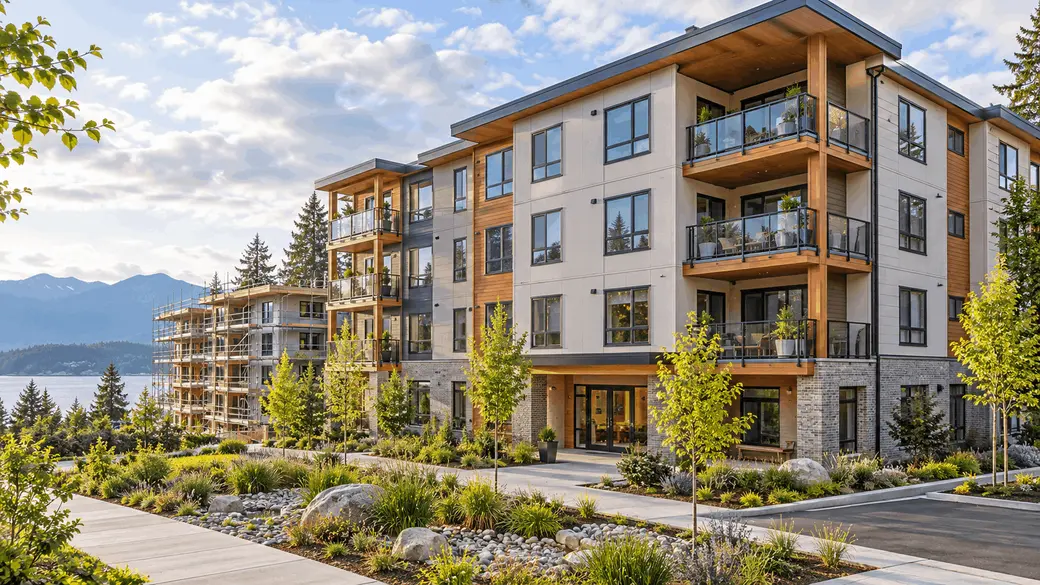
Build Canada Homes One Year On: What Has Changed, What Hasn't, and Who Maintains These Homes
Build Canada Homes (BCH) is now more than a year old, and the debate around it has sharpened. Supporters point to thousands of homes committed and new Crown corporation status. Critics point to how few homes are under construction and ask whether a new agency was needed at all. Both observations can be accurate at the same time.
This update covers what has changed since our September review, tests several common criticisms against the public record, and adds a question that rarely gets asked: once these homes are built, who pays to keep them in good repair? CMHC's October 22 analysis of repair needs gives us data to work with.
Where Build Canada Homes Stands Now
Since our one-year review in September, the picture has moved in small steps rather than large ones.
- Legal footing. The Build Canada Homes Act received Royal Assent on June 18, 2026. The Act provides the legal framework for BCH as a Crown corporation, and CBC reported on October 5 that it became one in July. The June announcement had said it would be fully operational as a Crown corporation later this year.
- Pace of construction. CBC reported in early October that BCH has committed to supporting roughly 19,000 affordable units, with about 2,000 under construction. Bloomberg's report on October 21 put the number under construction at about 2,300. In August, the federal government had cited nearly 17,000 committed and more than 1,900 under construction.
- New announcements. On October 1, BCH announced $25 million toward roughly 80 supportive homes in Toronto, subject to due diligence, underwriting and final agreements. On October 16, CMHC announced $165 million through its Apartment Construction Loan Program for 370 rental homes in Toronto, a reminder that CMHC's financing programs are still working alongside BCH.
- Strategy in a softer market. Bloomberg reported on October 21 that BCH's CEO sees a slower market as a reason to keep building, with an emphasis on purpose-built rental rather than investment condos.
- The wider backdrop. CMHC reported on October 20 that 143,929 homes had approved building permits but no construction started as of September, and that housing starts were down from last year. Vancouver's six-month starts trend rose 6%, driven by multi-unit projects.
Committed Is Not Underway
The Minister of Housing has described BCH as having over 19,000 homes underway. CBC's fact-check found that BCH has committed to supporting 19,000 units, but about 2,000 are currently being built. Both numbers are real. They measure different stages, and only completed homes add to the supply.
The Common Criticisms, Tested Against the Record
Housing commentators, builders and analysts have raised several recurring points about BCH. Some are well supported, some are partly supported, and some are matters of policy judgment. Here is how each holds up.
"Isn't this just more bureaucracy?"
This is a legitimate question and the data does not settle it. The Parliamentary Budget Officer (PBO) projected that BCH would add about 26,000 units over five years, roughly a 2.1% increase in housing completions, with about 13,000 of those for low-income households. The PBO also found that total federal planned spending on housing programs is set to fall 56%, from $9.8 billion in 2025–26 to $4.3 billion in 2028–29, as existing programs expire and Budget 2025 cuts take effect.
The federal government's response was that the PBO's projection does not capture investment from provinces and the private sector, and that expiring agreements may be renewed. Reasonable people can read the same figures differently. What the record does show is that BCH's contribution is modest relative to the national supply gap, and that measuring it will depend on completions, not announcements.
"Is this about helping Canadians buy homes?"
Not primarily. Budget 2025 says BCH will focus mainly on non-market housing: affordable rental, community, supportive and transitional homes. Ownership relief arrives through a different tool. Legislation that received Royal Assent on March 12, 2026 gives first-time buyers a rebate of the federal GST on new homes up to $1 million, phased out for homes between $1 million and $1.5 million. Readers who assume BCH is a first-time buyer program may be disappointed, and that confusion is worth clearing up.
"Doesn't CMHC already do rentals better?"
The two organizations do different jobs. CMHC's programs, such as the Apartment Construction Loan Program, mostly provide repayable financing to private-sector rental builders. BCH uses grants, contributions, public land and partnerships, mainly for non-market housing. In our September comparison of Toronto announcements, CMHC's financing supported more rental homes than BCH's, but the two figures are not like-for-like because the instruments differ. Whether the split was worth creating a separate Crown corporation remains a fair policy debate.
"Is modular housing real innovation, or just boxes?"
Modular is a construction method, not a design style, and the evidence is mixed in a useful way. In North Bay, Royal Homes reported manufacturing and installing 32 rental units (four eight-unit buildings, about 32,000 square feet) in roughly three months. The company has been building homes since 1971, so this is an established manufacturer scaling a proven approach. The release does not describe the project as part of BCH.
The federal government's own briefing note says Canada produces only about 2% of homes off-site, compared with far higher shares in Sweden and Japan. The Globe and Mail's editorial board has argued modular deserves support but that financing and insurance gaps must be fixed, while the Fraser Institute argues governments should not subsidize it. CMHC has since opened insured financing to prefabricated and modular homes.
Warranty is a question buyers rarely think to ask about. In BC, new homes built by licensed residential builders must carry 2-5-10 home warranty insurance: two years on labour and materials, five on the building envelope and ten on the structure. BC Housing exempts some categories from that requirement, including qualifying new rental buildings held under one title with a 10-year restrictive covenant on sales, and CSA-certified factory-built homes (CSA A277). Whether a particular project is exempt depends on how it is built and owned. A construction warranty, where one applies, covers defects in the original work for a limited time. It is separate from the owner or operator's ongoing responsibility for repairs, maintenance and reserves over the life of the building.
A Designer's View
After nearly 40 years in design, construction and renovation, I would judge any modular project by the same standards as any other: floor plan efficiency, natural light, storage, mechanical access, and how well the envelope is detailed. Factory control can improve precision. It does not replace good design, and it does not replace a plan for maintenance.
"Is the building code the real problem?"
Industry groups think so, at least in part. The Canadian Home Builders' Association has asked provinces to pause adopting the 2025 national model codes, citing cost and inconsistent adoption, and notes that Australia has paused code changes until 2029. BILD Alberta estimates the 2025 national code adds roughly $17,900 to $39,700 in construction costs for a representative 2,500-square-foot home. These are industry associations, so their estimates reflect their members' perspective.
The other side of the ledger is that the codes also carry accessibility, energy and climate-resilience requirements that have long-term value for residents. That makes the live question about pace, predictability and cost rather than whether to have modern standards at all.
Who Will Maintain These Homes?
The CMHC article you may have seen this week gives the debate a missing dimension. Counting new homes matters. So does keeping the homes we already have, and the ones we are about to build, in good repair.
CMHC's analysis of 2021 Census data found the following rates of homes needing major repair:
Subsidized housing therefore shows a higher rate of major repair needs than the rest of the stock, and CMHC links major repair needs to higher rates of mould, pests and unsafe water. At the same time, roughly nine in ten subsidized homes were not reported as needing major repair. The data support a concern about maintenance, not a conclusion that social housing is failing as a category.
Past social housing experience illustrates the risk. City of Toronto reports have described capital repair needs for its largest social housing landlord in the billions of dollars, and policy researchers have described how social housing providers faced deferred maintenance as federal operating agreements expired. A building where rent is geared to income often collects too little to fund long-term reserves unless the structure is designed to provide for them. These examples come from earlier programs and are not evidence of how BCH-funded housing will perform.
British Columbia already applies this principle to strata corporations. Since November 1, 2023, strata corporations must contribute at least 10% of their annual operating budget to a contingency reserve fund, and since July 1, 2024 strata corporations with five or more lots can no longer defer a depreciation report with an annual vote. Those reports project repair and replacement costs over 30 years. For what this means when you are buying, see our companion post, Renovated or Well Maintained? What BC Homebuyers Need to Know.
The Question to Ask About BCH Projects
Do BCH-funded buildings include dedicated capital reserves and a published long-term maintenance plan? In the sources I reviewed, I did not find public detail on lifecycle reserve requirements for BCH-funded projects. That is a reasonable thing for taxpayers and local governments to ask, and the answer will matter in 15 to 30 years more than the opening-day photo.
What This Means for British Columbia and the North Shore
For British Columbia, the near-term BCH story is supportive and transitional housing. In February 2026, the federal government and the Province agreed to a partnership through BC Housing: $170 million in federal investment alongside $640 million in provincial capital and operating funding, with at least 700 shovel-ready supportive and transitional homes to start construction within 12 months. A separate federal-provincial initiative announced in June aims to convert more than 2,200 vacant condo units into affordable homes. That program has drawn debate over its design and cost.
For buyers and owners in West Vancouver, North Vancouver, Vancouver, Squamish and Whistler, I see three practical takeaways:
- BCH is not a first-time buyer program. If ownership is your goal, the GST relief on new homes and your own financing plan matter more.
- New supply takes years to show up in your market. The projects that exist today are mostly in other regions or in early stages, so BCH is unlikely to change neighbourhood-level conditions in the short term.
- Condition and building reserves are part of value. Whether you are buying a strata unit or a detached home, how well a building has been maintained and funded matters alongside price and location. We explored this in our recent look at CMHC's repair data, Renovated or Well Maintained? What BC Homebuyers Need to Know.
What to Watch Next
- Completed homes, not just commitments, and how many of the roughly 2,000 under construction are finished and occupied.
- Construction starts on the six Direct Build federal sites, which are the real test of BCH's own development model.
- Published detail on lifecycle reserves and maintenance planning for BCH-funded buildings.
- CMHC's October housing starts data, due November 17, for a read on whether starts are stabilizing.
- Progress on the BC partnership's first 700 supportive and transitional homes.
Frequently Asked Questions
Common questions about Build Canada Homes, what it builds and what it means for BC.
What is Build Canada Homes?
It is a federal agency launched on September 14, 2025, with an initial $13 billion over five years, to finance and build affordable housing using public land, flexible financing and modern construction methods. The Build Canada Homes Act received Royal Assent on June 18, 2026, providing the legal framework for it as a Crown corporation. CBC reported on October 5 that it became a Crown corporation in July.
How many homes has it built so far?
The October 2026 coverage I reviewed did not give a count of completed homes. CBC reported on October 5 that BCH has committed to supporting roughly 19,000 affordable units and that about 2,000 are under construction. Bloomberg reported on October 21 that about 2,300 were under construction.
Does Build Canada Homes help people buy a home?
Mainly it supports non-market housing such as affordable rental, community and supportive housing. The federal tool aimed at first-time buyers is the federal GST rebate on new homes up to $1 million (phased out up to $1.5 million), which is separate from BCH.
Does Build Canada Homes replace CMHC?
No. CMHC continues to provide mortgage insurance, research and financing programs such as the Apartment Construction Loan Program. The two organizations have different roles, though how much they overlap is a topic of policy debate.
Is modular housing lower quality?
Not inherently. Modular and factory-built homes are a construction method, and quality depends on design, detailing, manufacturing standards and long-term maintenance, as it does for site-built housing.
What does the CMHC repair data say about subsidized housing?
CMHC's analysis of 2021 Census data found 9.4% of subsidized homes needing major repair, compared with 7.0% of non-subsidized rentals and 6.1% across all Canadian homes. The rate is higher, but most subsidized homes were not reported as needing major repair.
Sources
- CMHC — Build more. Lose less: Why maintaining existing homes matters, Mathieu Laberge, Chief Economist, October 22, 2026.
- CBC News — Build Canada Homes was launched a year ago. Can it scale up fast enough to meet demand?, October 2026; and Fact check: Is Canada building 19,000 affordable homes?
- Government of Canada — Government of Canada marks Royal Assent of the Build Canada Homes Act, June 19, 2026.
- Prime Minister of Canada — Government of Canada and City of Toronto to build thousands of new rental homes, August 5, 2026.
- Prime Minister of Canada — Prime Minister Carney delivers on commitment to accelerate homebuilding in Ottawa, April 23, 2026.
- Government of Canada — Build Canada Homes announces expanded partnership to advance supportive and transitional housing in Toronto, October 1, 2026.
- CMHC — Canada announces the groundbreaking of new homes in Toronto, October 16, 2026.
- Storeys — Canada's Approved-But-Unstarted Homes Climb As Starts Slide, October 20, 2026.
- Bloomberg — Build Canada Homes Sees a Down Market as a Building Opportunity, October 21, 2026.
- Parliamentary Budget Officer — Build Canada Homes outlook: housing programs under Budget 2025, December 2, 2025; see also CTV News.
- Government of Canada — Budget 2025, Chapter 3: Launching Build Canada Homes; MNP — First-time home buyers GST rebate receives Royal Assent.
- Government of Canada — Canada and British Columbia secure a new partnership to build more homes, February 2026.
- BLG — Build Canada Homes' first moves, August 2026.
- Royal Homes — Royal Homes Delivers 32,000 Sq. Ft. of Rental Housing in North Bay in Just Three Months, October 15, 2026.
- Housing, Infrastructure and Communities Canada — Question Period Note: Modular Housing Construction.
- The Globe and Mail — Canada needs a blueprint for modular homes; Fraser Institute — Carney government should not 'champion' modular homes.
- Canadian Home Builders' Association — Letter to provincial code authorities, March 3, 2026; BILD Alberta — 2025 National Building Code Recommendations, June 2026.
- City of Toronto — Toronto Community Housing capital repair report, 2019; Canadian Centre for Policy Alternatives — Fast Facts: Federal withdrawal results in loss of social housing.
- BCFSA — Homeowner Protection Act information; BC Housing — Regulatory Bulletin 29: Manufactured Homes; Third-party home warranty insurance (reviewed October 2026).
- Province of British Columbia — The contingency reserve fund (CRF) in strata corporations; Strata depreciation report requirements.
Debbie Evans Personal Real Estate Corporation | REALTOR®
eXp Realty | West Vancouver, North Vancouver, Vancouver, Squamish & Whistler
Federal housing policy plays out locally, one building and one neighbourhood at a time. If you are weighing a purchase or sale and want to understand how a building's condition, reserves and long-term plans fit into the price, I am glad to walk through it with you.
This article is for general information and education only and is not financial, legal, investment or policy advice. It reflects publicly available information as of October 22, 2026, and describes positions held by different parties without endorsing any of them. Figures from the 2021 Census are several years old and describe national and regional patterns, not individual buildings. Programs, projections and project timelines change, so confirm details with the original sources before making decisions.
Categories
- All Blogs (106)
- aboriginal title ruling (2)
- B.C. Policy (1)
- BC Election (1)
- bc housing market (25)
- bc real estate (59)
- Bill C-15 (1)
- build canada homes (11)
- Buyers Guide (4)
- canada strong fund (4)
- Canada-U.S. Trade (2)
- canadian real estate (17)
- Canadian Real Estate & Housing (1)
- Climate Change (2)
- Cost of Living (2)
- Design & Build (4)
- Dundarave West Vancouver (1)
- Equity Growth (1)
- Federal Policy (1)
- freehold (1)
- Home Buying (1)
- Home Buying Tips (1)
- Household Debt (1)
- housing policy (2)
- land claims (2)
- Land Claims / BC Real Estate (1)
- leasehold (1)
- local news (1)
- Lower Lonsdale (2)
- Market & Policy Analysis (1)
- Market Commentary (6)
- market insights (23)
- Market Intelligence (1)
- Mortgage Delinquencies (1)
- Mortgage Renewals (1)
- Multigenerational Living (2)
- North Vancouver Real Estate (19)
- open house (1)
- Open House Security (1)
- presale (1)
- Provincial Election (1)
- real estate insights (7)
- Real Estate Market & Housing (2)
- renovation (1)
- Squamish Market Update (7)
- squamish real estate (8)
- squamish update (3)
- Vancouver Real Estate (17)
- West Vancouver Living (15)
- West Vancouver Real Estate (26)
- Whistler Market Update (4)
Recent Posts








Have a Question? Let’s Talk. I’m Here to Help.

North Shore & Vancouver Realtor License ID: 175378
+1(778) 875-4934 | debbie.evans@exprealty.com