
Stellantis–Roshel: What Did Ottawa Know Before the Brampton Plant Sale?
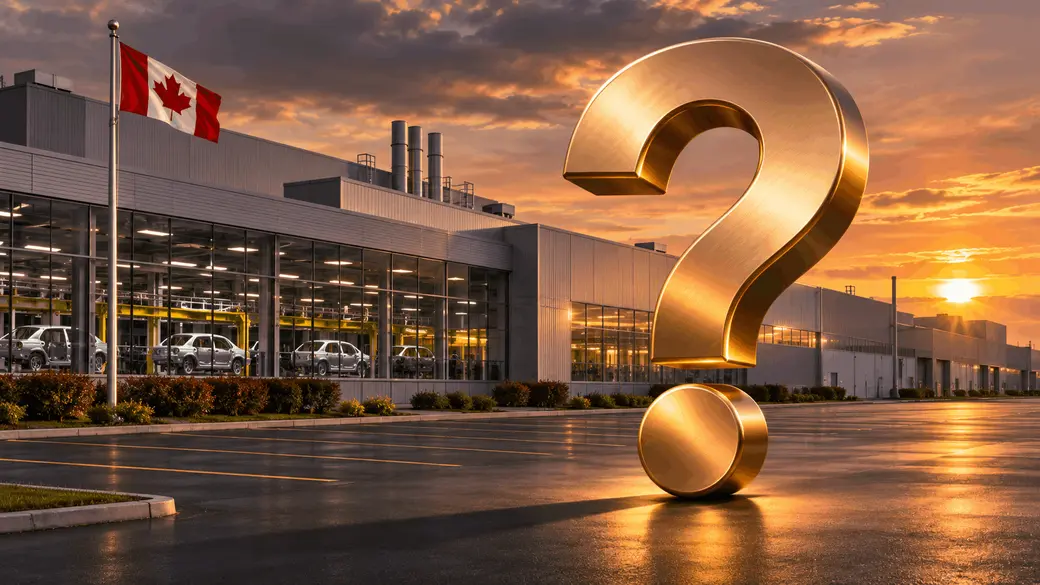
What the Record Now Shows About Who Knew What, and When
Since this article was first published on November 12, more records and on-the-record statements have come out: the federal lobbying registry (Roshel's August and September monthly communication reports), the Prime Minister's remarks of November 12 and November 16, and the Industry Minister's notice to Stellantis. The original investigation below is preserved; where a date or wording has been corrected, the correction is noted in the text. This update sets the new material against the timeline and keeps four things apart that are easy to blur.
Each is a different claim, and each needs its own evidence.
What the Record Shows on Each Question
| Question | What is on the record | Status |
|---|---|---|
| Did officials know? | The Prime Minister said on November 12 he was aware of “some aspects” of the sale before it was announced. He did not say when, or which aspects. Roshel's CEO says Roshel shared its plan with the government “months” earlier. Federal registry entries show Roshel's consultant communicating with senior staff in the Industry Minister's office on August 21 and September 2. CTV News, reading the registry, reports a further communication with a Prime Minister's Office adviser on October 15. | On the record |
| Were ministers' offices briefed? | A source told CBC that both the Prime Minister's Office and the Industry Minister's office were briefed on the details of what was going to be announced. Neither office has confirmed this on the record. CTV reported on November 12 that the Industry Minister's office had not responded to whether the minister was briefed on its staff's meetings with Roshel. No source checked for this update says whether ministerial authorization was required for those staff meetings. | Unnamed source; not confirmed |
| Did government take part in negotiating? | Three unnamed sources told CTV the government was “actively and intensively” part of the discussions. The minister's office says the minister had no part in negotiating with Stellantis or Roshel, did not meet Roshel, and that the government was not involved in or supportive of the private agreement. Roshel's CEO says he cannot speak for the government and was not part of its talks with Stellantis. | Disputed |
| Did government approve the sale? | No source reports an approval. The minister's office says it would never have approved a deal that broke Stellantis's funding commitments or lacked the union's support. On November 12 the minister said the government does not have the legal authority to block the sale. | No evidence of approval |
The Timeline, Checked Against Source Documents
| Date | What happened | Basis |
|---|---|---|
| Aug 12 | Stellantis told Unifor it was seriously considering closing and selling the Brampton plant. Unifor made this public shortly after. | Unifor letter, Sept 16; BNN timeline |
| Aug 13 | Registry entry: Roshel's consultant reported a communication with the Director of Community Outreach in the International Trade Minister's office (Global Affairs Canada). Posted to the registry August 15. | Lobbying registry, Roshel monthly communication reports |
| Aug 21 | Registry entry: Roshel's consultant reported a communication with Paul Moen (chief of staff), Yasmin Atassi (senior policy advisor), David McFarlane (director of policy) and Rene Sylvestre (investment advisor) of the Industry Minister's office. Aug 21 is the date the communication occurred; the entry was posted September 15 and is numbered as an amendment of an earlier filing. Subjects are listed only as broad categories (including defence, industry, international trade); the registry does not say what was discussed or whether the Stellantis plant came up. | Lobbying registry, Roshel monthly communication reports |
| Aug 25 | Registry entry: Roshel's consultant reported a communication with MP Amandeep Sodhi. Posted September 15. This is a different entry from the August 21 meeting with the minister's staff. | Lobbying registry, Roshel monthly communication reports |
| Sept 2 | Registry entry: Roshel's consultant reported a communication with Moen, Atassi, McFarlane and Brian Botting (director of defence industrial strategy). This is nine days before the MOU announcement. Posted October 15. | Lobbying registry, Roshel monthly communication reports |
| Sept 11 | Stellantis announced it had signed a memorandum of understanding with Roshel for a potential sale. September 11 is the announcement date; the signing date has not been published. | Reuters; Bloomberg; Global News |
| Sept 16 | Unifor president Lana Payne wrote to Joly. Unifor said it did not know what role the federal government had played and asked five questions, including whether Roshel's August lobbying meetings discussed the purchase, whether federal representatives had indicated support, and whether the government is party to, or aware of, the MOU's contents. No government reply appears on Unifor's page. | Unifor letter |
| Sept 22 | Registry entry: communication with MPs James Bezan and Charles Sousa. Posted October 15. | Lobbying registry, Roshel monthly communication reports |
| September (Stellantis) | CTV News, reading the registry, reports further high-level government meetings with Stellantis through September, the last on September 29, with Moen and McFarlane among those listed. Stellantis attendees are not named, and the Stellantis records reported run only through September. | CTV News (republished on CP24 and BNN) |
| Oct 15 | CTV News reports the registry shows the Prime Minister's senior global affairs adviser, Matthew Hall, met Roshel on October 15. Two sources told CTV that Roshel's CEO attended; the registry does not list him. The October registry entries had not been checked against the registry itself when this update was prepared. | CTV News, via registry (see passages below) |
| Nov 9 | Stellantis and Roshel announced an Asset Purchase Agreement for the plant and equipment, price undisclosed. Closing remains subject to conditions. Stellantis said the parties had signed an agreement that is a step toward the proposed transaction, not a completed sale. | Stellantis release / SEC Form 6-K; CBC |
| Nov 10 | Prime Minister Carney called the situation “unacceptable” and the sale a betrayal of workers and of Stellantis's obligations. CTV published its report citing three unnamed sources. Stellantis told CTV it had offered to voluntarily return Brampton retooling support (no amount given). Ontario Premier Doug Ford wrote to the Prime Minister the same day urging that Chinese-made knock-down kits not be assembled at the plant. | Globe and Mail; CTV News; BNN Bloomberg (Ford letter) |
| Nov 11 | CBC reported, citing a source, regular federal engagement since August and briefings of the PMO and the minister's office. The minister's spokesperson, Mathis Denis, called reporting that the minister was involved “false.” | CBC; The Canadian Press |
| Nov 12 | Carney, in Dublin, said he was aware of “some aspects” of the sale before the Monday announcement, and that this is not the same as Stellantis providing a solution for workers. Joly served Stellantis with a 30-day notice, saying the government cannot legally block the sale but will enforce the 2022 funding agreement and that hundreds of millions are owed. A Stellantis Canada statement that evening put the amount the company offers to return voluntarily at $24 million. That is an offer, not a repayment that has happened. | National Post; CTV/CP24; Canadian Press; Globe and Mail |
| Nov 13–14 | Joly said Ottawa had put an incentive package to Stellantis to try to prevent the sale, and that Stellantis could be eligible for more support for workers if it committed to keep the plant open. | BNN Bloomberg, Nov 14 |
| Nov 16 | Carney, speaking in Phnom Penh, said Canada could look to Chinese automakers if talks with the United States fail to preserve Canadian auto production (details below). He was not reported mentioning Brampton or Stellantis. | Associated Press; Yahoo Finance Canada |
Comparing What Was Known With What Was Said
The Prime Minister. On November 10 he called the situation unacceptable. On November 12 he said being aware of some aspects is not the same as Stellantis providing a global solution for the workers, and that his “betrayal” remark referred to Stellantis not meeting its obligations. Both statements are on the record. What remains unanswered is when he was informed, by whom, and what he was told about the sale's terms.
The Industry Minister's office. Its statements say the minister did not meet Roshel and did not negotiate with Stellantis or Roshel, and later that the government “has not been involved in or supportive of” the agreement and the minister never endorsed Roshel's proposal. The registry entries for August 21 and September 2 list senior staff in her office as participants in communications with Roshel's consultant. The statements as reported speak to the minister personally and to the government's role in the agreement; they do not say whether staff discussed the Brampton plant in those meetings, whether the minister was briefed on them, or what “involved” was meant to cover. Those points are unanswered. The registry records that a communication took place, not what was said.
Unifor's question, two months earlier. Unifor's September 16 letter asked in writing whether the government knew of the MOU and whether Roshel's August lobbying meetings concerned the purchase. The government's answers to those questions have not been made public.
The $24 million. On November 10 Stellantis told CTV it had offered to voluntarily return support tied to the Brampton retooling, without naming an amount. A Stellantis Canada statement on November 12 gave $24 million. So the figure is a proposed voluntary return, not money already repaid and not a legal obligation Stellantis has accepted. The Industry Minister says the amount owed is in the hundreds of millions and has served a 30-day notice.
Reading the registry's dates. Each entry carries a communication date (when the contact happened) and a posted date (when the monthly report was published). The Commissioner of Lobbying states that a monthly report is due by the 15th of the month following the communication, which is why August contacts were posted September 15 and September contacts October 15. Reports list the date, the public office holders, and subject categories chosen from a list. They cover oral and arranged communications and exclude some communications initiated by public office holders, so the registry is not a complete list of every meeting. It does not record what was said.
Roshel's CEO, in His Own Words
In the opening exchange of this clip, Roshel founder and CEO Roman Shimonov is asked whether Roshel had told the government it planned to buy the plant. He says Roshel shared its plan. Asked whether that was “several weeks ago,” he answers “months.” He then says he cannot speak for the government, does not know what it discussed with Stellantis, and is not part of those discussions. He does not say who in government received the plan, on what dates, or that the government approved the purchase.
November 16: Carney on Chinese Automakers and Canadian Production
Speaking in Phnom Penh, Prime Minister Carney said that if negotiations with the United States do not preserve Canadian auto production, Canada could look to other investment, including from Chinese manufacturers. He tied that to conditions: real manufacturing in Canada, fair labour standards, and growing domestic supply chains, including Canadian critical minerals. He said it is not about leverage but “action, reaction.” He added that the idea is not just about kit-built vehicles and that a manufacturing component is required, and that capacity not fully used in a North American context creates other opportunities.
The Brampton connection, stated carefully. In the reports checked for this update, Carney did not mention Brampton or Stellantis on November 16. The connection is context, not a statement by him. Brampton is the live example of idle Canadian assembly capacity: Unifor wants Stellantis to reopen it at its original capacity, and Ford's November 10 letter objects to Chinese-made knock-down kits there. In early April 2026, The Canadian Press reported that Ford and Industry Minister Joly had rejected a reported proposal to assemble vehicles from Stellantis's Chinese partner Leapmotor at the plant; the report gives no date or wording for the rejection. No source checked says Roshel plans to build Chinese-brand vehicles at Brampton. Roshel's stated business is armoured vehicles.
| Approach | What it means | Where it stands |
|---|---|---|
| 1. Importing finished Chinese-built vehicles | Vehicles are built in China and shipped to Canada. Production jobs and supply chains stay abroad. | Under the January 2026 arrangement, an initial country-specific quota of 49,000 EVs a year at a 6.1% most-favoured-nation tariff, implemented March 1, 2026 (Global Affairs Canada). The share with an import price of $35,000 or less is to reach 50% by 2030, and the arrangement allows a review of progress in three years. Reuters reported the ceiling rising to about 70,000 by year five; the federal backgrounder gives no such schedule. |
| 2. Kit assembly | Parts largely made and pre-assembled in China are shipped in and finished in Canada. Few assembly jobs and little Canadian parts content, according to Unifor. | Ford and Unifor oppose it at Brampton. One analyst quoted by CTV argued kit output should count as imports against the quota. No federal rule treating kit output as imports was found in the sources checked. |
| 3. Chinese-owned or joint-venture manufacturing in Canada | A foreign automaker builds vehicles and sources parts here, with Canadian jobs and suppliers. | The January federal backgrounder says Canada expects the arrangement to catalyse Chinese joint-venture investment with trusted partners. On November 16 Carney set out conditions for investment of this kind (above). No specific project was identified in the reports checked. |
The distinction matters for Brampton: a plant could be kept busy under the second or third approach, but the jobs, supplier base and ownership differ sharply. The January agreement is background here; the quota and affordability terms above are the figures in the federal backgrounder, not a fixed cap.
Canadian Funding in Africa—and China’s Role
Canada is also financing African infrastructure with documented Chinese participation. Ottawa confirms approximately C$26 million in loan financing for the Port of Cotonou’s modernization. China Harbour Engineering Company is building Terminal 5, and a fund backed by the People’s Bank of China contributes €25 million to the modernization financing. www.canada.ca
Separately, Canada has committed C$7.5 million to support farmers and businesses along the Lobito Corridor, a major mineral-export route. That contribution supports local economic activity rather than constructing the railway or port. www.canada.ca
Alongside the Chinese EV import arrangement and manufacturing discussions outlined above, these commitments raise a broader question: how does Canada ensure its overseas financing and automotive policies strengthen Canadian jobs and supply chains? The documented funding does not establish that Canada is paying for China’s EV parts, but the overlapping infrastructure and trade interests deserve scrutiny.
Terminal 5 contractor · African Development Bank financing
Still Unresolved
Not established. Please do not treat these as facts.
- The alleged $200 million funding connection. National Defence's April 27 briefing lists a $200 million contract for 383 Roshel Senator vehicles donated to Ukraine, as noted in my earlier article. Some online commentary implies that Ukraine-related contract money is connected to Roshel's purchase of the Brampton plant. No filing, government statement or named-outlet report checked for this update establishes such a link, and the commentary cites no source for it. Roshel's ownership and the financing of the purchase have not been disclosed.
- Committee testimony or other statements about a legal review of the funding contracts. The claim comes from an online video discussion. It has not been matched to an official transcript or document, so it is not relied on here.
- When the Prime Minister's Office and the minister's office were first briefed, and on what. CBC's source and the Prime Minister's own remark point to some advance awareness; no on-the-record statement gives dates.
- Whether the August and September meetings concerned Brampton. The registry lists broad subject categories only. The same video discussion claims that Stellantis also met ministry staff on August 21; the registry confirms the Roshel entry for that date, and no confirmation of a Stellantis meeting that day was found.
- How many meetings there were. CTV's sources describe more than a dozen meetings with the two companies over several months. The registry entries cover different parties and periods, so the two figures should not be added together or equated.
- Whether Unifor received answers to its September 16 questions.
- Whether Roshel or anyone else plans Chinese-brand vehicle production at Brampton. No source checked for this update says so.
Supporting Sources for This Update
- Unifor, letter to Minister Joly, September 16, 2026
- Stellantis, Roshel Asset Purchase Agreement release, November 9, 2026 and SEC Form 6-K, Exhibit 99.1
- Bloomberg, September 11, 2026 (MOU announcement) and Global News, September 11, 2026
- BNN Bloomberg, timeline of the Brampton plant, November 11, 2026
- CTV News, government involvement in talks, November 10, 2026
- CBC News, Ottawa aware of talks for months, source says
- CTV News (on CP24), lobby records and meetings, November 12, 2026. Passage: the registry shows Matthew Hall met Roshel on October 15, and “Two sources said the company's CEO Roman Shimanov attended that meeting.”
- The Canadian Press, Joly's office response
- National Post (Jordan Gowling, via Yahoo News Canada), Carney says he was aware of some aspects, November 12, 2026. Passage: Carney said he was aware of “some aspects” before Monday's announcement, and that this is not the same as Stellantis providing a global solution for the workers. Also reported by CTV on CP24 and CBC News
- The Globe and Mail, notice of default, November 12, 2026
- BNN Bloomberg, Joly on additional support, November 14, 2026
- Office of the Commissioner of Lobbying of Canada, Roshel monthly communication reports: August 2026 and September 2026 (the registry may show a security check to some visitors)
- BNN Bloomberg, Ford letter to the Prime Minister on Chinese EV kits
- Associated Press, Carney on Chinese automakers, November 16, 2026 and Yahoo Finance Canada report with his remarks
- Global Affairs Canada, January 16, 2026 Canada–China arrangement backgrounder and Global Affairs Canada, Electric vehicle imports from China (quota implemented March 1, 2026)
- Office of the Commissioner of Lobbying, frequently asked questions (monthly communication reports)
- The Canadian Press (via AM800), pushback over potential Chinese EV assembly at Brampton, April 2026
- Roshel CEO interview clip (YouTube)
This update draws on public records and news reporting as of November 16, 2026. Registry dates are those shown on the registry pages for Roshel's consultant (Naresh Raghubeer, Sandstone Group); other filers may have separate entries. Accounts based on unnamed sources are identified as such, and the government's responses are presented alongside them. Registered lobbying and government meetings are not, by themselves, evidence of wrongdoing. This is commentary, not legal or financial advice.
Stellantis–Roshel: What Did Ottawa Know Before the Brampton Plant Sale?
In my first article, Billions in Public Funding, a Massive Factory Sale and Canada’s Defence Boom: Who Really Benefits?, I looked at the public money tied to Stellantis’s Brampton plant and what a sale to Roshel could mean. This follow-up examines the additional reporting, public statements and chronology surrounding Ottawa’s knowledge of the proposed sale.
What Was Said in Public
On Monday, November 9, Stellantis and Roshel announced an Asset Purchase Agreement for the Brampton Assembly Plant and associated equipment. The price was not disclosed. On Tuesday, Prime Minister Mark Carney called the sale “unacceptable,” said it violates Stellantis’s obligations under several agreements, and called it a betrayal of the workers. Industry Minister Mélanie Joly expressed disappointment in Stellantis.
So what, specifically, was Ottawa condemning: the sale itself, its terms, or the breach of Stellantis’s commitments? Prior knowledge and opposition can coexist, but the public is owed an explanation of which it was.
What the Reports Say
CTV News (November 10). Marieke Walsh and Vassy Kapelos reported, citing three unnamed sources with direct knowledge of the talks, that the federal government was deeply involved in the discussions, engaged directly with both companies, knew the proposed terms and did not stand in the way. Two of the sources said there were more than a dozen meetings with the companies over several months. One said Ottawa initially opposed the sale. A senior government official, also unnamed, told CTV that Stellantis presented several proposals and Ottawa endorsed none of them.
CBC News. A source with direct knowledge told CBC the federal government had been engaged regularly on the deal since August, and that both the Prime Minister’s Office and Joly’s office had been briefed on the details of what was going to be announced.
All of this comes from unnamed sources, and I cannot independently confirm it. What it raises is how months of reported engagement fits with Tuesday’s public reaction.
What the Government Says
Joly’s spokesperson, Mathis Denis, said the government “never advocated for a deal” between Roshel and Stellantis, that it heard many proposals, and that it remains unsatisfied with the plans it has seen. He also told CBC that Joly had no part in negotiating the deal, did not meet with Roshel on this issue, and would not approve a deal that broke Stellantis’s commitments under the 2022 agreement. A separate senior government source told CBC she would not have approved a deal without union support and that the minister was unable to block it before it happened.
These statements address the minister personally and whether Ottawa advocated for or approved the deal. They do not directly address whether officials knew about the talks or were briefed.
What Roshel’s CEO Said
In a televised interview this week, Roshel founder and CEO Roman Shimonov was asked directly whether the government knew in advance that Roshel would buy the plant. He answered, “We shared our plan with the government.” Asked when, he said “Several months” ago. He added that Roshel shared its plans “all along,” not once, and that the feedback was very positive and aligned with the government’s objectives. He also said he could not speak for the government, did not know what it was discussing with Stellantis, and was not part of those talks.
He did not name who in government received the plans, did not mention the Prime Minister or any specific meeting, and did not say the government approved the purchase. What did that positive feedback cover: the manufacturing plan, the property purchase, or both? Joly’s office says Ottawa “never advocated” for a deal, so the two accounts have to be reconciled. Shimonov also said Stellantis has committed to lease back 25% of the plant for components and modules. I have not found confirmation of that from Stellantis, and CBC reports only that it could lease some of the property back.
What Was Already on the Public Record
Several things were public well before Monday. On September 11, Stellantis announced a memorandum of understanding with Roshel for a potential sale. On September 16, Unifor president Lana Payne wrote to Joly asking what role Ottawa may have played in discussions about a sale and whether the memorandum could breach conditions tied to Stellantis’s commitments to the government. The question of Ottawa’s involvement was on the table two months before the sale was announced.
The federal Registry of Lobbyists adds context, and Roshel’s communication reports can be searched there. Consultants registered to lobby for Roshel include Naresh Raghubeer and Hugues Théorêt of Sandstone Group, whose registrations began in April 2025. The registry shows Roshel communications with National Defence officials, including one dated May 2, 2025, and a communication report dated August 25, 2026. Registered lobbying is legal and routine, and the registry shows that a communication took place, not what was said. Nothing in the records I have confirmed ties them to the Brampton plant.
Sept 16 — Unifor writes to Joly asking about Ottawa’s role.
Nov 9 — Asset Purchase Agreement announced; price undisclosed.
Nov 10 — Carney condemns the sale; CTV reports Ottawa was involved in the talks.
Nov 11 — CBC reports engagement since August; Joly’s office disputes that the minister was involved.
The Public Money Is Still Unresolved
In 2022 the federal government committed up to $529 million to retool the Brampton and Windsor plants. CTV reports that records show about $222 million paid as of March 2025, with no breakdown by plant. Stellantis has said it offered to “voluntarily return” support tied to the original Brampton plan; three sources told CTV that amount is $24 million, and Ottawa did not respond to a request for comment on it. I treat that figure as reported, not confirmed.
The sale announcement does not, by itself, say how Stellantis’s obligations will be satisfied, recovered or enforced. Roshel’s stated goal is more than 2,000 jobs, but a stated goal is not a guarantee of replacement jobs, wages or job security. For Roshel’s Algoma Steel joint venture and the wider defence context, see my first article.
Questions That Still Need Answers
- When was the Prime Minister’s Office first briefed, and on what?
- When did Roshel first share its plans with government, with whom, and what was the response?
- What was Joly’s office told before the announcement, and how does that fit with the minister’s stated role in the labour dispute?
- Did Ottawa express support, opposition or conditions in private, and did that position change before November 9?
- Was Unifor kept informed, given its September questions?
- Which of Stellantis’s funding obligations remain enforceable, and will any public money be recovered?
- Will federal defence procurement support the Brampton operation, and under what process?
- What employment commitments exist, including numbers rehired, wages and conditions?
- What are the purchase price and financing?
These should be answered with documents and on-the-record statements, not assumptions about motives.
My Perspective: The Timeline Matters
I have spent nearly 40 years in design, construction, renovation and real estate, and I know how many parties touch a large property transaction: due diligence, financing, regulators and, when public money is involved, governments. It is reasonable for Ottawa to be in the room. What the public is owed is a clear account of how involved it was, what it knew and when, and what it did about commitments made with taxpayer dollars.
There may be perfectly good explanations for the gap between the reported private discussions and the public reaction. If so, they should be documented and shared. This plant represents thousands of workers, a significant public investment and Canadian industrial capacity. Those decisions deserve transparency, and I will update this article as verified information comes in.
CTV News (Walsh and Kapelos), Nov 10, 2026 — Carney government actively involved in talks
CBC News — Ottawa had been aware of Stellantis-Roshel talks for months, source says
The Canadian Press — Joly didn’t meet with Roshel before deal signed, minister’s office says
BNN Bloomberg, Sept 16, 2026 — Unifor urges government to prevent sale
Interview with Roshel CEO Roman Shimonov (video), Nov 2026
Stellantis Form 6-K, Nov 9, 2026 — Asset Purchase Agreement announcement
Registry of Lobbyists — Roshel communication reports (search)
eXp Realty | West Vancouver, North Vancouver, Vancouver, Squamish & Whistler
Categories
- All Blogs (119)
- 55+ Living & Downsizing (1)
- aboriginal title ruling (3)
- B.C. Policy (3)
- BC Election (2)
- bc housing market (27)
- bc real estate (62)
- Bill C-15 (1)
- build canada homes (11)
- Buyer Resources (2)
- Buyers Guide (5)
- canada strong fund (4)
- Canada-U.S. Trade (3)
- canadian real estate (18)
- Canadian Real Estate & Housing (2)
- Climate Change (2)
- Cost of Living (2)
- Design & Build (4)
- Dundarave West Vancouver (1)
- Equity Growth (1)
- featured properties (1)
- Federal Budget & Housing Policy (1)
- Federal Policy (1)
- freehold (1)
- Home Buying (2)
- Home Buying Tips (2)
- Household Debt (1)
- housing policy (2)
- Land / Indigenous Title / Property Rights (1)
- land claims (2)
- Land Claims / BC Real Estate (2)
- leasehold (1)
- local news (1)
- Lower Lonsdale (2)
- Market & Policy Analysis (1)
- Market Commentary (6)
- market insights (24)
- Market Intelligence (1)
- Market Updates (3)
- Mortgage Delinquencies (1)
- Mortgage Renewals (1)
- Multigenerational Living (2)
- North Vancouver Real Estate (19)
- open house (1)
- Open House Security (1)
- presale (1)
- Provincial Election (1)
- real estate insights (7)
- Real Estate Market & Housing (3)
- Real Estate Market Updates (1)
- Real Estate News (2)
- renovation (1)
- seller resources (1)
- Squamish Market Update (7)
- squamish real estate (8)
- squamish update (3)
- Vancouver Real Estate (17)
- West Vancouver Living (15)
- West Vancouver Real Estate (26)
- Whistler Market Update (5)
Recent Posts



Have a Question? Let’s Talk. I’m Here to Help.
North Shore & Vancouver Realtor License ID: 175378
+1(778) 875-4934 | debbie.evans@exprealty.com